
How to assess fleet management software’s cost-benefit
 Luiz Felipe 4 min read

Assessing the cost-benefit of fleet management software is essential to adopting solutions that actually generate positive returns for the fleet.
When considering implementing fleet management software, managers face a critical decision:
Invest in an integrated solution that promises to cover multiple features. Or adopt specialized fleet management software, each system focused on meeting specific operational needs.
This choice directly affects the company’s operational and financial structure, influencing efficiency, operational costs and responsiveness to market demands.
How do you assess return on investment when choosing fleet management software?
Assessing return on investment (ROI) when choosing fleet management software involves analyzing the system’s initial and ongoing costs against the benefits it offers.
To start this assessment, you must quantify direct costs such as software acquisition, necessary hardware and team training. Also consider future operational costs, including updates and support—if any.
The next step is to assess benefits, which can range from reduced fuel and maintenance costs to improvements in regulatory compliance.
An ROI analysis can also consider less tangible benefits, such as increased driver safety and reduced environmental impact.
Comparing these costs and benefits makes it easier to determine the real value of investment in fleet management software and how it aligns with the company’s strategic objectives.
What is the ROI of choosing ERP compared with specialized fleet management software?
ROI can vary depending on the transport operation’s specific needs and scale.
By integrating various business functions into a single system, ERP can offer a more comprehensive operational view, facilitating decision-making and potentially reducing operational costs through process optimization.
However, specialized fleet management software is designed to meet the transport industry’s unique needs. It offers deeper features, such as telematics, maintenance management and route optimization, which can result in more direct savings.
Where the company needs better operational organization, ERP may be more effective and provide a more attractive ROI.
When the issue is more focused on activities such as routing or tire management, the specialized system is expected to bring much better results.
The choice between ERP and specialized systems should consider more than expected ROI, focusing on the ability to meet specific industry requirements and, above all, the company’s needs.
What are the differences and benefits of integrated systems compared with specialized systems?
Integrated fleet management software offers a unified platform covering multiple operational functions.
This tool type facilitates strategic decision-making by centralizing data. This can lead to greater operational efficiency and cost reduction by eliminating redundancies and optimizing processes.
Specialized systems, on the other hand, focus on specific aspects of fleet management. For example, vehicle maintenance, telematics or fuel management, offering detailed features tailored to these areas’ particular needs.
Benefits include analytical depth, monitoring accuracy and potential for significant improvements in critical fleet areas.
What are the main advantages and limitations of choosing specialized fleet management software?
Choosing specialized fleet management software brings advantages such as the ability to meet specific operational needs accurately.
These systems enable detailed analysis and more accurate monitoring, facilitating precise interventions and targeted improvements that can result in savings and increased operational efficiency.
However, these systems’ limitations appear in the difficulty of integrating data between different specialized platforms. This can lead to challenges in obtaining a consolidated fleet operational view.
Dependence on multiple systems for different functions can also increase management complexity, as well as raise operational costs for training and maintaining several platforms.
To adopt different specialized systems for managing your fleet, you therefore need to assess integration capability, daily operational impact and additional costs over time.
Which factors should be considered when choosing between multiple solutions and an integrated fleet management solution?
When deciding between different solutions and an integrated fleet management solution, several factors should be considered to align fleet technology with the company’s strategic and operational objectives.
Beyond breadth and/or specialization, you need to assess factors such as:
Operational scale
Fleet size and complexity can influence the need for more specialized systems or the preference for an integrated solution that can scale as the company grows.
Total cost of adoption
This includes not just the acquisition cost but also ongoing maintenance, training and update expenses.
An integrated solution may be more practical and economical but may also have limitations requiring additional investments in other tool types.
A specialized solution may have lower initial costs and maintain a fixed monthly cost, but there may also be extras over time during hardware or even software update periods.
It is worth asking about this information during demonstrations and when requesting proposals for the solutions you research.
Workflow and internal processes
The way fleet operations are organized and teams interact with management systems may favor more flexible, customizable solutions or a unified platform that centralizes operations.
Compatibility with existing systems
The ability to integrate new solutions with IT systems already in use by the company can be decisive, especially to avoid duplicate information and ensure smooth data flows between departments.
Ready to take your fleet management to the next level? Schedule a free demonstration of our fleet management technology solutions now.
Frequently asked questions
What should you consider when choosing fleet management software?
ERP or specialized fleet software: which delivers greater returns?
How do you calculate the ROI of fleet software?
I have several specialized systems and cannot get a unified fleet view. Is that expected?
What questions should you ask the supplier during the demonstration?
// newsletter
Fleet management content, straight to your inbox
Articles on tires, maintenance and fleet operations. No spam.
Read also
 Technology and logistics efficiency

 Technology and logistics efficiency
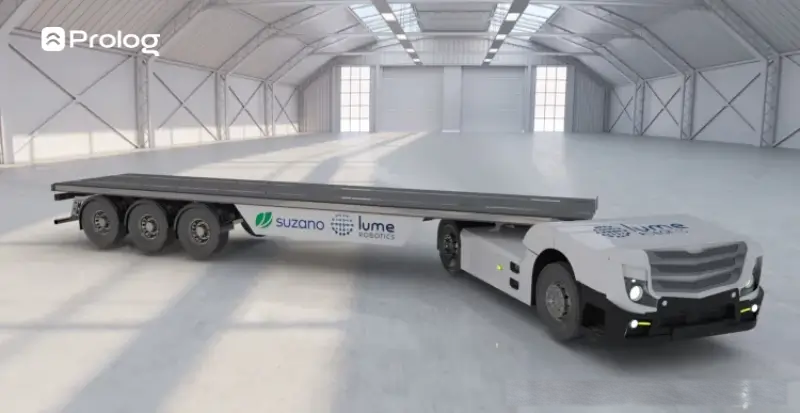
Autonomous trucks in transportation: tests and impacts
Understand autonomous trucks, the technologies involved, where operations are advancing, expected impacts and precautions for fleet management.
Image: Press handout/Lume Robotics
Luiz Felipe