Fuel consumption: what makes your fleet spend more
 Jade Zart 4 min read

Managing fleet transport and refueling is essential to control fuel consumption and learn how to bring greater savings to the transport company.
To manage your fleet's fuel comprehensively, you need to keep track of various indicators. You should also pay attention to which factors can increase and/or decrease consumption.
For example, did you know that worn tires can increase vehicle fuel consumption by around 20%?
To help you improve your fleet management, we will explain the main influences on fleet fuel consumption and the alternatives you can use to solve these problems.
What affects fleet fuel consumption
To understand what affects vehicle refueling control, you need to keep track of certain performance indicators (KPIs) at all times. The most important include average expenditure by mileage, the average price per liter of diesel, and average expenditure per vehicle and driver.
In addition to managing these figures, you also need to know the factors that affect consumption. This enables you to make more effective improvement decisions.
Want to see this in your fleet? Talk to a Prolog specialist
Fuel quality
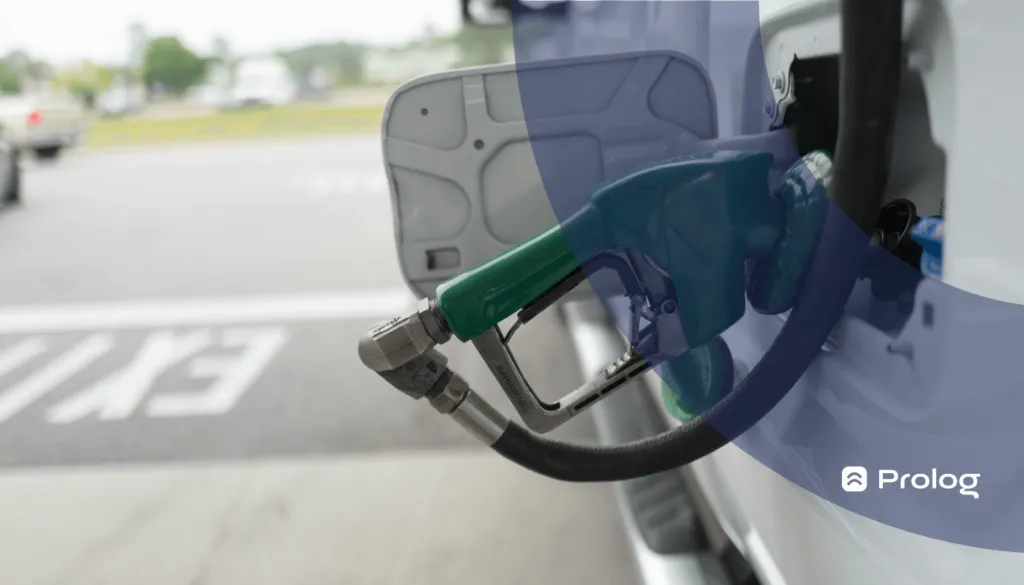
There are two aspects to consider here: keeping track of when refueling takes place and where it is done.
First, do you know when each refueling takes place and how much it costs? Even though drivers are responsible for this task, they need to pass on accurate information so you can keep it under control.
This way, you start to understand actual expenditure and how long each tank lasts. If a full tank lasts less than expected, for example, you should question the station where it was last filled.
The second point is precisely about this. Is your fleet refueling at reliable, licensed stations? Are you always seeking the lowest prices?
Although every fleet manager wants savings, you need to pursue them by carrying out fleet tasks correctly, and refueling at trusted stations is on that list.
Air conditioning and open windows
Excessive air conditioning use can greatly increase fleet fuel consumption. At the same time, open windows can also cause this increase.
So what should you do? When should you use one or the other?
At high speeds, the vehicle makes better use of fuel per kilometer, reducing the fuel expenditure from air conditioning. Air conditioning can therefore be used above 70 km/h.
Even if the driver wants to keep the windows open at high speeds, the incoming air increases resistance and requires more effort for the vehicle to move. Open windows are therefore recommended only at speeds below 70 km/h.
Faulty catalytic converter
A catalytic converter that is not working properly increases fleet fuel consumption. This happens because of the function it performs.
When it cannot convert all toxic gases into water, carbon dioxide and nitrogen, the vehicle's temperature rises, leading to the unwanted increase.
Problems with this part of the vehicle are not normally expected. It should always be checked, along with the exhaust, during preventive maintenance sessions.
Overloading
In addition to significant losses from fines, overloading makes the vehicle work harder to move, consequently increasing fuel expenditure.
Each transport vehicle has a maximum load set by its supplier. This information is based on efficiency testing and the expertise of the vehicle's developers; you should trust and strictly follow their recommendations.
Beyond excessive fuel expenditure, you will be reducing the vehicle's useful life as a whole. After all, you will be increasing the risks of accidents and vehicle component breakdowns.
Driver practices on the road
Drivers' actions directly influence fuel waste. The general advice is simple:
- do not press either the brake or accelerator too hard;
- change gears correctly;
- and consider the air conditioning guidance discussed above.
All drivers should be trained and taught best practices and their role in the fleet's fuel economy.
Incorrect tire pressure
Tire management is among the most important fleet tasks. Why? Because tire expenses are among transport companies' largest costs!
Tire calibration is part of this management. The inspection process is carried out during preventive maintenance and indicates the pressure of these vehicle components. It gives you an indication of whether the tires need to be inflated to the recommended pressure.
The ideal pressure for each tire should be provided by the product's distributors; you simply need to follow the guidance.
How does this relate to fleet fuel consumption?
Tires with incorrect pressure, like worn tires, make the vehicle use more force to move and gain speed. This leads to higher fuel expenditure to support that extra effort.
Clogged air filter and worn spark plugs
While the filter wastes fuel by obstructing the air passages to the engine, spark plugs are among the main items affecting consumption. They generate energy in the vehicle so that fuel burns appropriately for vehicle performance.
When there is a problem with the spark plugs or the assembly that burns fuel in the combustion chamber, it should be corrected before the vehicle sets out on another trip.
Still have questions? Want even more solutions to reduce your fleet's fuel consumption? Get to know Prolog App Tire Management (in Portuguese)!
Frequently asked questions
What factors increase fleet fuel consumption?
Do worn tires increase fuel consumption?
Is it better to use air conditioning or open the windows?
Which indicators should you keep track of in fuel management?
How does overloading affect fuel expenditure?
What can drivers do to save fuel?
// newsletter
Fleet management content, straight to your inbox
Articles on tires, maintenance and fleet operations. No spam.