
Autonomous vehicles: how they work and their fleet impact
 Jade Zart 7 min read

With the emergence of autonomous vehicles, one discussion that opens up is the use of this innovation in the logistics and transport industry.
Because it is still an evolving technology, with different applications depending on the operating environment, questions commonly arise about the efficiency, the savings and, above all, the safety of these vehicles.
Even so, the potential and the constant improvement that autonomous vehicles can offer transport operations help keep the subject on the radar of companies, manufacturers and fleet managers.
Below, learn more about:
- What are autonomous vehicles?
- How do they work?
- Are autonomous vehicles safe?
- What are the benefits of an autonomous car fleet?
- What is the impact of the autonomous truck on freight transport?
- How do autonomous vehicles impact fleet management?
What are autonomous vehicles?
Autonomous vehicles are technological innovations capable of moving without the direct need for a human driver to control them.
In other words, these vehicles have technological and intelligent foundations that allow the vehicle to perceive and analyze its surroundings. That way, they can make decisions autonomously to accelerate, brake and maneuver.
In addition, the technologies used also enable this vehicle type to recognize and obey traffic rules on the routes it travels.
How do autonomous vehicles work?
Autonomous vehicles work through a combination of technologies designed to ensure safe and efficient operations, even without direct human intervention.
The most notable among them are:
External sensors
These sensors can include cameras, radars, motion and heat sensors, and so on. They are essential items for the vehicle to understand the environment it is passing through and to identify obstacles and pedestrians along the way.
Artificial intelligence
Once the data from the sensors mentioned above is collected, artificial intelligence comes into play.
It needs to do this work of interpreting and making the right decisions, such as triggering the braking and turning commands, so that the vehicle's movement happens without problems.
Like any AI tool, the vehicles tend to improve with more data, tests and validations, and they are developed to handle different and adverse situations on the road. Before reaching the streets, autonomous driving models can also be validated in closed simulations, as technology suppliers describe.
GPS and navigation systems
Just as these systems are used by humans, artificial intelligence can also take advantage of GPS and navigation technologies to work out the best routes from its starting point to its final destination.
In addition, when these resources are integrated into autonomous driving systems, they help the vehicle plan its movement and stay on the planned route with less direct human interference.
Internal Control Unit (ECU)
The ECU is the part of autonomous vehicles that executes the driving commands, coordinating functions from acceleration to braking and ensuring that actions are carried out smoothly and precisely.
Connectivity components
These components are what allow communication and interaction with the traffic infrastructure and other vehicles.
This includes components such as Electronic Stability Control (ESC), which adjusts wheel speed to prevent skidding. The iBooster, which optimizes the braking process.
Also the speedometer and odometer, which provide information on speed and distance traveled.
Are autonomous vehicles safe?
The answer depends on the level of autonomy, the usage scenario, the validation carried out before operation and the rules applied to each project. There is even a report that estimated that by 2040, the number of accidents could be close to zero.
Another relevant piece of information, which helps explain the interest in this technology, is that 90% of accidents are caused by humans, for reasons such as distraction, drowsiness at the wheel, consumption of alcohol and illicit products, among other reasons.
Meanwhile, 5% of accidents are caused by vehicle problems, such as mechanical failures, which are also a human responsibility. And the last 5% relate to the quality and upkeep of streets and highways.
The safety of autonomous vehicles is associated with the ability to make complex decisions quickly, anticipating and reacting to traffic conditions, unexpected obstacles and the unpredictable behavior of other vehicles on the road.
The ability to interpret traffic laws and make adjustments automatically, whether to speed or other factors, also contributes to making their driving safer. Even so, safety forecasts should be read as estimates, not as a guarantee that accidents will not happen in any operation.
What are the benefits of an autonomous car fleet?
Besides the safety and efficiency that autonomous vehicles promise, building a fleet with this type of transport can bring other benefits as well.
The main ones are:
- Lower operating costs: although they have a higher purchase price, costs can be reduced in the long run, since they tend to make better use of fuel. In addition, a smaller number of drivers on staff can also mean lower spending on salaries and labor costs.
- Less environmental pollution: the optimized and efficient driving of autonomous vehicles can contribute to reducing polluting gas emissions. This is possible thanks to precise engine control and optimized fuel use, minimizing the environmental impact of each trip.
- Convenience and connectivity: integrating autonomous vehicles with Internet of Things (IoT) technologies can boost fleet management, increasing operational efficiency and providing valuable data for route and maintenance optimization.
- Lower maintenance costs: driver behavior is one of the reasons that contribute to more maintenance services and higher maintenance costs for vehicles, something that tends to decrease when autonomous vehicles run according to ideal performance parameters, making them less prone to wear and damage from improper driving.
What is the impact of autonomous trucks on freight transport?
The impact of these vehicles on freight transport depends on how autonomous trucks will be best used within logistics operations.
In Brazil, examples of use and trials need to be assessed according to the context of each operation, because the stage of adoption changes quickly and not every project involves the same level of autonomy, route, cargo or exposure to risk.
But, considering the expected benefits of autonomous vehicles, the impact of these trucks may be freight transport that is more economical, safer and more sustainable, especially on controlled, repetitive routes or routes with lower operational complexity.
In addition, the ability of these trucks to operate without interruptions and without the limits of drivers' working hours (in Portuguese) may enable more efficient delivery scheduling and more productive use of the fleet, as long as the operation is authorized, safe and technically feasible.
How do autonomous vehicles impact fleet management?
Autonomous vehicles introduce changes in fleet management, transforming traditional supervision and operation activities.
For example, the need to keep track of drivers' behavior and their working hours, including stops and rest times, becomes smaller or disappears when these vehicles operate without direct human control.
Assessments of working hours, stops made and stop duration no longer carry the same weight in driverless operations, but they may remain relevant in mixed fleets, transition phases or models with human supervision.
This also shifts the focus of activities such as risk assessment and the implementation of preventive and corrective measures, since some risks cease to exist and new possibilities emerge.
Another aspect that changes and impacts fleet management concerns the vehicle maintenance department.
Because these vehicles operate through advanced devices, systems and technologies, the maintenance process, from inspection to repair of the vehicles, also becomes somewhat different.
What is more, these same technologies and innovations make it possible to keep closer and more precise track of transport operations data, and this results in better-informed management, based on accurate data, that supports strategic decisions and identifies optimization opportunities in operations.
Have you ever imagined a fleet truck driving itself to the workshop for maintenance? That is what the future points to, although practical application depends on technological maturity, operating rules and the safety of the environment.
Stay on top of more content like this to optimize your fleet management by subscribing to our free newsletter (in Portuguese).
Frequently asked questions
What are autonomous vehicles?
How do autonomous vehicles work?
Are autonomous vehicles safe?
What are the benefits of an autonomous vehicle fleet?
Are autonomous trucks already used in freight transport in Brazil?
How do autonomous vehicles change fleet management?
// newsletter
Fleet management content, straight to your inbox
Articles on tires, maintenance and fleet operations. No spam.
Read also
 Technology and logistics efficiency

 Technology and logistics efficiency
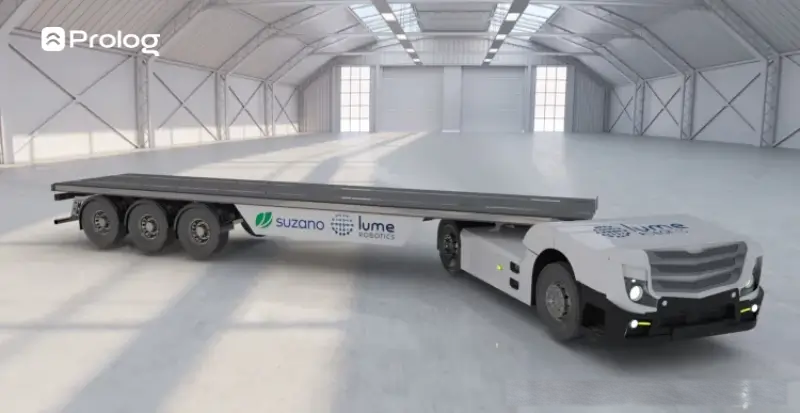
Autonomous trucks in transportation: tests and impacts
Understand autonomous trucks, the technologies involved, where operations are advancing, expected impacts and precautions for fleet management.
Image: Press handout/Lume Robotics
 Luiz Felipe