Digital tire tread depth gauge: how to use it in a fleet
 Luiz Felipe 6 min read
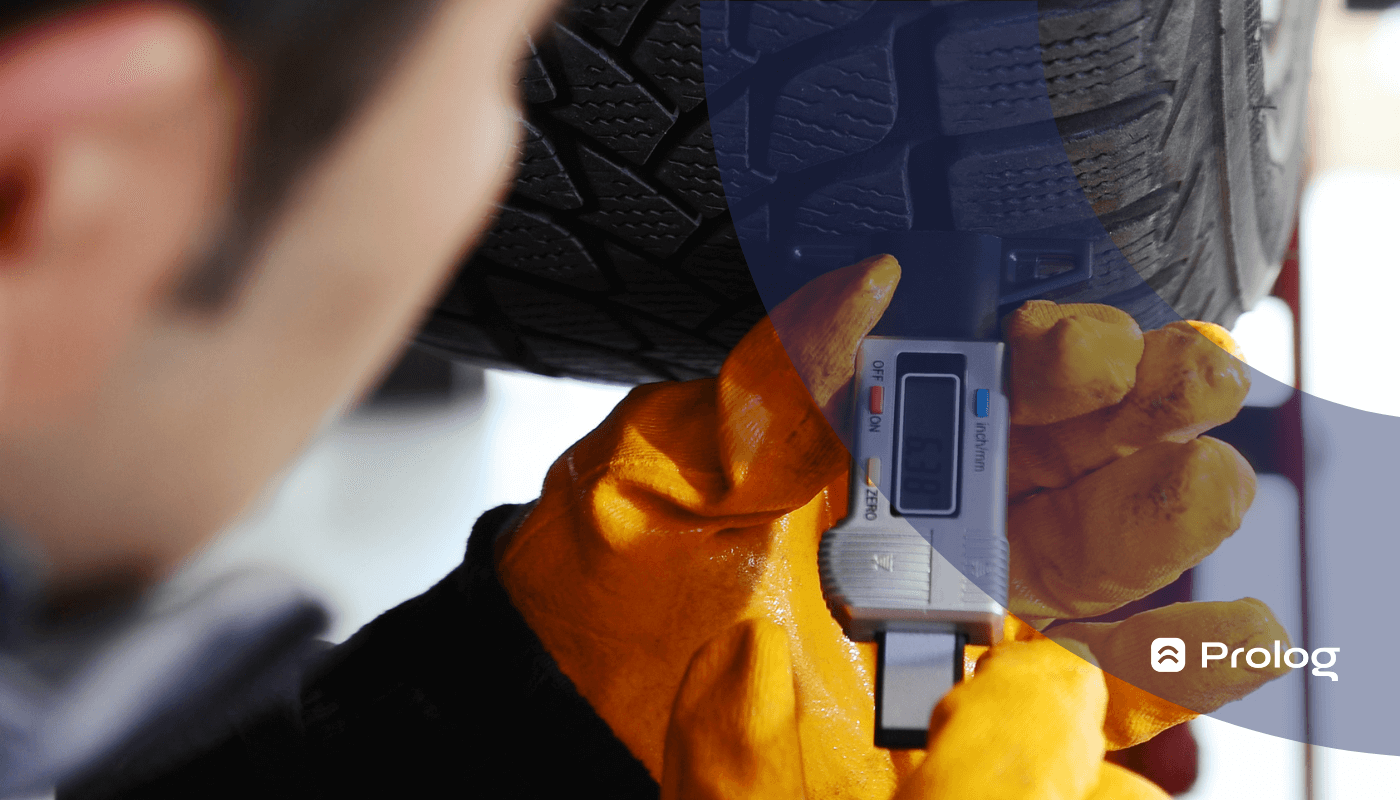
A tire tread depth gauge is a device used to measure the depth of each tire groove. This information helps you understand the condition of the tread and decide with greater confidence when a tire needs closer attention, to be sent for refurbishment or to be replaced.
Suitable depth depends on the tire type, vehicle, load and operation. The starting point is that a gauge, especially a digital one, makes this process much easier than improvised methods: it provides a reading in millimeters, reduces recording errors and helps maintain a reliable inspection history.
But…
What are the other benefits of using a digital tire tread depth gauge in a fleet?
A digital tire tread depth gauge is a reliable, efficient and easy-to-use tool. It is also an important fleet safety resource, as it can help identify when tires need to be sent for retreading or replaced.
What is more, using it helps ensure better tire performance. Tread depth is linked to tire grip on the surface, especially in bad weather; correct calibration also influences fuel savings.
Your operation's tire control keeps improving, especially if you acquire a management system along with your digital gauge. However, a spreadsheet can also be a good first step for organizing readings, comparing tires and keeping track of wear progression.
What matters most is checking tread depth as well as pressure, and recording those data for reference in your decisions. Pressure, tread depth, rotation and alignment are among the central points of a tire maintenance routine, so it is worth treating inspection as part of the process rather than an isolated task.
How do you measure tire tread depth?
There are several unofficial and unrecommended ways to measure the depth of a tire groove. For example, using a ruler or tweezers and taking readings at different points around the tire tread. This can be time-consuming, and the chances of an incorrect reading are high.
If you have heard of, or even use, measurements with a Brazilian one-real coin or a matchstick in your fleet, know that these are not good practices either. These methods may give a visual impression, but they do not provide the precision needed to compare tires, axles, routes and periods of use.
The best way, without doubt, is to use a digital tread depth gauge, also called an electronic tread probe. It should not be confused with the tire calibration gauge, which is used for pressure. In fleet management, the two measurements complement each other: one shows tread depth; the other shows inflation pressure.
With the right equipment, each point is read in a few seconds, and the routine becomes more standardized. In an operation supported by a tread probe, there is a case published by Prolog in which inspection time is reduced by as much as half.
How do you use a digital tire tread depth gauge?
Simply position the gauge's probe in the groove, rest the device's base on the tread and record the reading in millimeters. With digital equipment connected to a mobile phone, the measurement can be sent via Bluetooth to the system used by the team, reducing reliance on manual notes.
Besides the numerical reading, also observe signs of irregular wear. The tread's own wear indicators help show when the tire has reached a critical point: when these bars become level with the tire surface, it is time to take the tire for assessment and replacement.
Want to see this in your fleet? Talk to a Prolog specialist
At least 2 mm, but is there an ideal depth?
Tire tread depth is an important factor determining component performance. The deeper it is, the more water it can hold and channel away from the contact patch, improving traction on wet surfaces.
In addition, a deep groove also improves lateral stability and brake pedal feel. On the other hand, depth alone does not tell the whole story: pressure, alignment, rotation, tire type and vehicle application also affect operational results.
This is a frequently asked question, but there is no single clear and objective answer for every fleet. Instead, there is a combination of technical parameters, manufacturer guidance, internal company policy and assessment of the tire's actual condition.
An important precaution is to avoid treating any operational number as a universal rule. Some international references call for attention when tread depth reaches 2/32 of an inch, but the fleet's decision must consider applicable legislation, the tire manufacturer, casing condition and operation type. If the tire already has a wear indicator level with the tread or signs of damage, it needs assessment even if the reading seems close to the limit used internally.
One thing is certain: using a digital tire tread depth gauge is essential to check whether the grooves remain at a suitable running depth. The tool allows quick and easy depth measurement, becoming a valuable resource for those who want to maintain fleet performance and avoid decisions based solely on visual perception.
How do you find the ideal depth for each case?
The minimum depth you want to achieve with tire grooves depends on a variety of factors, including vehicle type, vehicle weight and tire type. Route, weather, surface type, damage history and the right time to send the casing for retreading also enter the equation.
This is because, while greater depth can provide more traction in wet weather, shallower grooves can change how the tire behaves in the operation. The decision should therefore rely on a series of comparable inspections rather than a single isolated measurement.
That is why tire service severity can be a crucial factor in selecting the best models for your fleet. For example, low-severity tires are excellent for longer trips, and higher-severity tires are more suitable for urban distribution.
If you are unsure whether tread depth meets specifications, using a digital tire tread depth gauge is a way to find out. This investment can help maintain driver safety on the road and improves the quality of rotation, retreading and replacement decisions.
How do you use a tire tread depth gauge to find this information?
As you perform tire inspections, you generate tread depth data that must be stored for later reading and analysis. This way, after about 3 months, you can already draw some conclusions, such as:
- Which tire had the most wear;
- Which route caused the most tire damage;
- Which tire type performed best in a particular operation;
- Whether there is irregular wear requiring inspection, calibration, rotation or alignment;
- And so on.
With all these questions, you also identify whether tires that have reached the limit defined by your internal policy are still in good condition to run for some time longer or are already at a suitable point to be sent for tire retreading. In a case published by Prolog, the inspection process with pressure and tread depth data helped bring forward preventive retreading and prevent premature tire loss.
The conclusion to take away is that a tire tread depth gauge will be crucial for improving your fleet's tire management. To explore this tool further, schedule a free demonstration with a specialist from our team.
Frequently asked questions
What is the correct way to measure tire tread depth?
What is the minimum depth tire grooves should have?
Is deeper tread always better?
How do you use a digital tread depth gauge?
What should you do with the data collected during inspections?
What benefits does a digital gauge bring to the fleet?
// newsletter
Fleet management content, straight to your inbox
Articles on tires, maintenance and fleet operations. No spam.