Tire CPK: how to calculate the cost per kilometer
 Jean Zart 7 min read
Imagine you are going through a period of rising operating costs and, on impulse, decide to buy the cheapest tire available to try to cut the budget. This is a common mistake that many fleet managers make.
Here is what can happen: the cheap tire may have a short useful life, which means you will have to replace it sooner. This tire may also not stand up well to road conditions or to the operation's loads, resulting in frequent maintenance and extra costs for retreads or premature replacements.
The purchase price alone does not show the real cost of the tire. Pressure, load, speed, temperature, impacts, road damage and the way the tire is maintained after installation influence the asset's performance and useful life.
With the CPK calculation, you can avoid these traps and compare the real cost of each option before investing in the tire that offers the best cost-benefit. So, read on:
- What tire CPK is and why it matters
- How to calculate tire CPK
- How calculating the tire's cost per kilometer can impact the fleet
- Factors that influence tire CPK
- Automated control of the fleet's tire CPK
What is tire CPK and why does it matter?
Cost Per Kilometer, CPK, lets you know precisely the cost of each kilometer driven on a given tire, taking into account the purchase price, maintenance, retreads and other factors.
Through this analysis, you can make smarter choices and avoid common mistakes, such as buying only on the lowest upfront price without considering how much that tire will cost over the whole operation.
The calculation is done to find the cost per kilometer (CPK) of each tire individually and is used to compare the cost of running different tire makes and models on the fleet's vehicles.
After all, when you buy the cheapest tire looking to cut costs, you may be getting nothing more than a lower upfront cost.
Besides this factor, there are several other questions, such as: is the performance right for the fleet? Will the tire make good use of its useful life? Will it stand up to the roads of the region it runs in, the load carried and the maintenance plan adopted?
There are many factors you need to consider when choosing your fleet's assets — and that you should use as a basis to show the board that the amount invested will pay off in operating savings.
How do you calculate CPK?
Calculating CPK is simple: add the tire's purchase price to the cost of repairs and retreading services; add the mileage covered by the new tire to the mileage covered after retreading; then divide the first result by the second.
This is the tire CPK formula:
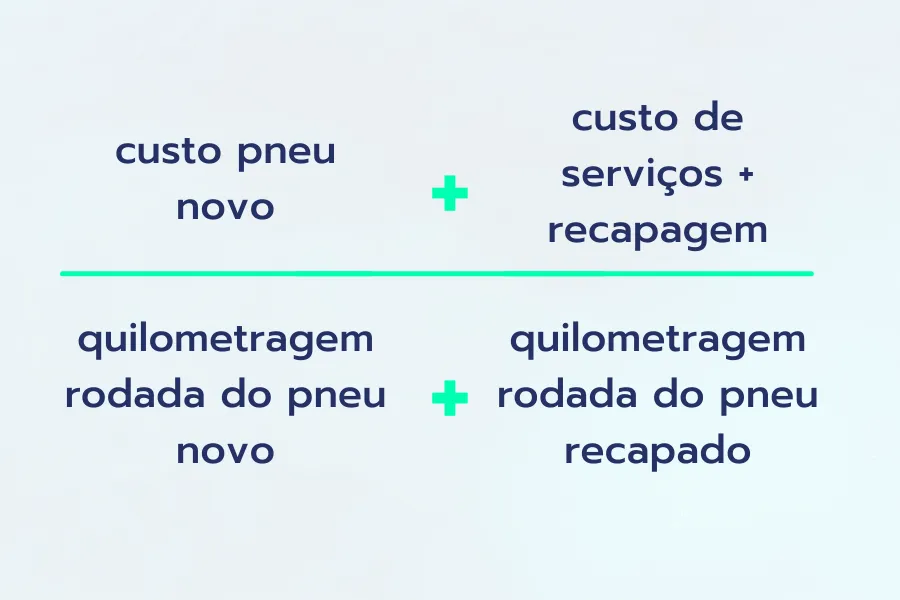
This calculation gives a realistic view of the cost of each tire over its useful life. Keep in mind that there is a simplified estimate that divides the retail price by the estimated mileage, but it is only a projection and may not reflect the real CPK.
How can the CPK calculation impact your operation?
CPK seeks to answer how much it costs to cover a certain distance with each tire in the operation. This information is used mainly when buying new tires.
That is because it lets you assess which tires have the best cost-benefit, not necessarily the cheapest at the time of purchase, but the one that runs longest, with the fewest problems, generating lower costs in the long run.
For example, a R$1,200 tire that covers 60,000 km has a CPK of R$0.02 per kilometer. A R$900 tire that covers only 30,000 km has a CPK of R$0.03. In other words, the tire that is more expensive upfront delivers greater savings in the long run.
Factors that influence tire CPK
Even if they do not enter a direct calculation, factors such as vehicle weight, tire pressure, tire size, load, speed, temperature, impacts and road damage can affect the final cost per kilometer. That is why you need to find the CPK of each tire in the fleet.
The main factors for you to assess include:
Tire make and model
Tires from more “premium” makes may have greater durability and resistance to adverse conditions, resulting in a lower CPK when they match the fleet's operating conditions. Specific models may also be better suited to certain types of road, load or operation, optimizing cost-benefit in those specific situations.
Tire serial number
The serial number, which may be the tire's hot-branded number, is used to identify each asset individually. This makes it possible to keep the usage and maintenance history of each tire, making CPK analysis and the planning of retreads or replacements easier.
License plate of the vehicle the tire is installed on
Keeping a record of which tire is on each vehicle helps correlate wear with factors such as road type, the weight of the vehicle and of the load carried, and driving style.
Mileage and operating conditions can vary widely from one vehicle to another, affecting CPK.
Road conditions
Poorly paved roads, with potholes or uneven surfaces, contribute to impacts, damage and faster tire wear, raising CPK. For managers operating in regions with bad roads, it is important to choose tires suited to the route, the load and the technical specification, rather than deciding only on price or on a single feature.
Current tire pressure reading
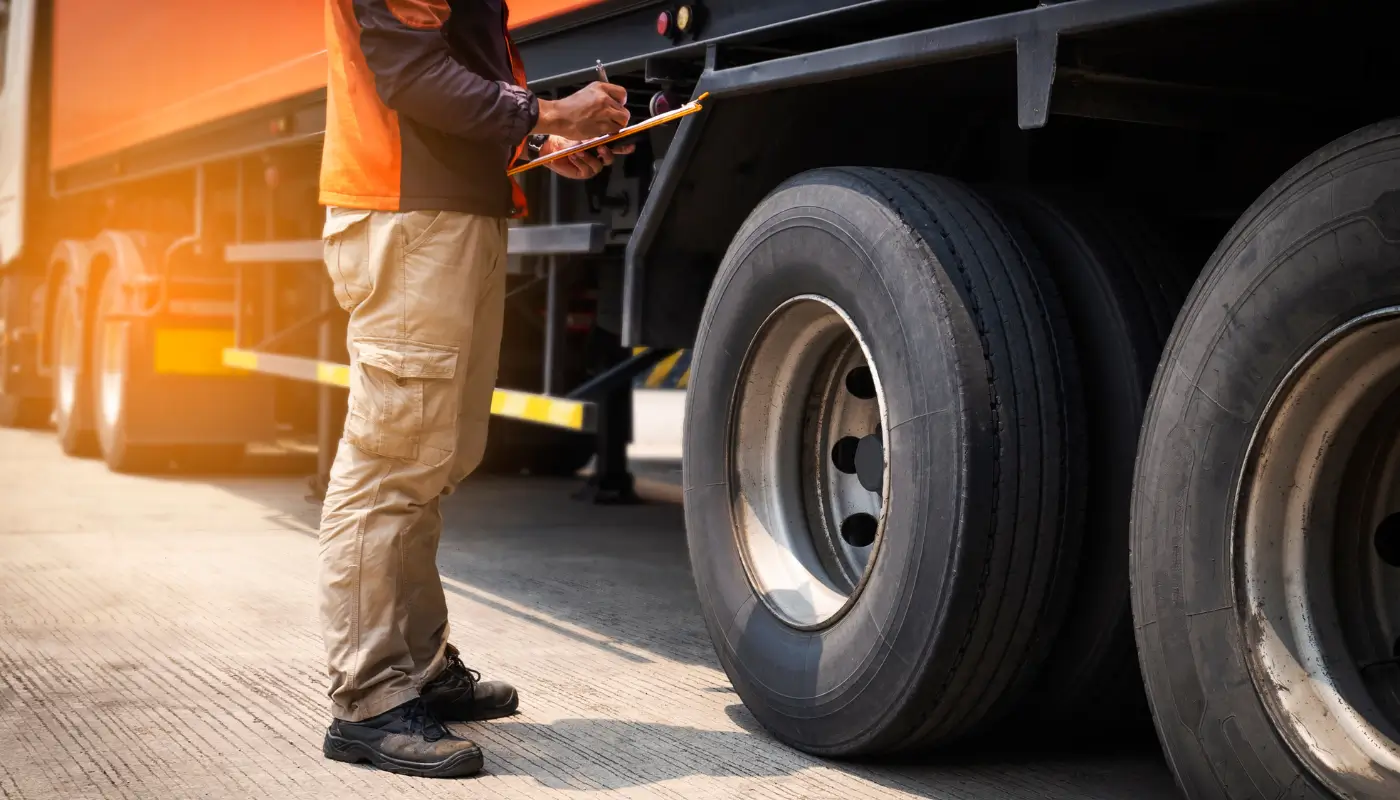
Tires with incorrect pressure suffer uneven wear, reducing their useful life and increasing CPK. Pressure is among the core points of ongoing tire maintenance and should be checked during inspections, along with tread wear and visible damage.
Current tread depth
Tread depth is an indicator of tire wear. Shallow grooves indicate that the tire is nearing the end of its useful life; in Brazil, the law cites a remaining depth below 1.6 mm as a situation subject to the penalties set out in the Brazilian Traffic Code (CTB).
Monitoring this depth lets you determine the right time for retreading or replacement, helping keep CPK under control. The remaining depth can also be checked visually through the tire's tread wear indicators.
Number of retreads performed
The number of retreads directly influences CPK, since retreading is a practice that extends the tire's useful life. However, there is a limit to the number of retreads a tire can safely withstand.
Any services that have been performed
Any kind of maintenance or repair done on the tires, such as alignment, balancing or damage repairs, also affects CPK. Pressure, tread wear, rotation and alignment are among the essential points of ongoing maintenance, and preventive maintenance carried out regularly can extend the tires' useful life and reduce operating costs.
Cost of retreads and service type performed
The cost of each retread or service must be added to the tire's total cost for an accurate CPK calculation. More expensive types of retreading or services may affect the result, but they may also contribute to greater durability, lowering CPK in the long run.
Driver's driving style
Drivers who drive aggressively, with harsh braking and excessive acceleration, speed up tire wear and may increase CPK. Training drivers in defensive driving can help extend the tires' useful life.
Automated CPK control: a practical solution
Keeping track of CPK manually can be laborious, requiring frequent updates and constant monitoring of several variables. A lot of time is devoted to this specific task, and other types of monitoring may suffer.
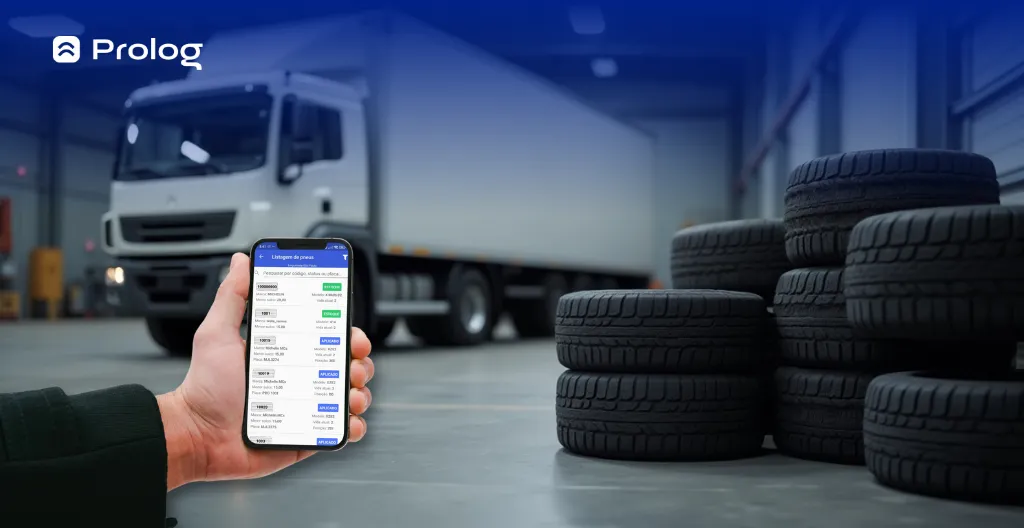
That is why relying on an automated tire management system (such as the one offered by Prolog App) is a practical solution that streamlines the process.
With this system, you can record the pressure measured at each inspection, follow wear and mileage over time, generate automatic CPK reports and, with all of that, make better-grounded decisions based on accurate data that reflects your fleet's reality.
In the end, tire CPK is more than just a calculation. It is a tool that enables the fleet manager to reduce costs, increase safety and optimize vehicle performance.
Want to control your fleet's tire CPK more effectively? Use Prolog App! Schedule your demo and see how to implement it.
Frequently asked questions
What is tire CPK?
How do you calculate tire CPK?
What is the CPK calculation used for in a fleet?
What factors influence tire CPK?
Does the cheapest tire have the lowest cost per kilometer?
// newsletter
Fleet management content, straight to your inbox
Articles on tires, maintenance and fleet operations. No spam.