Fleet tire diversion: signs, gaps and how to detect it
 Jean Zart 9 min read
Do you know exactly where each tire in your fleet is right now? Not how many, but each one, with its fire number (the serial number branded on the tire), vehicle, position and history?
If the answer is no, you have a problem and may not even know how big it is.
In a fleet, the total value of tires in operation and in inventory is usually significant enough to justify individual control. The disappearance of first-life premium tires, for example, can have a direct replacement impact and also eliminate that asset's refurbishment potential.
But tire theft is not just robbery on the road or theft in the yard at dawn. There is a less visible and often more harmful layer of loss: improper substitutions at unauthorized stops, first-life casings disappearing from the tire repair shop, new tires that “become” refurbished in the system and diversions disguised as natural wear.
Without traceability and individual control, these losses go unnoticed month after month, eroding the operation's margin without clearly showing up in reports.
Read on:
- How to tell if tires are being stolen from your fleet
- Forms of loss: from external theft to improper casing substitution
- Control failures that facilitate asset diversion in the fleet
- Individual traceability: the importance of tire serialization and branding
- Cycle counts: how to identify discrepancies before losses grow
- The tire management system as a governance and security tool
How to tell if tires are being stolen from your fleet
Most operations suffering from tire diversion do not discover it by catching someone in the act. They discover it, when they do, through symptoms: numbers that do not add up, costs growing without explanation or inventory counts revealing discrepancies between physical stock and the system.
Some warning signs worth investigating:
- The premature tire loss rate is above expectations, but there is no apparent technical cause: calibration, alignment and operation appear to be within the standard.
- Tires are being discarded with usable tread depth, or first-life casings disappear before going for retreading.
- New tire consumption is disproportionately high relative to the mileage covered by the fleet.
- There is a recurring discrepancy between the number of tires in the system and the physical count.
- Certain vehicles or routes show an abnormal frequency of replacements or “losses.”
There is no need to start pointing fingers: none of these signs alone confirms theft. But all point to a lack of control. And where control is lacking, opportunities for accidental and intentional losses abound.
The point is that without reliable data and traceability, you cannot distinguish between a tire that genuinely wore out, one damaged by a mechanical failure and one that simply disappeared. And if you cannot distinguish, you cannot act.
Forms of loss: from external theft to improper casing substitution
Truck tire theft is not limited to one scenario. Different forms of loss exist, and understanding them is the first step toward protection:
External theft (road and yard)
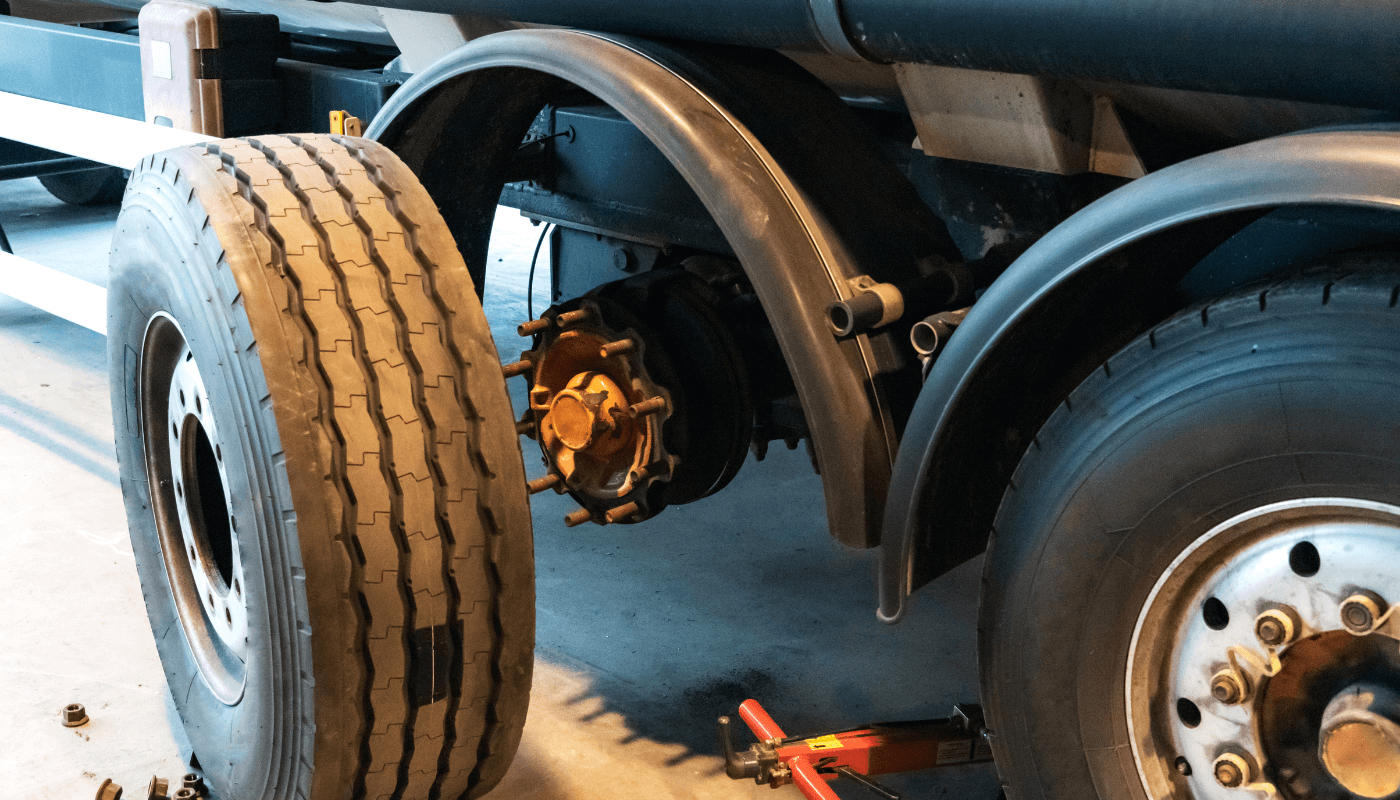
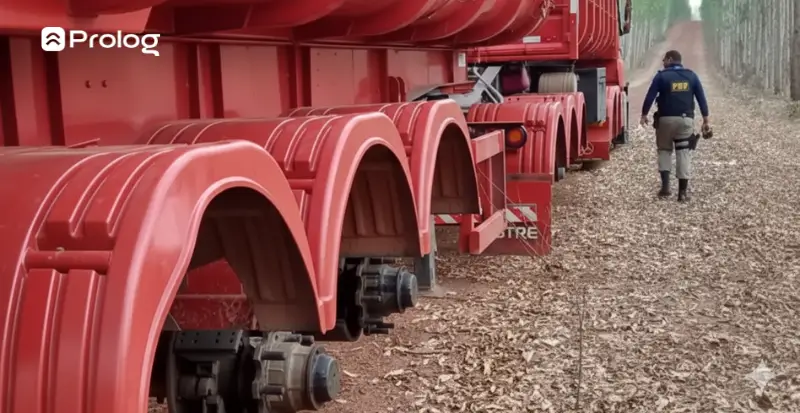
The most obvious form of tire theft is when criminals operate at roadside stops, fuel stations, parking lots and even inside poorly secured yards. Wheels and spare tires are easy targets, and it can take little time.
In urban centers and on high-risk routes, wheel and spare tire theft is a reality affecting carriers of different sizes.
Physical measures help, such as locking wheel nuts, spare tire locks and parking in monitored locations. But none of the alternatives prevents every occurrence, and what a lock does not solve, control needs to detect: if a tire is stolen, the system should record the write-off with context, such as place, date and circumstances, rather than simply absorbing the loss as “disposal.”
Improper substitution at unauthorized stops
This is the form many managers prefer not to discuss, but it exists. Drivers stopping at unauthorized tire repair shops may exchange a good tire for an inferior one, pocketing the difference.
A truck tire may also be replaced with a lower-quality one without the manager noticing, because there is no inspection on arrival or control is not individual.
Without traceability by fire number and a standardized inspection on return from a trip, this substitution goes unnoticed. The tire that came back on the vehicle is not the one that left, but the same position remains “occupied” in the system.
Only when that tire shows accelerated wear or fails a more rigorous inspection does the substitution become apparent, and by then the trail has already been lost.
Disappearing casings at the in-house tire repair shop
First-life casings are important assets for fleet operations. A casing in good condition can return to the cycle through refurbishment, provided it is preserved and kept track of through proper disposition.
When a first-life casing disappears before going for refurbishment, the loss is not just its residual value: the fleet also loses the future mileage that asset could still deliver.
In tire repair shops without relocation control, casings may be diverted for resale or use on private vehicles. And how do you find out? Often, you do not. The disappearance may be recorded as “casing rejected by the refurbisher” or simply go unrecorded.
Without physical checks and audits, the disappearance passes as a normal process.
Record manipulation and improper write-offs
In operations using manual control or spreadsheets, manipulation is simple: a diverted tire is recorded as “scrapped due to wear” or “discarded due to irreparable damage.” Without a photo, assessment report or inspection history proving the tire's actual condition at disposal, any narrative is accepted.
This form is the most difficult to detect because it uses the system itself, or the lack of one, as cover. The control that should protect the asset ends up legitimizing the loss.
Control failures that facilitate asset diversion in the fleet
Most tire losses do not occur because of physical security failures. They occur because of process failures. When control has gaps, losses find a way through, whether intentional or not. These failures may include:
Management by quantity alone, not identity
If your control knows you have 300 tires but does not know exactly which ones they are, where they are and in what condition, any tire that falls off the radar becomes a statistic. Quantity-based management aggregates, while identity-based management, using the fire number, provides traceability and allows real asset control.
No individual relocation history
Each tire needs a timeline: when it arrived, where it was fitted, when it was inspected, when it changed position, when it went for refurbishment and when it was discarded.
Without this history, there is no way to identify when and where a loss occurred. The tire simply “disappears” between relocations, without control confidently identifying the difference.
Manual or spreadsheet-based control
Manual control is a major ally of tire loss and theft. It allows data manipulation, omitted records and a lack of traceability over who did what.
A spreadsheet can be changed by people with access, without the same level of operational history as a dedicated system. A notebook can have pages torn out. Neither offers the governance a high-value asset requires.
No standardized inspections at vehicle entry and departure
If a vehicle leaves with a set of tires and no one checks what came back, improper substitution is practically risk-free for the person doing it. A return inspection, checking the fire number and making a photographic or digital record, is a simple, effective barrier.
Disposal without an assessment report or physical check
A tire sent for disposal without a record of its actual condition, such as tread depth, photos and a documented reason, is a tire that may have been diverted. Disposal is often the stage where losses materialize, because it is the asset's final exit and, without verification, also the point where the trail ends.
Individual traceability: the importance of tire serialization and branding
If quantity-based control is insufficient, the solution begins with individualization. Each tire needs to be a unique, identifiable, traceable asset.
The fire number is the tire's unique identifier, equivalent to a vehicle's license plate. It links that specific asset to its entire history: purchase, fittings, inspections, repairs, refurbishments and disposal.
The hot branding needs to be done when the tire is received into the operation, before any relocation. A tire without a fire number does not enter operation. This is the rule that closes the first gap.
After that, you need to know where the tire is, on which vehicle, on which axle and in which position. And this link needs to be updated with each relocation. When the system knows a specific tire is on a given vehicle and position, any discrepancy at the next inspection becomes much easier to investigate.
In general, each event in a tire's life should generate a system record with date, time, responsible person and context. This history makes it possible to reconstruct the asset's path and identify where, when and how a loss occurred.
It is important to emphasize that individual traceability does not prevent theft, but makes diversion much harder to hide and much easier to detect.
Cycle counts: how to identify discrepancies before losses grow
Tire auditing cannot depend solely on an annual event. In large fleets, inventory counts can rotate, taking place in frequent cycles and covering portions of the fleet at a time.
Instead of stopping the entire operation to count all tires on a single date, you define a rotating schedule. Each cycle, the tires in that group of vehicles are physically checked and compared with system records.
With frequent cycles, the fleet is checked repeatedly. And if there is a discrepancy, it tends to appear before turning into a larger problem.
But cycle counting only works if treated as a routine, rather than a project. It needs a designated person responsible, a fixed schedule and consequences for discrepancies found. When the team knows control is frequent and rigorous, its preventive effect is as relevant as its detection effect.
The tire management system as a governance and security tool
Locks, cameras and locking wheel nuts are physical barriers. They are important, but mainly protect against external theft and do not cover all internal forms of loss. What protects the operation as a whole is governance.
A dedicated tire management system helps move tire control away from manual spreadsheets and keep track of the asset's cycle from registration to disposal. In Prolog's case, the platform covers tire management, preventive maintenance and electronic checklist, with individual control of wear, retreading, life cycle and cost per tire.
Beyond centralizing data, the system needs to support decision-making routines: record relocations, keep history up to date and facilitate comparison between control records and what was physically checked in the operation.
This information does not accuse anyone, but signals what needs checking. And checking is what turns suspicion into information.
If you are unsure where each tire in your fleet is now, your operation may be losing money without anyone noticing. And the first step to solving this is not buying more cameras or locks. It is having real, individual, traceable and auditable control over each asset.
Want to put tire control into practice in your operation? Book a demonstration with the Prolog team and discover the system that helps provide visibility into each tire in your fleet, from entry to disposal.
Frequently asked questions
How can I tell if tires are being stolen from my fleet?
What forms of tire loss occur in fleets?
What control failures make tire diversion easier?
What is a tire's fire number and what is it used for?
How do tire cycle counts work?
How much does tire loss cost the fleet?
// newsletter
Fleet management content, straight to your inbox
Articles on tires, maintenance and fleet operations. No spam.