Tire hot branding: what the number is and how to do it
 Jean Zart 6 min read
Hot branding is the first step toward starting tire management for your fleet. Have you ever struggled to control your fleet tires' useful life?
Without this marking, you cannot tell the tires apart, and many errors can follow. In practice, tire control is impossible without individual identification for each asset.
So, let us go into more detail:
- What a tire's hot brand is
- Why it is necessary
- How to hot-brand tires in your fleet
- Whether there are other ways to identify tires
- Whether hot branding is the best way to identify tires
- After tire hot branding: tire control
What is a tire's hot brand?
Tire hot branding is the process of engraving a unique identification directly on a tire's casing using a heated tool. This identification usually consists of numbers, letters or codes that serve as the tire's “RG”, or identity document, within the fleet.
As you probably know, each vehicle has at least 4 tires. So, besides making control easier, hot branding organizes all of your fleet's tire management from the start, making it possible to keep track of each component's performance individually.
Without fleet-specific identification, it is impossible to trace the tires' internal history and keep track of aspects such as wear, retreading and useful life.
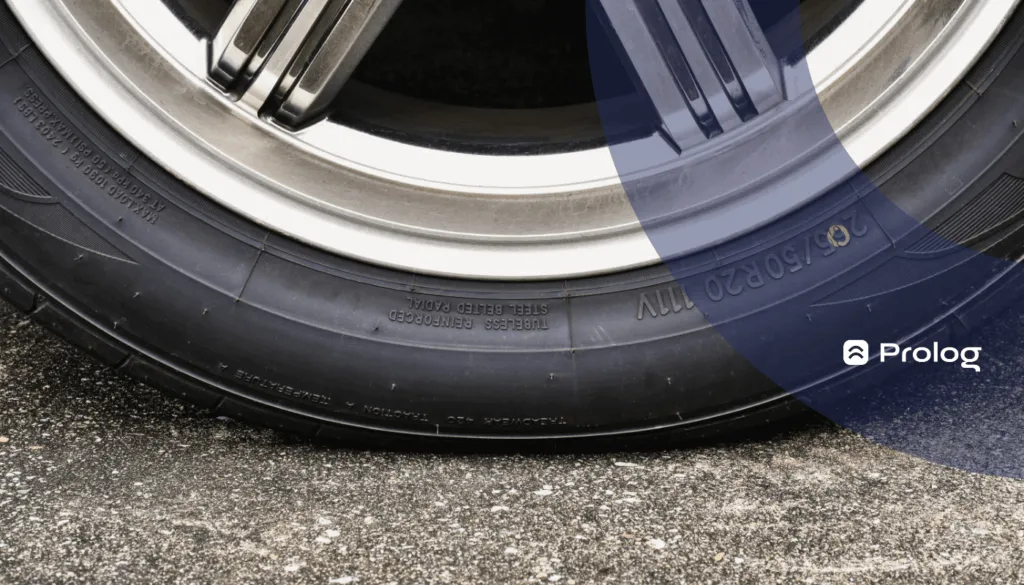
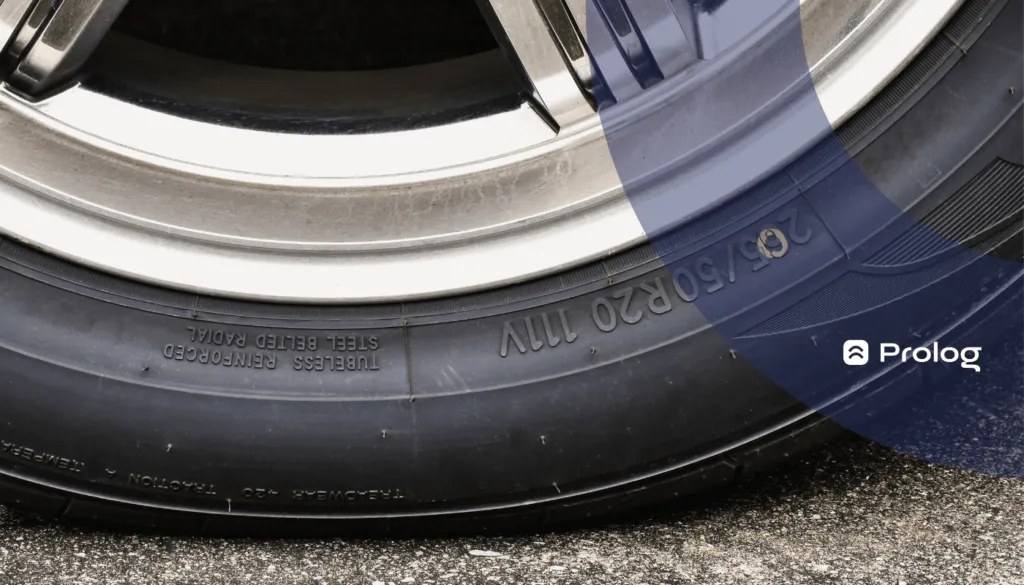
It is worth distinguishing this marking from the codes already on the tire's sidewall. A tire may have factory markings, such as technical information, a load index and a tire identification number, but these data do not replace a unique code created to control your operation.
Marking also helps avoid common issues, such as mixing tires from different batches or losing retreadable casings. In summary, it is the first step in turning chaos into an organized and efficient system.
Why is it necessary?
Hot branding is necessary because, without it, tire control becomes unfeasible. Tires are valuable assets for any fleet, and proper management can produce savings and safety.
Its main benefits are:
- Individual identification: each tire receives an “identity”, making it easier to keep track of within the fleet.
- Complete history: marking allows essential information to be recorded, such as kilometers traveled, retreading and position on vehicles.
- Maintenance planning: marking makes it easier to identify the right time for retreading or replacement.
- Reduced waste: identified tires have greater traceability, preventing loss or premature disposal of still-useful casings.
Without hot branding, any attempt at control will be generic, making it impossible to identify bottlenecks or opportunities for improvement.
And you may ask: why is tire control needed?
Well, with this control, you can identify the right time to send a tire for retreading, locate it easily — whether it is installed, on which vehicle and in which position it is being used — and identify which tire offers the best value for money for your operations, among many other things.
Control also improves when identification is included alongside routine inspections. These checks allow pressure, tread wear and tire damage to be observed, always linking the record to the correct asset.
Want to see this in your fleet? Talk to a Prolog specialist
How do you hot-brand tires in your fleet?
There is a specific device for this: an electric tire branding tool. You may notice that new tires have a space near the tire data applied by the supplier, reserved for hot branding.
This prevents information from being lost during an occasional tire refurbishment.
Although tires need to be marked by a specialized company or professional to avoid damage to the rubber or casing, the steps are simple:
- Acquire the right equipment
- Choose the correct place on the tire
- Define the identification system
- Engrave the code
Before engraving, it is worth standardizing the numbering logic. A simple system can combine the fleet's branch office, asset type and a progressive sequence; for example, an operation could use codes such as SP-TR-0001 for a branch office's first tire. What matters most is that the standard is unique, easy to read and applied in the same way to all tires.
It is also important to record who performed the marking, on what date and which code was engraved. This way, when the tire enters service, is relocated, undergoes inspection or goes for retreading, the team always uses the same reference.
Once marked, the tire only needs to be registered in your management software and will be ready for use and follow-up.
You may also want to know: why does this number not come “from the factory”?
You do not always buy tires from the same company, and if each used a marking system to identify tires, two tires from different makes could have the same ID number. In other words, making the manager's control harder.
In addition, factory codes serve manufacturer and product technical-information purposes. They help identify tire characteristics, but do not say how that asset is used within your fleet, on which vehicle it ran, which positions it occupied or how many refurbishments it received in the operation's history.
That is why hot branding must be performed by each manager within their fleet. And each fleet can register a tire with identification suited to its own control.
Are there other ways to identify tires?
Yes, there are other ways to identify tires besides hot branding. Some include adhesive labels, which are easy to apply but have low durability in extreme conditions.
Another option is RFID (Radio Frequency Identification) tags. They can work well for remote tracking of the identified asset, but require high initial investment and specific equipment.
Then there are also permanent markers made specifically for tires, simple and inexpensive but subject to wear.
All are viable alternatives, but some have limitations in durability and value for money, especially in severe operating conditions, such as markers, while others may have higher purchase or maintenance costs, such as RFID tags.
When choosing among these methods, consider the operating environment, retreading frequency, ease of reading the code and the team's discipline in recording relocations. The best identification is the one that remains legible and actually feeds fleet control.
Is hot branding the best way to identify tires?
Hot branding is widely recognized as the best identification method for fleets because of its durability and simplicity. However, its effectiveness depends on your fleet's context and needs.
So, when is a tire hot brand the best option? When you want a durable solution resistant to adverse conditions, you can choose it.
In fleets with tires subject to frequent retreading, where other markings may be erased, you should also choose hot branding.
Likewise, fleets operating on rough terrain or exposed to extreme weather can greatly benefit from hot branding, as it is resistant and long-lasting.
Regardless of the choice, what matters most is ensuring that the chosen identification method is integrated with the fleet management system, optimizing control and results.
After tire hot branding: tire control.
Marking is only one of the first tire management processes. After identifying each tire, it is essential to record all information in a control system to keep track of its performance over time.
Contrary to what you may hear, this management is not complicated at all, provided you use the right tools. Trying to perform all control through spreadsheets and manual inspections does become tedious and time-consuming.
However, with digital tools, such as Prolog's tire management system, individual control of each tire is centralized: you keep track of wear, retreading, life cycle and cost per tire in the same history.
Start organizing your tire management easily now. Download our free tire control spreadsheet and simplify your operations (in Portuguese)!
Frequently asked questions
What is a tire's hot brand?
How do you hot-brand fleet tires?
How should hot-brand numbering be defined?
Why does this number not come from the factory?
What are the alternatives to hot branding?
When is hot branding the best choice?
What comes after marking?
// newsletter
Fleet management content, straight to your inbox
Articles on tires, maintenance and fleet operations. No spam.