8 freight transport issues in Brazil
 Jade Zart 5 min read
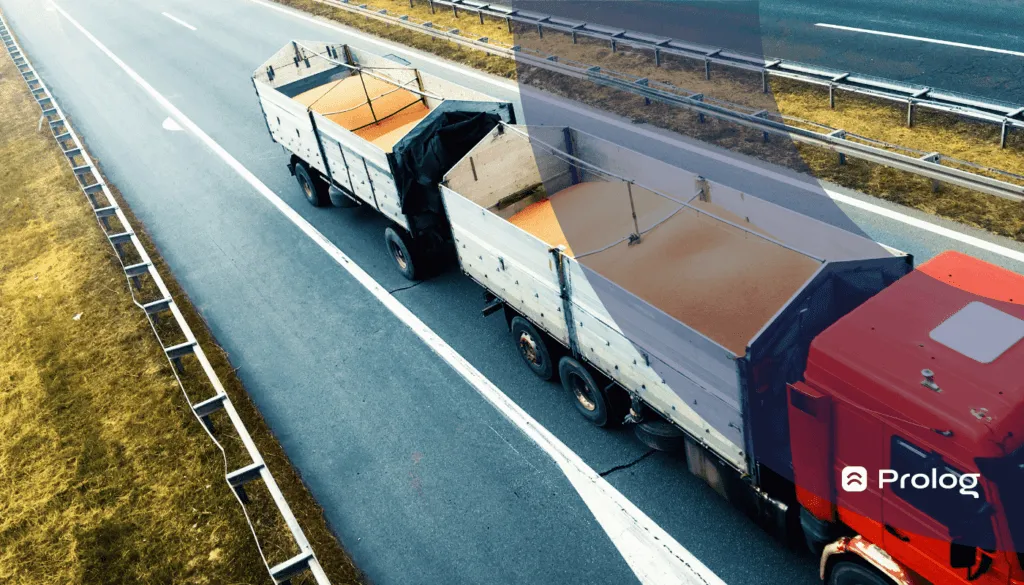
In Brazil, trucks are responsible for most goods transport. Because they are large machines traveling on poor roads, freight transport issues are frequent.
However, complications can extend beyond the vehicle and its components, affecting administration, finance and risk management.
What is more, road transport drives the national economy.
Carriers aim to meet all needs, from small to large entrepreneurs, carrying out the process that takes raw materials to the supplier and the finished product to the consumer’s home.
To carry out this mission successfully, it is important to know the main issues encountered in freight transport and how to avoid them.
What are the issues in freight transport?
1. Brazilian highways in poor condition
One of the main issues in freight transport is beyond the control of drivers and logistics companies: poor highway conditions.
Lack of public investment results in roads with potholes, paving defects, poor signage and lighting.
This type of disruption causes delays in goods delivery, since the chances of accidents and vehicle damage are greater.
The best way around this obstacle is strategic geographic planning, creating safer routes in better condition for the driver to continue the trip.
Highway privatization is already a reality in Brazil. In some places, resurfacing, filling potholes and making improvements are taking place.
Although toll costs rise to generate the amounts needed for improvements, lower costs from vehicle breakdowns and tire losses may offset them.
This brings us to the next freight transport issue:
2. High operating costs
Brazil has one of the highest tax burdens applied to logistics companies. In addition to reducing business growth opportunities, this considerably reduces Brazil’s economic development.
The option is to study and understand logistics legislation in depth, year after year. Try to find provisions that financially support your company according to its size, and make tax payments on time to avoid extra charges.
3. Fuel costs
One of the largest expenses in Brazil’s freight transport industry is fuel. In some cases, it accounts for up to 50% of all a carrier’s expenses.
The first step in trying to work around this situation and the constant fuel price increases is to control fuel consumption per kilometer, plan costs and plot shorter routes — ones that are still safe.
Another way to save fuel is to keep vehicle maintenance up to date, since faults in certain components increase consumption.
4. Exhausting working hours
In many cases, companies do not control their drivers’ working hours, exceeding the daily service time limit and exhausting company employees.
It is important to emphasize that, under Brazil’s Driver Law (Law No. 13.103), a freight driver is entitled to 11h of rest, including 8h of full rest, and 11h of daily work with a 30-minute break every 5h30.
The carrier is responsible for working hours management, and may use spreadsheets, logbooks or a digital management system to record and keep track of this information.
5. Lack of team training
Team training can prevent a range of issues in the transport company and during a delivery.
You should keep drivers up to date on legislation and the importance of safety and defensive driving.
You can also teach minor repairs or instruct them to recognize freight transport issues that commonly occur in trucks.
6. Poor quality and upkeep of fleet vehicles
Because of ineffective enforcement, some trucks with more than 20 years in service still travel on highways, putting the safety of their drivers and of other vehicles on the road at risk.
Another factor is the lack of vehicle management and maintenance. Every fleet needs frequent service inspections whenever vehicles arrive at and depart from the company on a new trip.
This is the best way to maintain vehicle quality. It avoids disruptions during a delivery and truck faults, and also helps save money.
Unless your vehicle has exceeded its time in service and is generating more expenses than it should, it is much better to repair it than to purchase a new model, right?
The same advice applies to tire maintenance.
Tires suffer the most along the route, since they bear the whole load in direct contact with the road. Wear is certain, but it does not need to occur irregularly or at an accelerated rate.
Always pay attention to tread depth control, avoiding “bald” tires, which cause instability while driving, hydroplaning and a risk of blowouts.
7. Cargo theft
Cargo theft by specialized gangs is a recurring reality in Brazil, especially in major state capitals. This causes major losses to carriers and their customers, risks drivers’ lives and harms business credibility.
The solution is good route planning and effective fleet control, with clear processes to identify route changes, unplanned stops and other situations that require a quick operational response.
8. Ineffective use of available logistics technologies
Automation in logistics processes is a reality and is increasingly innovating with systems that help with route control, maintenance routines and truck management.
In fact, ignoring technology’s benefits causes delays and losses for your fleet, since technology increases the chances of a fast, safe and effective delivery.
A fleet management app also:
- Improves productivity through faster, more intuitive processes;
- Produces reports that facilitate decision-making and planning;
- Helps reduce waste by organizing tire routines, preventive maintenance and electronic checklist routines.
These are just the three benefits that stand out most. Now imagine them speeding up your company’s operations. A good scenario, we would say. Do you agree?
So,
How can you tackle freight transport issues efficiently?
Here at Prolog, besides offering technology solutions for your fleet, we have a complete fleet management kit available to download. Click here and download it free (in Portuguese):
- A complete guide to more efficient fleet management
- An online tire and vehicle control spreadsheet (or in Excel)
- Free, printable daily checklist templates
Frequently asked questions
How much of a carrier’s costs go toward fuel?
What does the Driver Law stipulate about working hours?
How can you reduce losses caused by poor highway conditions?
Is it better to repair or replace a fleet truck?
What can you do to reduce the risk of cargo theft?
What training do drivers need?
// newsletter
Fleet management content, straight to your inbox
Articles on tires, maintenance and fleet operations. No spam.