
Work orders, integrations and tires: Prolog App in 2025
 Luiz Felipe 5 min read

The last 6 months of 2025 were marked by total dedication to developing improvements in Prolog’s product portfolio, which includes a platform developed for fleet management in road freight transport.
Prolog has an impact on more than 1,500 transport operations across Brazil and mobilized its product development team to listen to customers and market needs to generate even more value for those wanting to transform their fleet results.
The market is increasingly competitive, and seeking solutions that care about innovation and adaptation is fundamental, especially for those aiming for an operation with sustainable growth.
Vehicle maintenance needs reinforcement
Fleet management is a segment that requires considerable dedication when it comes to vehicle maintenance. This is an area that tends to leave a lot of money on the table if neglected. Maintenance control is usually carried out by generating work orders, where the problem found is documented.
Having a vehicle stopped for maintenance means it may affect and delay some deliveries. To make it easier to monitor maintenance progress, one of the improvements developed was a new look for the feature, allowing customers to plan fleet maintenance and monitor each vehicle’s maintenance status in real time as service records are updated.
This monitoring will help with route planning, reducing the risk of delays and providing a better relationship with customers awaiting cargo.
A holistic business view
As in all management, reliable information is crucial for decision-making, and fleet management is no different. A lot of data are collected daily, and ensuring they work together correctly is not optional, especially considering the various digital solutions for different functions used in operations.
Seeking greater confidence in collected data, Prolog made an integration center available, already featuring various suppliers available to integrate systems. Besides optimizing time and making integration easier, Prolog App users will have much more reliable collected data.
In a world where an extra zero in the record of km driven changes everything, this is every fleet manager’s dream, and seeing that it is achievable provides the fuel to rely on tools that care about a decisive management point: ensuring synergy between solutions and confidence in the data.
Navigation is essential
And when it comes to data, the subject is extensive, since hundreds of pieces of information are collected in a transport operation’s day-to-day work.
Imagine a fleet with more than 70 vehicles. If every day you perform two checks per vehicle, record data and generate essential information for managing them, it would be important to analyze this information visually, simply and in depth, right?
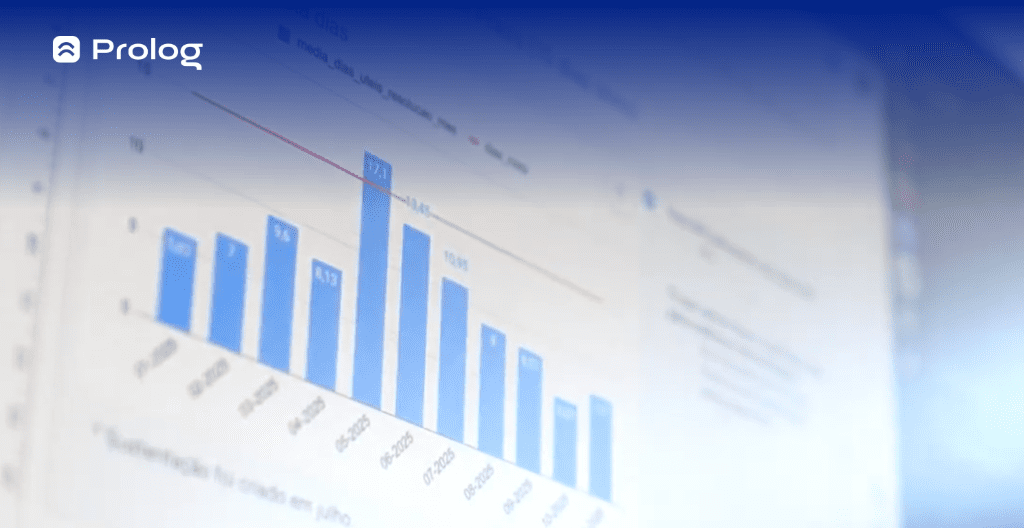
And that is exactly what you will find in Prolog App. It is now possible to navigate Dashboard data. Clicking some charts opens a table with a “breakdown” of the information. This allows the customer to delve deeper into data analysis, navigating from high-level information to the root of problems.
This means time optimization, efficient operational management and operational maturity. And all of this directly affects business finances.
Tires in focus
Like the dashboards, tire indicators have changed for the better. This asset represents an investment in the millions in transport operations. Therefore, every precaution matters.
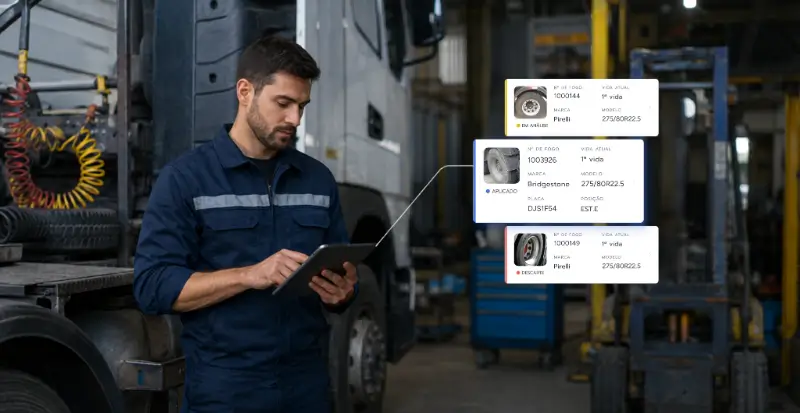
Prolog has one of the best tire management software solutions on the market, but that does not mean it should stand still and stop updating. Quite the opposite. The tire data screen was enhanced with more detailed information and performance indicators.
The indicators allow customers to understand and compare the tire’s performance with others. On this same screen, they can audit the tire’s entire history, easily identifying who performed tire relocations and inspections and when.
For an operation seeking efficiency, this new development is a key point.
From inventory to inventory
Many transport companies have branches across states, leading to the practice of transferring items between branch inventories. This action is common with tire inventory, and it is now possible to perform this transfer within Prolog App without leaving the relocation screen.
Tire relocation is when the person responsible rotates the asset on vehicles, as well as moving the tire from inventory to vehicle or vice versa. Performing relocation from one inventory to another on this same screen saves considerable time.
This system is designed for each customer’s context, especially operations sharing tire inventory, bringing agility to relocations and consistency to inventory control of this asset.
In summary, standing still is not an option for those seeking increasingly better results. And Luiz Felipe, Prolog’s CTO, confirms this by saying, “Everything we introduced in Q4 reinforces Prolog’s direction: always evolving, guided by what the market really needs. The ‘redesigned WO’ brings greater predictability and real-time maintenance monitoring through service records; the integrations center opens up the ecosystem; and the Dashboard now lets customers go from the big picture to the detail in a few clicks. For the future, the ambition is to continue along these lines: more connections between systems, more intelligence in analysis and more confidence in data — to help customers make better decisions and operate more efficiently.”
Next actions for 2026
The company promises to remain committed to developing many other improvements. Prolog carries dissatisfaction with inefficiency in its DNA, and this is reflected in the product.
The team is dedicated to bringing many new developments to market, even generating AI analyses — but that is just a preview with no set date for now.
“Prolog was never built to be a “finished” product. It will never be complete. It is created and evolves daily from a real commitment to continuous improvement, guided by data, field use and constant feedback from those who live the operation day to day.
Every product evolution decision starts from real market needs, not internal guesswork. What enters the roadmap is what solves concrete problems, improves efficiency and generates measurable impact for customers.
Looking ahead to the coming years, Prolog’s vision is clear: deepen the platform’s intelligence even further, connect operational data to strategic decisions and help companies become more efficient, predictable and competitive. Prolog is a living construction, evolving alongside the market and our customers’ challenges.”, says Gustavo Pires, Software Engineering Manager.
Frequently asked questions
What changed in Prolog software at the end of 2025?
What is Prolog’s integration center for?
How does navigation in the Prolog App Dashboard work?
What do the new tire indicators show?
Can tires be transferred between branch inventories?
Will Prolog launch artificial intelligence analyses?
// newsletter
Fleet management content, straight to your inbox
Articles on tires, maintenance and fleet operations. No spam.
Read also

Prolog at SXSW 2026: founders visited Austin
Jean Zart and Luiz Felipe attended SXSW 2026 in Austin to find AI and technology signals applicable to fleet management in Brazil.
Prolog at SXSW 2026
Where the technology that will change your fleet management comes from.
 Jade Zart
 Prolog
 Prolog
