
Refrigerated fleet transport: costs
 Prolog 5 min read
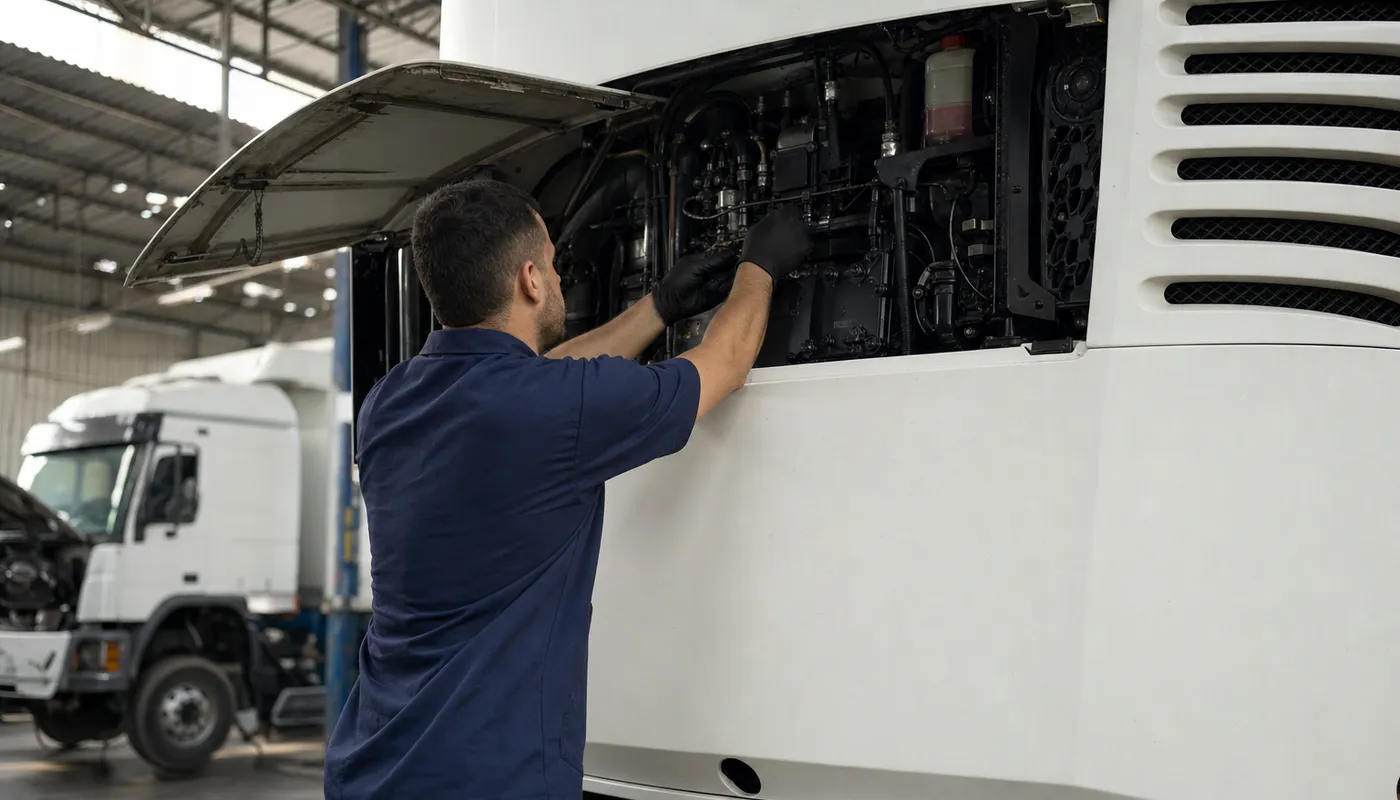
Refrigerated fleet transport changes the way maintenance is viewed. The vehicle carries more than weight and volume: it also depends on refrigeration equipment that needs to be available, consume energy efficiently and protect sensitive cargo during operation.
For fleet managers, this creates a separate cost calculation within the broader maintenance budget. Costs do not arise only when there is a serious failure. They also appear in consumption, more frequent interventions, downtime and operational risk when refrigeration does not fulfill its role.
Refrigerated fleet transport starts with availability
In a conventional fleet, an unexpected stoppage already affects scheduling, the workshop and delivery. In refrigerated transport, refrigeration system unavailability adds another layer of risk because the cargo may depend on thermal conditions to maintain quality and safety.
That is why refrigeration needs to be included in the maintenance plan as a critical asset rather than an accessory. Proactive inspection and regular maintenance of critical assets can help prevent unexpected failures and unplanned downtime. In practice, this means treating signs of wear, difficulty operating and service needs as part of the management routine, before they become interruptions.
This approach also helps organize priorities. Equipment serving a route with sensitive cargo cannot compete for attention only when it breaks down. It needs criteria for checks, a history of reported issues and a clear routine so the workshop knows what to check, when to check it and what must not be ignored.
Consumption and efficiency contribute to refrigeration costs
Onboard refrigeration contributes directly to operating costs. Manufacturers present solutions focused on transport refrigeration unit efficiency as a way to reduce fuel consumption, CO2 emissions, particulate emissions, noise and operating costs. The point for fleet management is simple: efficiency is more than an environmental discussion; it also shows up in operating expenses.
When the system operates with lower consumption and requires fewer interventions, total cost of ownership tends to decrease. This relationship between consumption, maintenance and the fleet's total cost matters because it prevents an analysis limited to purchase price or an isolated repair. Equipment that is inexpensive to maintain on one work order can prove costly if it increases stoppages, consumption or the need for further interventions.
Good management separates unavoidable costs from costs caused by a lack of control. Planned maintenance, reliable records and recurrence analysis help reveal whether refrigeration is taking up too much of the workshop's attention. Without this insight, the fleet may accept as normal a series of small operational losses that, together, undermine availability.
Equipment maintenance reduces the impact of downtime
Maintenance in refrigerated transport is more than replacing a part when the equipment fails. Easy service access can simplify maintenance and reduce downtime, as described by a refrigeration unit manufacturer. For the fleet, this reinforces an operational criterion: the harder it is to work on the equipment, the greater the impact of each stoppage tends to be.
This point should be considered both when assessing the asset and in the workshop routine. If the team takes too long to diagnose, access components or release the vehicle, refrigeration starts to compete with the availability of the entire fleet. The issue goes beyond being purely technical and becomes an operational bottleneck.
It is also worth organizing records to distinguish isolated failures from patterns. A single reported issue can be resolved through a correction. Recurrences involving the same type of component, the same vehicle or the same route, however, call for a review of the maintenance plan. This precaution prevents the fleet from treating repeated symptoms as unrelated events.
Sensitive cargo also contributes to fleet costs
Refrigeration costs do not end with the equipment. The FDA cites failure to refrigerate food properly among issues related to sanitary transportation, alongside inadequate cleaning of vehicles between loads and insufficient food protection. Even without treating this point as a local rule, the operational message is clear: inadequate refrigeration can put transported food at risk.
For operations carrying food and other sensitive cargo, maintenance should consider the effect of a failure on the cargo. A vehicle stopped by a mechanical issue already causes delays. A vehicle with compromised refrigeration adds risk to the transported product when the cargo depends on thermal conditions. This impact is part of the fleet's real cost, even if it does not always appear under the same maintenance budget line.
That is why maintenance decisions need to look beyond the part. Managers should ask whether the equipment is available for the planned operation, whether the workshop can act in time and whether the records provide a basis for prioritizing what really threatens the cargo.
How to control refrigeration without complicating the routine
The first step is to treat refrigeration as a mandatory item in fleet maintenance controls. This includes recording incidents, scheduling checks, keeping track of recurrences and separating failures that prevent operation from those that allow a planned intervention.

The second step is to bring operations and the workshop closer together. Operations notices symptoms during daily use; the workshop turns these signs into diagnosis and action. When these two sides do not communicate, the fleet risks losing important information between trips.
The third step is to keep track of simple indicators: vehicles stopped because of refrigeration, the most frequent failure types, release times after maintenance and recurrence by equipment. These data do not need to be perfect from the start. They need to be consistent enough to support decisions and prevent costs from remaining invisible.
Ultimately, refrigerated transport requires maintenance discipline because refrigeration equipment influences consumption, availability, total cost and the risk to sensitive cargo. The sooner the fleet includes these points in routine controls, the lower the chance of discovering an issue only after the operation has already been affected.
Frequently asked questions
How does refrigerated fleet transport affect costs?
Why is preventive maintenance important for fleet refrigeration?
Does energy efficiency change refrigerated transport costs?
Can a refrigeration failure affect the cargo?
What should you keep track of when maintaining a refrigerated fleet?
// newsletter
Fleet management content, straight to your inbox
Articles on tires, maintenance and fleet operations. No spam.
Read also
 Fleet maintenance management

Automatic truck: signs of transmission failure
See the signs of automatic transmission failure in trucks, fluid care tips and when to take the truck to the shop for a specialized diagnosis.
Image: Ford Caminhões
 Jean Zart
 Fleet maintenance management