Freight transport vehicles: how to choose
 Jonatan Fernandes 6 min read
Road freight transport is responsible for a large part of the movement of goods in Brazil, and choosing the right vehicle, along with maintenance care, is fundamental for the operation.
Choosing the right vehicle or truck for each type of cargo makes all the difference. The decision impacts not only operating costs but also on-time performance and fleet safety. In addition, keeping vehicles in good condition is indispensable to avoid mechanical failures and ensure the durability of the assets.
Check it out now:
- What are the types of road transport vehicles?
- How to choose the right vehicle for each type of cargo
- How to take care of road freight transport vehicles
What are the types of road transport vehicles?
Road freight transport vehicles vary according to load capacity, axle configuration, the type of goods carried and operational requirements. Knowing these differences helps define the best option for each operation without treating a single capacity as a universal rule.
Light vehicles
These are used mainly for urban deliveries and short routes, ensuring mobility and agility in distribution when the volume and weight of the cargo are compatible with the size of the vehicle.
The van, for example, is suited to transporting small loads in cities, protecting products against external damage and making less-than-truckload deliveries easier in areas with heavier traffic.
Likewise, the Veículo Urbano de Carga (VUC, Brazil's urban cargo vehicle), also known as a smaller truck, is widely used for distributing goods in retail. In areas with urban restrictions, circulation depends on local rules, so the vehicle's size needs to be checked against the city's regulations before it goes on the route.
Medium and toco trucks
These vehicles are suited to regional operations and to transporting loads larger than those handled by vans and VUCs. The ¾ truck, as this class is known in Brazil, usually appears on goods distribution routes for medium-sized companies, but its capacity should be checked according to the configuration and the limits that apply to the vehicle.
Another option is the toco truck, as it is called in Brazil, suitable for transporting less-than-truckload goods when the operation calls for more capacity than a light urban vehicle but does not yet require a heavy or articulated combination. Before defining this model, it is worth checking weight, volume, route and the limits that apply to the vehicle.
Heavy trucks and semi-trailers
These vehicles are mainly used for long distances and large-volume loads. One of the main models is the Truck, as this class is called in Brazil, which has a dual rear axle and serves operations that need more capacity, stability and robustness than smaller trucks.
The two- or three-axle semi-trailer is already common in the interstate transport of bulky cargo. In this choice, capacity should not be read as a fixed number: it depends on the combination, the axles, the payload, the permitted PBT (gross vehicle weight) or PBTC (gross combination weight) and the applicable regulatory conditions.
Articulated vehicles
Even more than heavy trucks and semi-trailers, these types of vehicles are designed to carry large amounts of cargo at a lower cost per ton carried, as long as the combination is within the limits permitted for circulation.
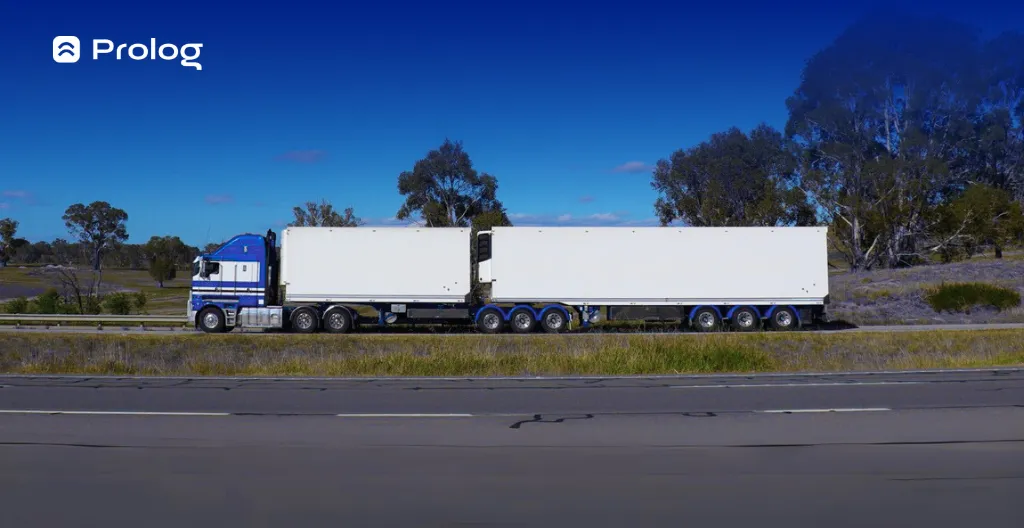
The bitrem, as this combination is called in Brazil, is made up of two articulated semi-trailers, while the rodotrem, also a Brazilian name, uses a larger combination. Instead of treating these combinations only by a fixed tonnage, the decision should consider the PBTC, the axle configuration and the need for a special traffic permit when one is required.
Specialized vehicles
These are trucks designed for specific types of cargo, such as the car carrier, used to transport vehicles, and the refrigerated truck, with temperature control for perishable cargo, such as food and medicines.
Other models of specialized vehicles are the tank truck, used when the cargo requires this type of implement, and the dump truck, for transporting sand, crushed stone and other bulk materials. For cargo with specific regulatory requirements, the vehicle, the implement and the documentation need to be defined according to the operation, without assuming that every hazardous product uses the same vehicle type.
How do you choose the right vehicle for each type of cargo?
You can't just pick any truck and hope for the best. Vehicle management in freight transport requires planning and strategy to find the best option for each operation. You should consider three main factors:
- Type of cargo carried
Each type of goods has different requirements that impact the choice of vehicle, implement and precautions before the trip.
For example, less-than-truckload cargo can be carried in smaller trucks, such as the toco or the truck, depending on weight, volume and route. Bulky or heavy cargo, on the other hand, may require semi-trailers or articulated vehicles, optimizing the cost per ton when the combination respects the traffic limits.
And cargo with a specific transport rule needs to be assessed case by case, considering the vehicle, implement, documentation and requirements applicable to the type of goods. For any vehicle or combination, no set should travel beyond the permitted PBT or PBTC.
- Distance and type of route
For short, urban distances, smaller vehicles such as VUCs and vans ensure greater agility and mobility, as long as they are allowed at the delivery location and time. On the other hand, for long distances, semi-trailers and bitrems tend to be more efficient, reducing the number of trips needed when the volume carried justifies the combination.
On unpaved roads, robust vehicles such as dump trucks are essential to reduce the risk of mechanical damage and preserve fleet availability.
- Regulations and restrictions
Some cities impose traffic restrictions on heavy vehicles at certain times and in certain areas. Before defining the ideal truck, it is important to check local traffic rules, the requirements for transporting specific cargo and the PBT or PBTC limits that apply to the chosen configuration.
How do you take care of road freight transport vehicles?
The management of road freight transport vehicles should include periodic servicing, avoiding mechanical failures and reducing emergency repair costs.
Ideally, follow a maintenance schedule based on the mileage driven and the vehicle's time in use, as well as recording inspections to keep track of the history, the people responsible and the pending issues found before each trip.
It is also necessary to keep track of calibration and tread depth wear, ensuring longer useful life and savings for the fleet.
Diesel consumption is one of the main costs of the operation. In many fleets, tracking, telematics and refueling control technologies help identify waste and optimize decisions, as long as they are used as part of a management routine and not as a substitute for preventive maintenance.
Speaking of technologies, adopting digital checklists makes daily truck inspection easier, so that no essential item is forgotten before each trip. With records of the date, time, person responsible and location of the inspection, the team gains more control over what was checked by a person and what needs to be sent to the workshop.
Choosing the right vehicles and taking good care of them is not a detail — it is what ensures the operation's success and avoids issues along the way. But freight transport fleet management involves much more than that, requiring strategic control, an inspection routine and the use of the right tools.
Want to improve your fleet management even further? Download Prolog's free fleet management guide now (in Portuguese) and get access to strategies to optimize your operation!
Frequently asked questions
Which truck should you choose for each type of cargo?
What is the difference between a bitrem and a rodotrem?
How do you take care of vehicles so they don't break down on the road?
What should you check in the legislation before defining the vehicle?
Which vehicle should you use for urban deliveries and which for long distances?
// newsletter
Fleet management content, straight to your inbox
Articles on tires, maintenance and fleet operations. No spam.