
Tire dimensions: how to read 225/60R15 on the sidewall
 Jade Zart 5 min read

Tire dimensions help you understand a tire's characteristics, application and main operating limits, and are essential for managing its useful life and average durability in transport operations.
Besides knowing these dimensions, you need to know how to read tire sizes and use them to support fleet tire management. Read on to learn:
What are tire dimensions?
Tire dimensions are the tire's width, height and the diameter of the rim specified for mounting. On the sidewall, this information appears as part of a standardized code that also helps identify important limits, such as load index and speed rating.
Tire dimensions are used to:
Identify the right tire size and model for each vehicle
As discussed, this is the primary purpose of tire dimensions. Each vehicle's owner's manual provides the appropriate dimensions for the tire to be installed, and sometimes the correct size to use is also marked on its structure.
So check the information on your vehicle first, then confirm it on the tire to ensure the model and size are suitable. When replacing it, the tire must meet the specified requirements, without using a smaller size or a lower load capacity than the original.
Prevent the wrong tire from being used, compromising the vehicle's structure and route safety
Any tire with a size different from the recommended one can create serious safety risks on a route. This is because wear or friction as the tire rolls can damage the structure and lead to premature loss of the vehicle.
There is also a chance that the suspension structure and shock absorption system will be unable to withstand road impacts. The right choice also needs to consider load and speed, because the tire must support the vehicle's weight and operate safely at its intended operating speeds.
Ensure the best performance from vehicles and tires on the road
Using the appropriate tire dimensions promotes vehicle stability, which is essential for a safe trip.
If you combine this care with other tire management and maintenance activities, giving the vehicle ideal running conditions, performance tends to be better and more predictable.
Save on tire purchases and disposal
Using the correct tire size is essential to prevent irreparable damage and loss before its useful life has been fully used.
Choosing the right tires is therefore an important way to generate greater fleet savings, especially when the decision considers load index and speed rating alongside dimensions.
How do you read tire sizes?
Tire dimensions usually appear in a code following the “000/00R00” pattern, where the first information refers to tire width, followed by sidewall height relative to width and, finally, rim diameter, measured in inches.
This means that a tire coded 225/60R15 is 225 millimeters wide, has a sidewall height corresponding to 60% of that width and must be mounted on a 15-inch rim. So 15 is not the tire's outer diameter, but the diameter of the compatible rim.
Where can you find tire dimension information?
On the tire's sidewall
All tires have this information on their sidewall, regardless of make and model.
It is, in fact, an international standard. If you choose or need to buy imported tires, the code will be in the same place and have the same basic structure to read.
In the owner's manual
Likewise, all vehicle manuals provide the most suitable dimensions for a tire to be installed on the vehicle.
Some vehicles may also display these dimensions on the driver's door or inside the fuel tank cap.
Other tire information
The tire's sidewall also provides other information, such as its DOT code. DOT stands for “Department of Transportation”, the United States Department of Transportation, and the code helps identify tire manufacturing data.
Instead of treating DOT as a single number always consisting of 13 digits, the safest approach is to read each marking according to the arrangement on the tire itself and the manufacturer's guidelines. One important point is that the last four numbers indicate the week and year the tire was manufactured.
Outside this block, there is also information about tire dimensions, its maximum load index, the maximum speed at which it can run and its construction type.
Speed limit
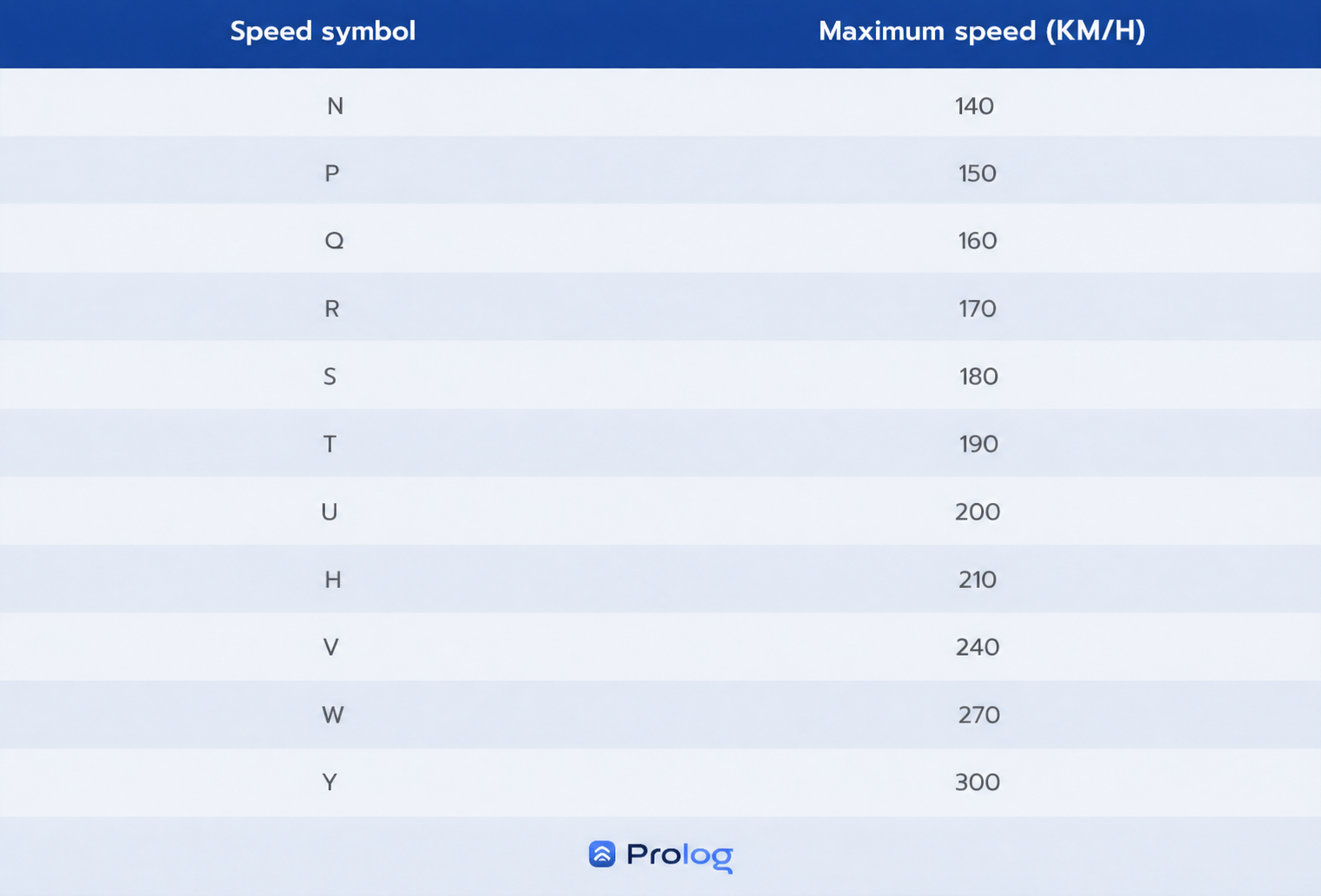
The tire's maximum speed rating is represented by a letter. It indicates the maximum speed for which the tire was rated, according to the applicable correspondence table.
It is the last item in the information on the tire's sidewall.
If the code is 225/60 R 15 85 H, “H” indicates its maximum speed. According to the correspondence table, that is 210 km/h. See the table:
Load limit
The tire load index is represented by a number, the second-to-last item on the tire's sidewall. It indicates the tire's maximum load capacity according to the corresponding table.
If the code is 225/60 R 15 85 H, “85” indicates its maximum load and, according to the table, 515 kg.
To interpret the number marked on the tire, consult the full correspondence table in kg:

Tire construction type
It is represented by the letter between the height and the rim diameter. There are two common possibilities: a radial tire (R) or a diagonal/conventional tire (D).
In other words, if the code is 225/60 R 15 85 H, the tire has radial construction.
Treadwear rating
Another piece of information on the tire's sidewall, but one that usually receives less attention than the others, is the treadwear rating. It indicates tire wear over time.
Since the reference value is 100, numbers below it represent faster wear, and numbers above it represent better tire wear performance.
Tire TWI
The tire TWI is information found not on the tire's sidewall, but inside each groove. Like the treadwear rating, it indicates tire wear, but in a more practical and direct way.
To sum up, it lets the driver or fleet manager see whether the tire is excessively worn or can stay in use for longer.
Learn even more about tires, their construction and structure in a complete resource about their history. Download it free here (in Portuguese).
Frequently asked questions
What do tire numbers such as 225/60R15 mean?
What are tire dimensions used for?
Where can I find tire dimensions?
What else is written on a tire's sidewall?
What is the difference between the treadwear rating and TWI?
// newsletter
Fleet management content, straight to your inbox
Articles on tires, maintenance and fleet operations. No spam.


