Prolog App: how tire management works
 Luiz Felipe 4 min read
What exactly does Prolog do? To answer this question, we will explain the steps of Prolog's tire management program right now.
Many activities are involved in a comprehensive tire management strategy. It can be understood as the entire process involving tires, encompassing purchasing, registration, inspection, maintenance, relocations and disposal.
Prolog App focuses primarily on inspection and the processes related to it. Our objective is to enable reductions in time, effort and costs through a methodology that combines processes, app and equipment to generate accurate information.
Our entire management program is also designed to help users, with intuitive screens, deadline control and inspection schedules, fleet tire and vehicle registration, and easy use in the routine of those carrying out the checks.
How is the Prolog methodology divided?
To organize and optimize tire control, the system's tire management module is divided into a series of features. See in detail what happens at each stage:
Inspection schedule
The key points of this stage are visibility and the ability to define inspection due dates. The app lists the branch office's license plates, separated by vehicle model and ordered according to the time of the last inspection.
Visual due date references indicate how long it has been since each vehicle was inspected. Each license plate can have different deadlines for pressure and tread depth inspections, according to the rule configured by the fleet.
The schedule also helps prioritize the routine: vehicles that have gone longest without inspection can appear at the top of the list, making it easier to keep track of the branch office's pending measurements.
Inspection
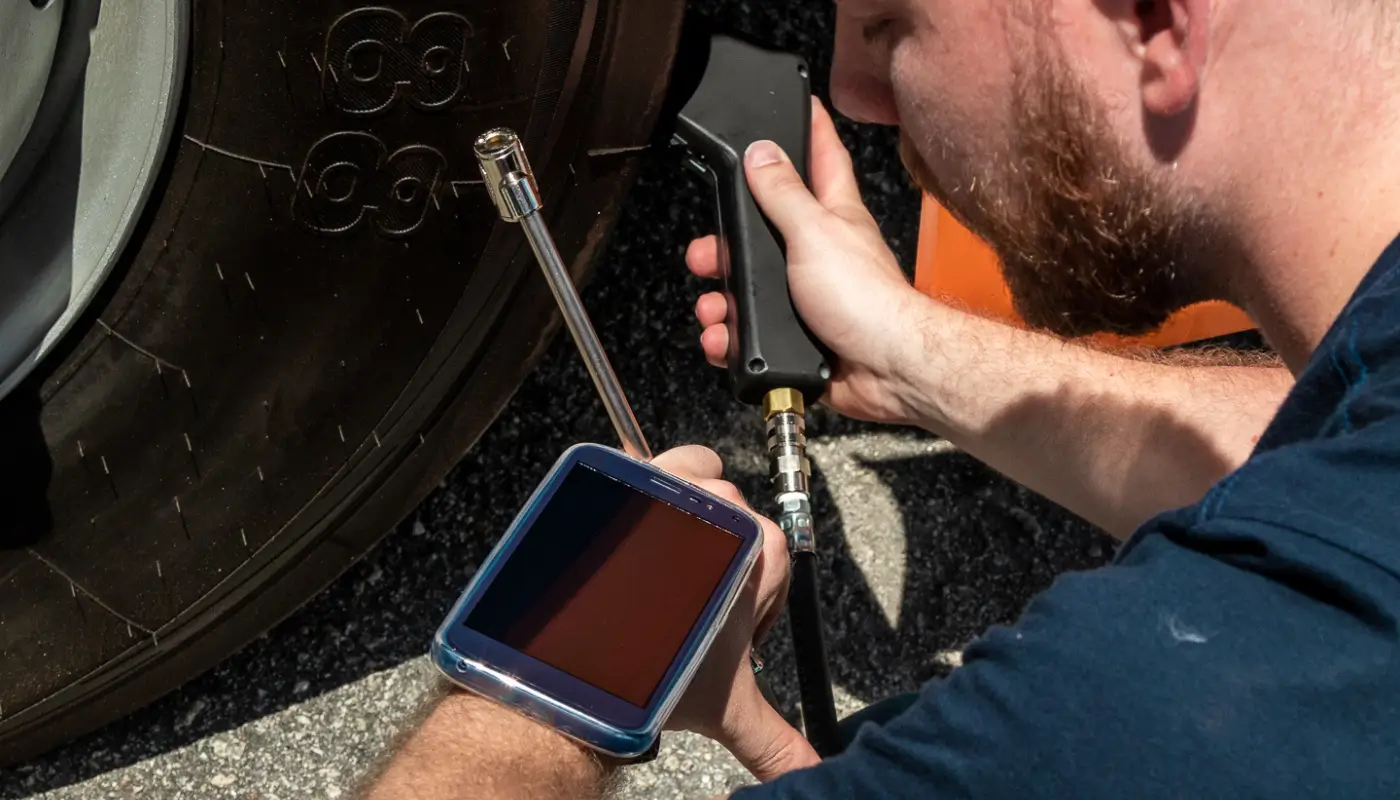
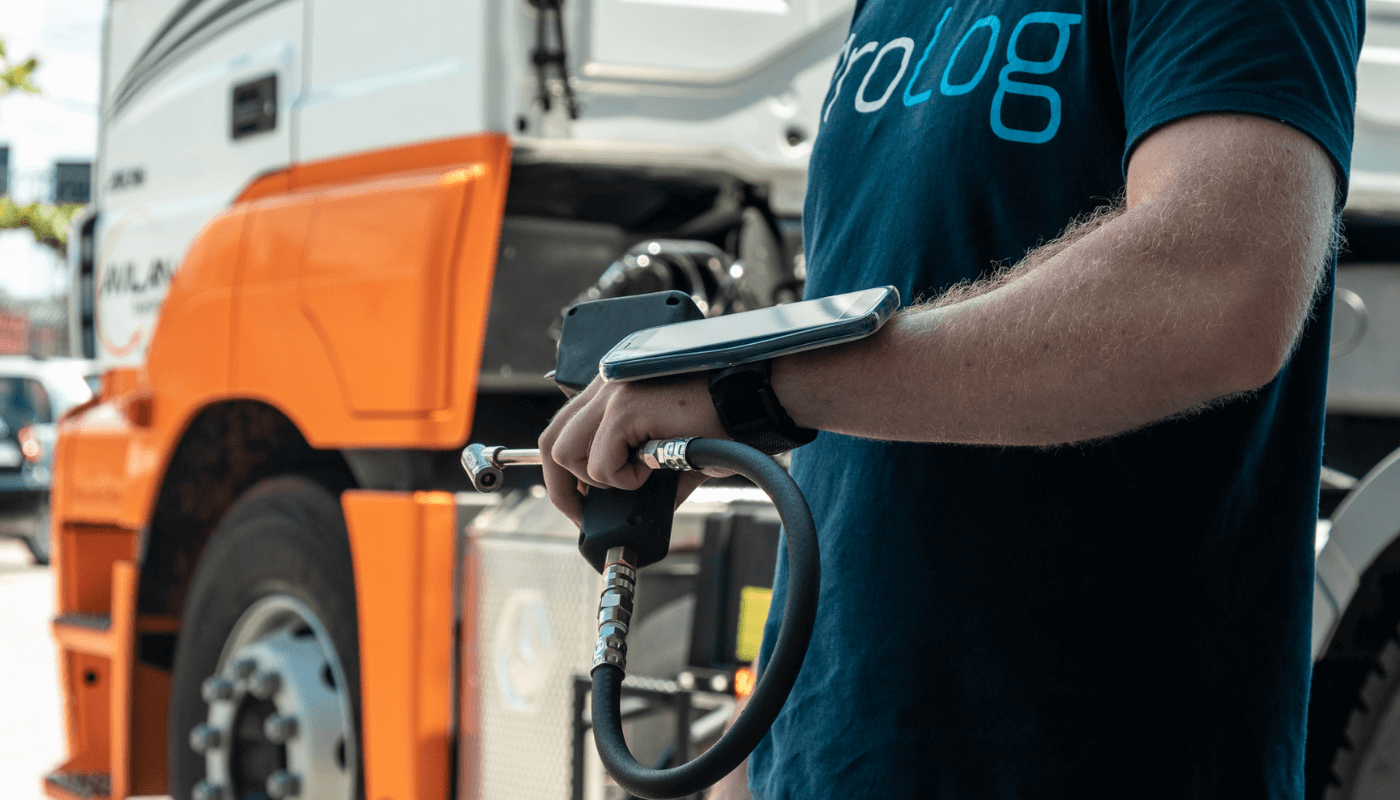
At this stage, the user checks calibration pressure and tread depth. This check is carried out using Prolog's electronic tread probe, as part of the inspection process performed by the team.
As tires are inspected, the smartphone screen displays tire information such as identification, position and the pressure and depth readings checked by the tread probe.
At the end of each inspection, the mileage, pressure and depth of each tire on the vehicle are collected. With the inspection, data is updated in the Prolog system and starts feeding analyses, reports and dashboards.
Data analysis
Data analysis is highly important because it can provide a basis for decisions and actions by the person responsible for tire management.
After collection, both pressure and tread depth of each tire are assessed. This checks compliance with company-defined standards. The Work Orders needed for each situation are then opened.
- Calibration: when there is pressure loss or excess;
- Inspection: when excessive pressure variation is found;
- Relocation: in cases of differences between tread depths on the same tire or wear beyond the stipulated standard.
The system also supports automatic work order generation for tires outside the configured parameters. Analysis thus goes beyond diagnosis: it directs the maintenance needed to address each issue.
Service completion (WOs)
Where a calibration WO was opened, new measurements with the inspection equipment are requested at this stage. This ensures the tire is at the recommended pressure.
For inspection services opened during the analysis stage, the issue found with the tire must be entered at this stage.
Relocation
The relocation stage differs slightly from the others, as it will not necessarily be linked to tire inspection.
It can appear in the inspection process in certain cases, when a relocation service is opened (data analysis stage) and needs to be closed (service completion stage).
However, it can also happen independently at other times in the tire management routine. Every relocation can be carried out directly in the app, with the following possible origins and destinations:
- Inventory: the management system has access to the customer's tires in inventory and can relocate them to analysis, a vehicle, retreading-related services or disposal.
- Analysis: once moved to this status, a tire can only return to inventory after information on retreading (if any) and the tire's new tread measurements is entered.
- Vehicle: tires fitted to a vehicle can be moved to other destinations, such as inventory, analysis and disposal, as well as have their position changed on the vehicle itself.
- Disposal: in the case of retreading rejection, a photo of the retreader's report must be included for relocation to this condition to be possible.
Although it does not directly cover stages such as purchasing and retreading, Prolog focuses on generating information. This is made possible through data stored in the history of measurements and inspections carried out by the fleet's own team.
This data makes it possible to assess tire performance and can guide managers toward the best supplier, better driving practices related to safety and savings, tire purchasing forecasts, maintenance volume, durability and cost per kilometer.
All this can be analyzed through the reports and dashboards available to users of the Prolog App tire management program. They help keep track of position, tread depth, pressure, CPK, average wear per kilometer, replacement forecasts, uneven wear, inspections and tire performance indicators.
Want to learn more about our product and start using it in your fleet? Contact a specialist today.
Frequently asked questions
What does the Prolog app do for tire management?
What are the stages of the Prolog methodology?
How does the inspection schedule work?
When does the system open a tire work order?
How are tires relocated in the app?
Does the program control tire purchasing and retreading?
// newsletter
Fleet management content, straight to your inbox
Articles on tires, maintenance and fleet operations. No spam.