Prolog Tire Management: your questions answered
 Luiz Felipe 4 min read

To implement an effective and economical tire management solution, you need a better understanding of how Prolog works and the benefits of using it.
Did you know it is possible to completely eliminate premature tire losses in your transport company?
As difficult as it may seem, this result has already been achieved in a real operation. Conlog, which has used the Prolog solution since 2018, eliminated premature tire disposal and also recorded productivity gains in inspections.
You are probably wondering: how? What magic does Prolog use to achieve these results?
What does Prolog's Tire Management solution do?
There is no magic involved.
With technology advancing in so many sectors, there was no reason for logistics to fall behind. In fact, this market has many technological alternatives to make fleet management easier, more organized and faster.
With that in mind, the Prolog team focused on a more specific fleet control problem: tire management.
Premature tire loss is a fairly common problem in transport companies, whether from lack of care or inadequate care. First of all, what are the key points in fleet tire management?
- Carry out tire inspection;
- inflate tires to the ideal pressure;
- collect data and open work orders when necessary.
These are some of the main points, and this is where Prolog's work comes in: turning the team's inspection into organized data for maintenance, control and decision-making.
What is our solution?
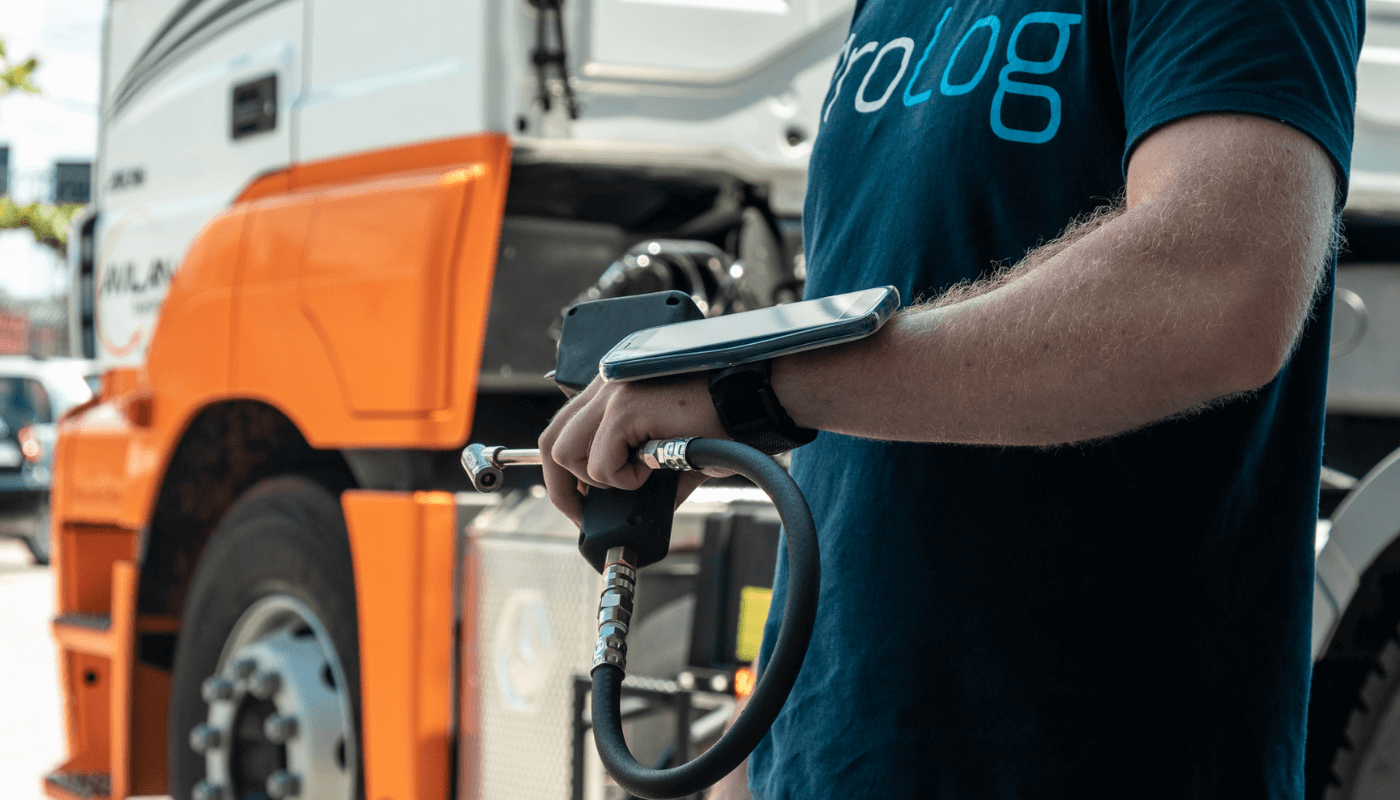
Our product consists of two parts: the software and the digital inspection kit. They complement each other. When you use the inspection kit, inspection data enters the system directly, with faster and more accurate collection.
There is therefore no longer any need to write everything on paper and a clipboard and only enter the information into fleet management software after completing the inspection of all tires.
Moreover, in our system you will find features such as an inspection schedule, data analysis, dashboards updated with every inspection and work order control.
What benefits does Prolog offer?
As mentioned just now, inspection time is significantly reduced with our kit — and we can prove it (video in Portuguese)! Prolog's electronic tread probe helps make inspections faster and more accurate, with data updated in the system after measurement.
In addition, you will have more reliable data for analysis and better fleet decisions. This data comes from tire inspections carried out by the team itself, and the system uses this information to generate reports, analyses and views for keeping track of the results.
As for the tires themselves, you will see greater durability, because they will suffer less wear during trips and transport operations. Consequently, costs will fall.
How does Prolog's tire management solution work?
We have discussed this before, so today's answer will be shorter:
Our methodology is divided into: inspection scheduling, tire inspection, data analysis and service completion.
The schedule provides a list of the branch office's license plates, organized by model and sorted according to the last inspection. It is also possible to prioritize vehicles that have gone longest without an inspection, moving them to the top of the work list.
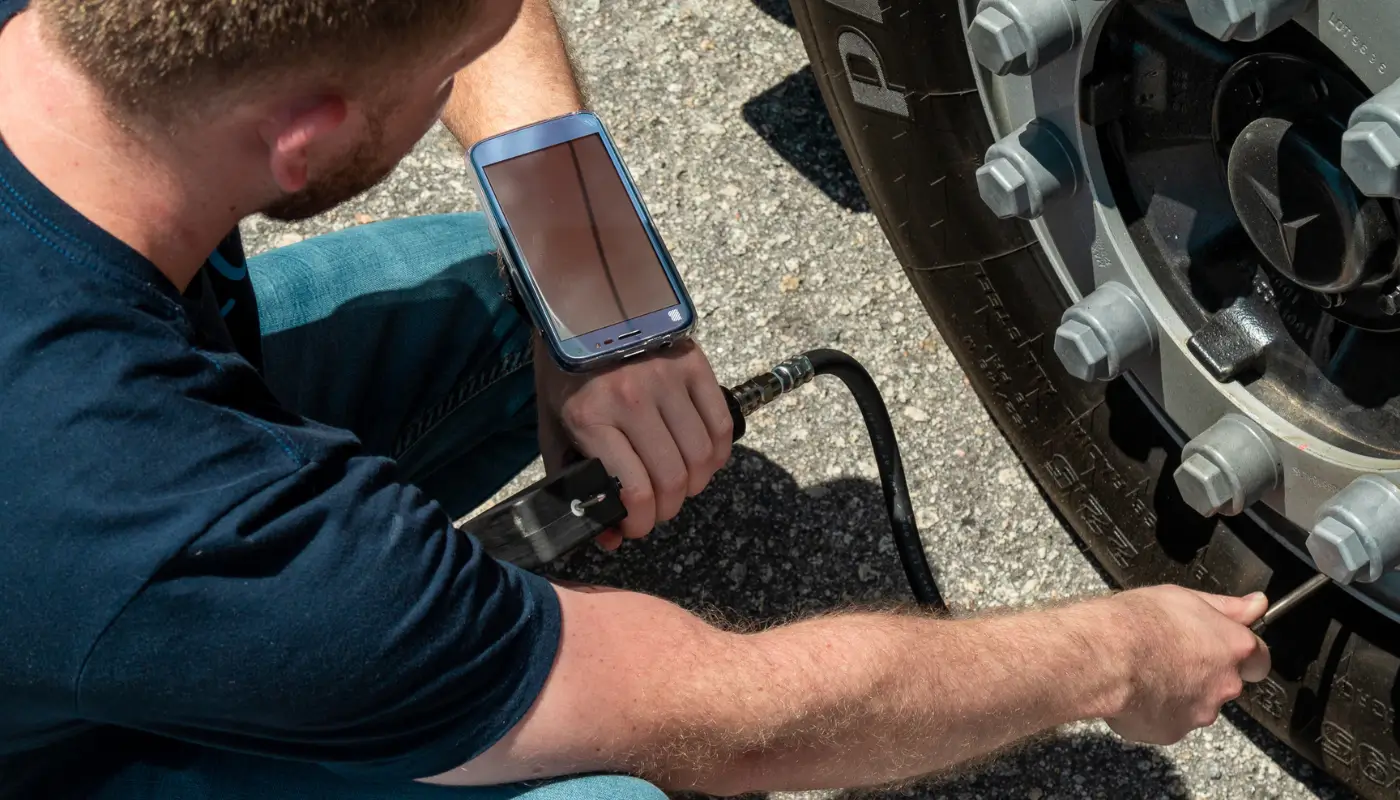
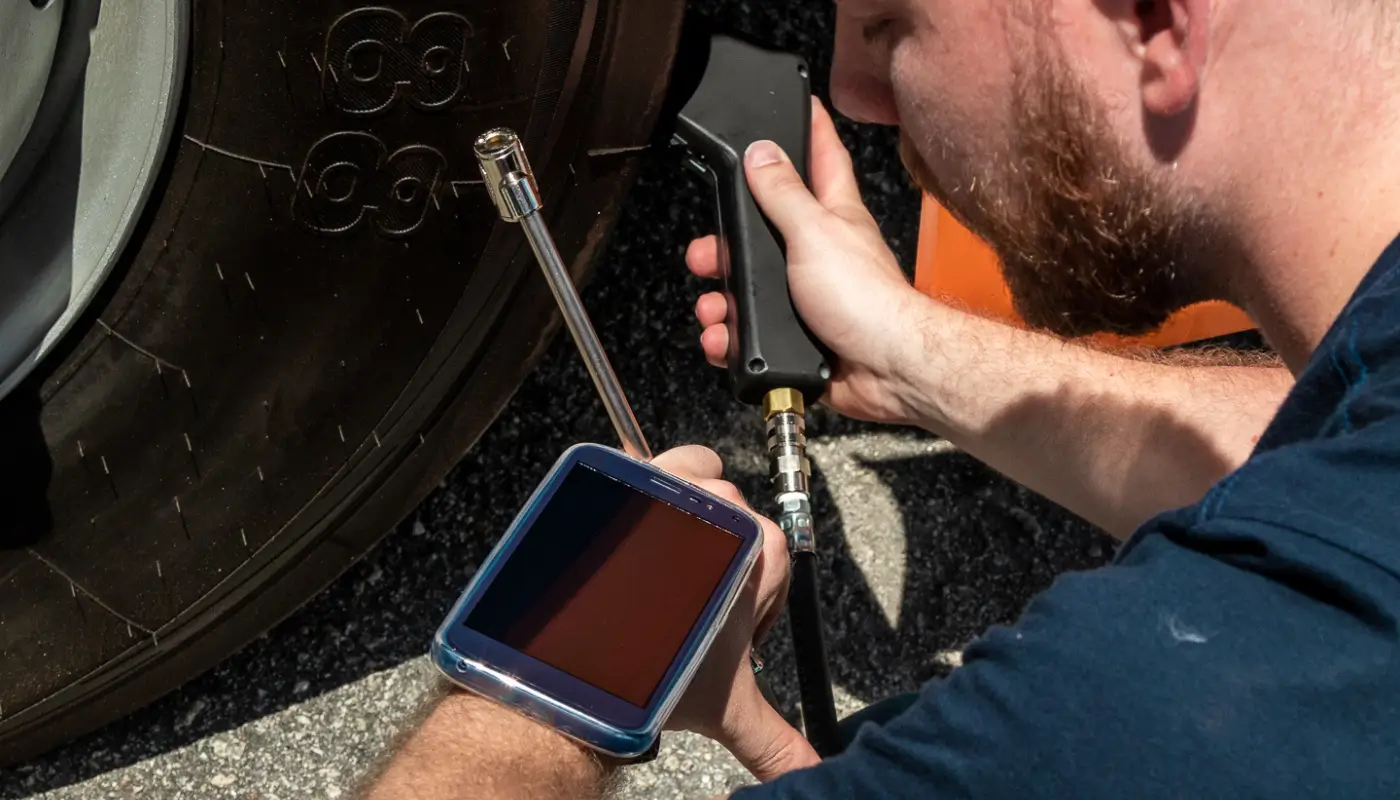
At the inspection stage, the person responsible measures pressure and tread depth. The data is sent directly to the smartphone connected to the digital tread probe and becomes available in the system, without relying on paper for someone to retype everything later.
Next comes data analysis, which will indicate whether any service needs to be carried out. This is when the work order will be started, indicating the need to inflate the tires, carry out a more detailed inspection or perform a relocation. For tires outside the configured standard, the system itself can open maintenance work orders.
Finally, the service is completed: the open WO is closed. This keeps the tire, inspection and maintenance history organized for future reference.
How can you use Prolog in your fleet?
Normally, the person responsible for the truck's preventive maintenance carries out the tire inspection, and this is usually the driver.
Essentially, that person should have Prolog's inspection kit in hand. In carrying out this task, they will measure both tire pressure and tread depth.
This way, if the readings are below or above the recommended range, or if there is another issue, a work order relating to the detected issue will be opened automatically.
Drivers, mechanics and fleet managers can all access the system. In fact, they all should!
Whenever an inspection is carried out and a work order is opened and later closed, everyone who needs to can keep track of the process.
Likewise, they can keep track of data entry, analysis of the data entered into the system and reports generated from inspections carried out by the team.
Do you still have any questions? If you would like to evaluate Prolog Tire Management for your operation, speak with the team through the channel available on the website.
Frequently asked questions
I am losing tire casings prematurely. Has any fleet solved this?
How does tire inspection with Prolog's digital kit work?
How do I know which vehicles to inspect first?
Who in the fleet needs access to tire management software?
What is the difference between inspecting tires on paper and with a digital kit?
How does this type of control change tire durability?
// newsletter
Fleet management content, straight to your inbox
Articles on tires, maintenance and fleet operations. No spam.