
Tire replacement forecast: how to calculate the timeframe
 Luiz Felipe 4 min read

Knowing the right time to replace your fleet's tires is essential to keep your operation's assets from going to waste. However, identifying the tire replacement forecast does not mean it is time to take the tire out of service and dispose of it.
It actually represents the ideal moment for the tire to be removed from the vehicle and sent to the retreading process — an action that contributes to increasing its useful life and reducing fleet costs.
What is more, replacing the tire at the right time helps prevent accidents and other safety risks on the road. That is why identifying the ideal moment to replace these assets is just as important as knowing how to take care of your fleet's tires.
Here is what you will see:
- How to forecast tire replacement;
- Why keep track of the tire replacement forecast;
- How to collect the data to calculate the tire replacement forecast.
How to forecast tire replacement?
1 – Using the tire's TWI
The TWI, also known as the “Tread wear indicator”, is a marking at the bottom of each groove of the tire that indicates the moment when the tread is worn beyond its permitted and safe limit.
If you notice that the tread is getting close to this marking, even without taking a measurement in the most appropriate way (with a caliper or an electronic tread probe), you can already consider the tire replacement forecast to be very close.
2 – Keep track of tread depth
One of the most important activities in fleet tire management is keeping track of tread depth, which is done to find out at what pace tread wear takes place.
Measuring tread depth is a routine that can take place every two weeks or every month. After a few months, you will have enough data to understand the average depth loss of each tire model and to forecast how much time is still left until wear reaches its limit.
3 – Keep track of tire pressure
In tire control, calibration of these assets is an essential task. Without the correct pressure, the tire can suffer various kinds of damage, from irregular wear to a blowout on the road.
Although it does not play a major role in calculating the tire replacement forecast, it is one of the tire performance indicators that contributes to the tire's durability and also to its preservation, so that it can be retreaded without problems later on.
4 – Calculating the tire replacement forecast
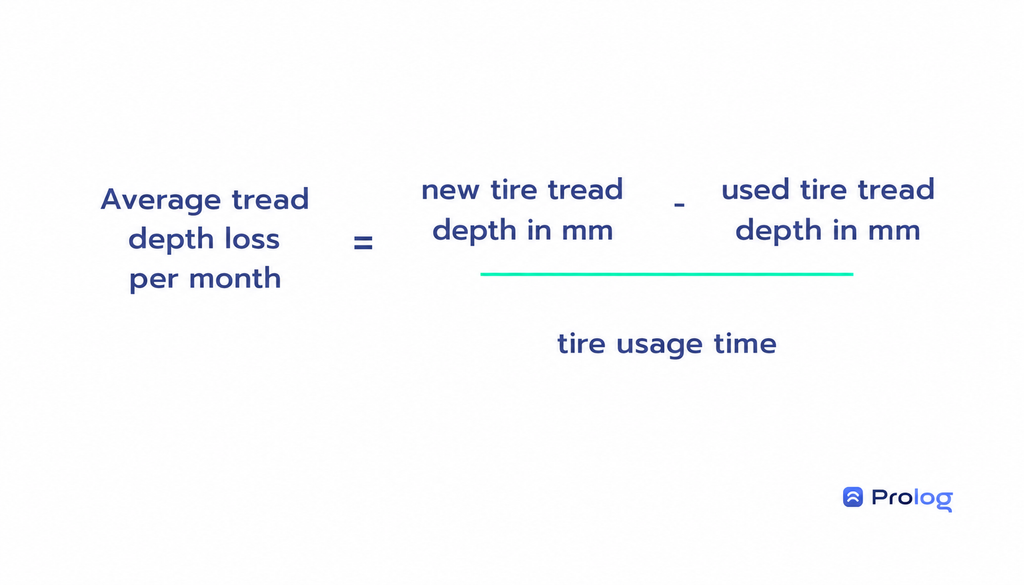
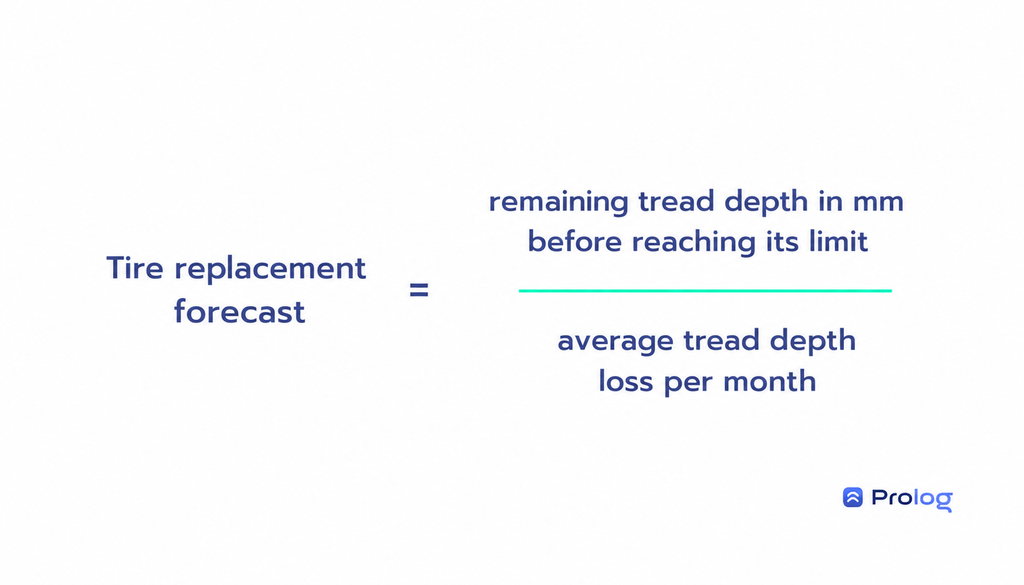
What we do is use tire inspection to understand how much a tire wears from one month to the next, as we explained in the tread depth measurement process, and work out an average of how many months it would take to reach its set limit.
In Brazil, the limit set by law is 1.6 mm; however, letting wear go on until that point increases retread rejections and can fatigue the tire casings.
Generally, the limit set in heavy vehicle fleets is 3 mm, but it is something you can determine after analyzing the operating data of your own transport operation.
First, you need to identify the average tread depth loss per month:
With this result in hand, you can calculate the tire replacement forecast:
Watch the video for 7 reasons to replace tires:
(video in Portuguese)
Why keep track of the tire replacement forecast?
Because it helps plan the operation's budgets allocated to tire management, giving a better view of the number of retreads that will take place in the month, as well as how many new tires should be purchased in the same period.
In addition to keeping track of the tire's useful life, you need to have control over when to replace it and the right time to send the asset on to the disposal stage.
How to collect the data for the tire replacement forecast?
A tire management system is essential to make it easier to collect and analyze data on the fleet's tires.
To do this, you should also use the electronic tread probe, a tire inspection tool that sends pressure and tread depth readings directly to your system over a Bluetooth connection.
In addition to being one of the main tools for reducing, and even eliminating, tire disposal in your operation, the system also increases the number of retread lives and generates fuel savings.
This has even been proven by some of Prolog's case studies, as you can see in our free downloadable material: Tire Management Case Studies You Need to Know (in Portuguese).
Frequently asked questions
What is the tire replacement forecast?
How do you calculate the tire replacement forecast?
What is the minimum tread depth for replacing a tire?
How often should tread depth be measured?
How do you collect the data for the tire replacement forecast?
Why keep track of the tire replacement forecast?
// newsletter
Fleet management content, straight to your inbox
Articles on tires, maintenance and fleet operations. No spam.


