
Vehicle unavailability in retail: the chain reaction
 Jean Zart 8 min read

When a delivery truck breaks down on the route or does not leave the base because of a mechanical problem, the first impact is obvious: the vehicle has stopped. But what happens next is what really costs money, and it is what most retail operations are not measuring.
In retail, distribution fleet management is not just logistics; it is the link between the distribution center's inventory and the store shelf. When that link fails, the service level drops.
And the service level, in retail, is what determines whether the product is where the consumer expects to find it, at the moment they need it.
Here is what you will find below:
- How vehicle unavailability originates
- The chain the manager needs to see
- What makes the distribution fleet vulnerable
- What preventive maintenance management changes in this picture
How vehicle unavailability originates
A vehicle's unavailability is the end result of a sequence that begins long before the breakdown and that, most of the time, could have been interrupted.
The most common pattern is this: a component starts to show signs of wear (noise, vibration, loss of performance, a dashboard warning). In the rush of operations, the signal is ignored or put off. You have probably said or heard something like this: “it will hold up until Friday”, “we will look at it at the next service”.
The problem is that the component fails before then and the vehicle stops. The maintenance is now corrective, urgent and more expensive. An engine warning, for example, indicates that something is wrong with the engine and should lead to an inspection by a mechanic; ignoring this kind of signal can reduce the vehicle's efficiency and pave the way for more expensive repairs later.
This pattern repeats itself with brakes, suspension, the electrical system, the engine, the transmission and tires.
The origin of unavailability is not the breakdown; it is the lack of a process that would detect the problem before the breakdown and allow time to plan how the repair is carried out. Vehicles do not stop “out of nowhere”, but because something that should have been seen was not seen, something that should have been done was not done, or something that should have been replaced was not replaced in time.
The chain the manager needs to see
The loss caused by a stopped vehicle does not end with the cost of the repair. In retail, it multiplies through a chain of consequences that reaches areas that have nothing to do with maintenance but that suffer directly because of it.
Unavailable vehicle → route not completed
If the vehicle that would make 25 deliveries that day does not go out, those deliveries have to be redistributed to other vehicles (overloading the rest of the fleet) or they simply do not happen. In operations with optimized routes and tight delivery windows, redistributing is not simple and is often not possible on the same day.
Route not completed → store without replenishment
The store that expected to receive goods that day does not receive them. If the product has high turnover (which is exactly the kind of product that most needs frequent replenishment), the absence turns into a shelf stockout within a few hours.
Shelf stockout → lost sale
The consumer reaches the shelf, does not find the product and does one of two things: buys the competitor's product or leaves the store. In both cases, the sale has been lost. In high-demand categories, each day of stockout represents a direct percentage of revenue that does not come back.
Lost sale → compromised service level
The logistics service level measures the operation's ability to deliver the right product, in the right place, at the right time. When the vehicle stops and the delivery does not happen, this indicator drops, and with it, the stores' confidence in the distribution operation.
Compromised service level → recovery cost
Recovering the service level costs more than maintaining it. Extra deliveries, emergency freight, driver overtime, renegotiation with stores, stockout credits. The maintenance cost of “fixing” the problem is always higher than the cost of having avoided it.
What makes the distribution fleet vulnerable
The retail distribution fleet operates under conditions that amplify the impact of unavailability. Some characteristics make this type of operation especially vulnerable:
- High frequency of deliveries. Unlike a road transport operation that makes one long trip per day, retail distribution makes dozens of stops per route. Each vehicle serves multiple stores. When a vehicle leaves the operation, the impact multiplies by the number of stores it would have served.
- Tight delivery windows. Many stores have set times for receiving goods. Missing the window does not just mean a delay; it can mean the delivery simply does not happen that day. The rigidity of the windows turns any delay into a stockout.
- Fleet operating close to the limit. Retail distribution operations usually size the fleet with little slack. If every vehicle needs to run to fulfill the day's plan, the unavailability of a single vehicle already compromises part of the deliveries. There is no spare vehicle to absorb the impact.
- Seasonal demand. During peak periods (holidays and other commemorative dates, the start of the month, promotional campaigns), the volume of deliveries increases and the fleet operates at its maximum limit. Precisely when unavailability is most critical, the probability of it happening is also higher, because the vehicles are under intense strain.
- Maintenance put off because of operational pressure. This is perhaps the most common and most dangerous factor. The manager knows the vehicle needs maintenance but cannot take it off the route because they “need it tomorrow”. The maintenance is put off. The problem gets worse. The breakdown happens at the worst possible moment because, in reality, there is no good moment when the fleet is operating close to its limit.
- Replacement parts handled only in emergencies. When maintenance only comes up after the vehicle has already stopped, the operation loses time organizing the work order, communicating the work and keeping track of execution under pressure. The critical point is not to promise that no part will ever be missing, but to reduce improvisation: record the service, give visibility to what is pending and schedule the downtime before it becomes an emergency.
What preventive maintenance management changes in this picture
Preventive maintenance does not eliminate the possibility of a vehicle stopping. But it radically changes how often this happens, when it happens and what it costs when it happens.
It changes the frequency because a vehicle that is inspected regularly and has its components replaced within their useful life simply breaks down less. Preventive maintenance works with regular inspections, lubrication and the replacement of parts according to a defined calendar or plan; for this reason, it helps prevent unexpected failures and periods of unplanned unavailability.
It changes the timing because preventive maintenance makes it possible to choose when the vehicle will stop. Instead of breaking down on the route in the middle of deliveries, the vehicle goes into the workshop at the scheduled time, outside peak operating hours, with no impact on that day's deliveries. When the team identifies failures before they happen, it can schedule maintenance tasks in more convenient windows and with better cost control.
It changes the cost because emergency corrective maintenance is more expensive than preventive maintenance in every sense: parts bought in a rush, labor at overtime rates, towing or roadside assistance, a stopped vehicle generating opportunity cost. The maintenance that seemed “too expensive to do now” becomes cheap when compared with the total cost of the breakdown; reactive procedures tend to become more expensive and to produce more unplanned downtime.
It changes control over execution because the work order is no longer just a request opened after the breakdown and starts to organize, communicate and keep track of maintenance work. In a distribution operation, this helps the manager see what needs to be done for each vehicle, which service is pending and which downtime can be scheduled instead of becoming an emergency.
For preventive maintenance to work in a distribution operation, it needs three things:
- planning by vehicle (with a schedule based on mileage and time, not on improvisation);
- disciplined execution (the plan has to be followed, even when operational pressure pushes for it to be postponed);
- structured records (each service needs to be documented to feed the vehicle's history and allow trend analysis).
This structured record also improves the conversation between operations and the workshop: the issue identified becomes a work order, planned maintenance appears on the schedule and the vehicle's history no longer depends on memory or scattered spreadsheets. The goal is not to promise that no part will ever be missing, but to reduce improvisation and give visibility to maintenance work before unavailability compromises the route.
Preventive maintenance management in retail is what protects the service level. Each vehicle that no longer stops unexpectedly is a set of deliveries that arrive on time, a group of stores that do not suffer a stockout and revenue that does not go to the competitor.
If your operation still manages maintenance reactively, the risk is still there. Discover Prolog Maintenance Management and see how to structure preventive maintenance for your distribution fleet, with a daily checklist to identify issues early, plans by vehicle type and work orders by mileage or by date.
Frequently asked questions
Why does a distribution vehicle become unavailable?
What happens when a retail delivery does not go out?
What makes the retail distribution fleet more vulnerable?
What does preventive maintenance change about unavailability?
What does preventive maintenance require in a distribution operation?
// newsletter
Fleet management content, straight to your inbox
Articles on tires, maintenance and fleet operations. No spam.
Read also
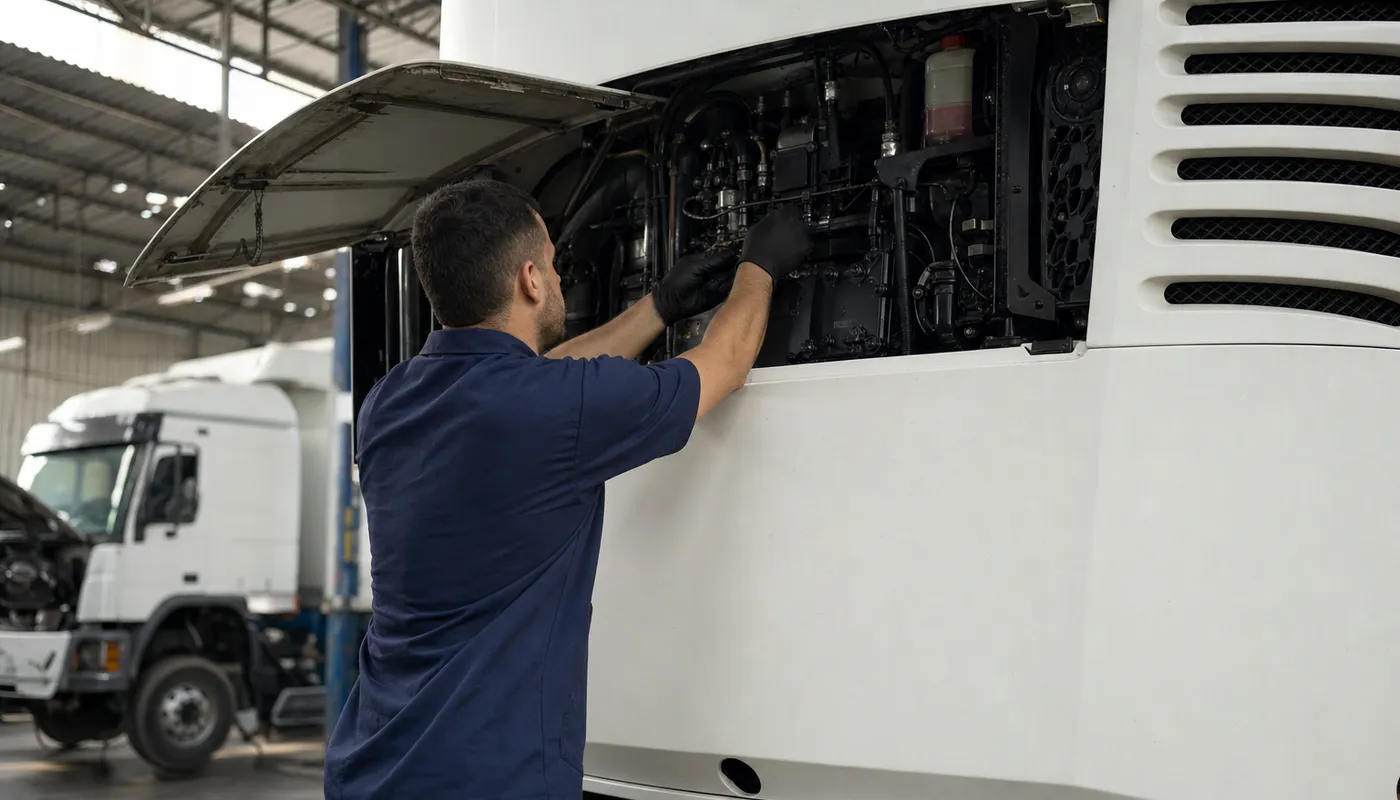 Fleet maintenance management

 Fleet maintenance management
Automatic truck: signs of transmission failure
See the signs of automatic transmission failure in trucks, fluid care tips and when to take the truck to the shop for a specialized diagnosis.
Image: Ford Caminhões
Jean Zart