Wheel alignment: what it is, price and when to do it
 Luiz Felipe 3 min read
Wheel alignment is a preventive maintenance procedure that all vehicles need.
This service ensures asset stability and balance, helping preserve structure and components and preventing uneven tire wear.
Learn below:
- What vehicle wheel alignment is;
- The importance and benefits of wheel alignment;
- How much wheel alignment costs;
- How wheel alignment is performed;
- How to know when a vehicle needs alignment.
What is wheel alignment?
Wheel geometry refers to vehicle alignment. These are adjustments to vehicle suspension and wheels so the tread fully contacts the surface it runs on.
This ensures maximum vehicle stability and balance for safe driving, making alignment crucial to transport operations.
What are the benefits of wheel alignment?
Better tire handling
Tire handling is determined by how easily a driver can drive a vehicle with that particular tire make and tire model. Influencing factors include tire calibration, tread patterns and, as discussed here, wheel alignment.
Without maintenance and alignment services, tire handling deteriorates, making the vehicle heavier and harder to drive.
More comfort, stability and safety
Alignment aims to give the vehicle stability, which can also be considered a benefit. It brings two other major advantages: driving comfort, also linked to tire handling, and safety on the route.
A lack of alignment and preventive maintenance can cause friction and wear on important structural parts. This could cause breakdowns and failures during a trip, bringing material and financial losses to the fleet.
Wheel alignment therefore prevents issues and makes transport operations safer.
Longer tire useful life
Aligning vehicle structure lets all tires run level with the ground, preventing early and uneven wear. This also lets tires last longer and protects their casings from damage, making additional lives through retreading possible.
How much does wheel alignment cost?
In Brazil, this service can cost between R$80 and R$250. It depends on both the vehicle and the technique used.
Workshops generally offer alignment and balancing together because they are complementary.
Wheel geometry is therefore often understood and sold as both services combined.
How is wheel alignment performed?
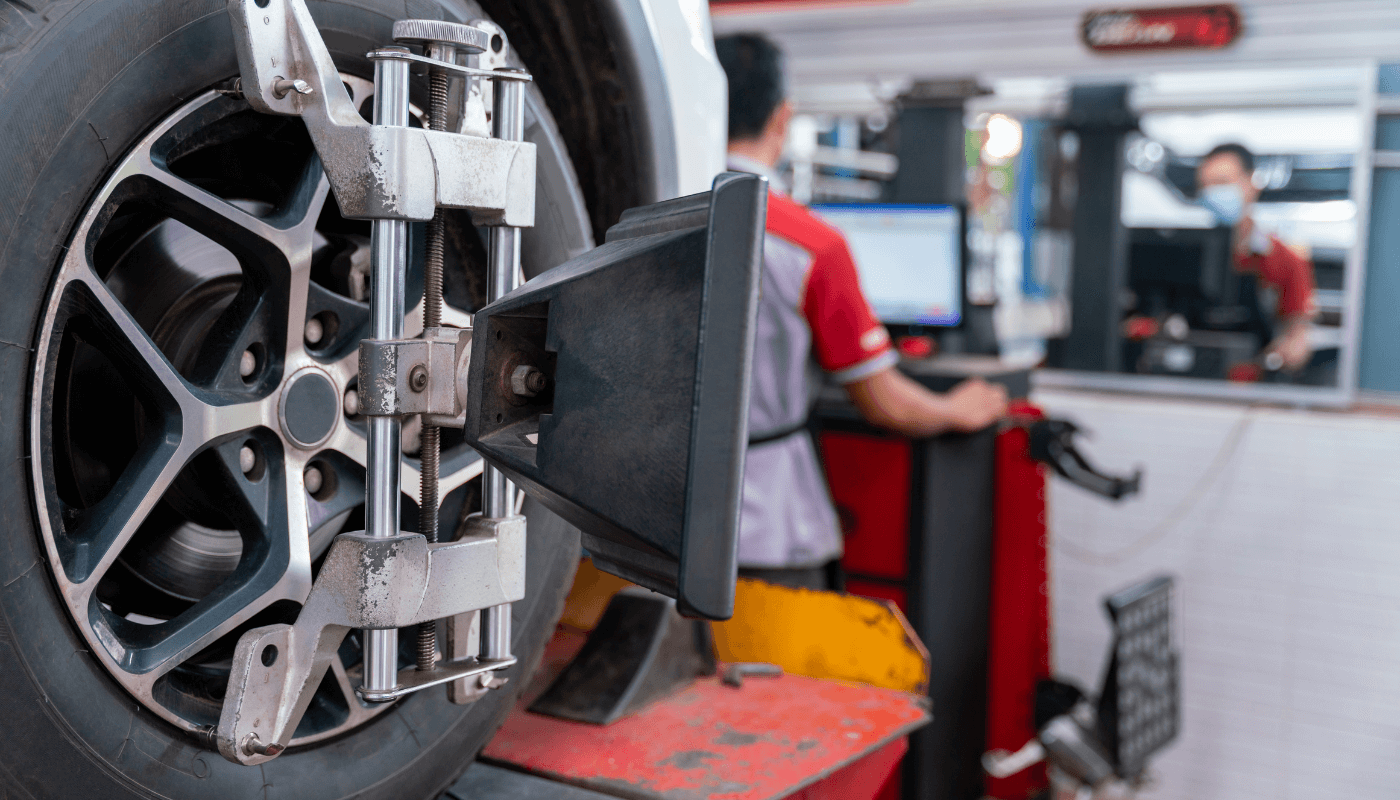
There are three methods: optical, laser and 3D:
- Optical: light projectors show wheel alignment on a panel.
- Laser: similar to the light projector method, but using laser projectors instead.
- 3D: the most modern wheel alignment method, with a sensor on each wheel showing its shape and irregularity in 3D.
After identifying vehicle irregularities, correction angles must also be confirmed to finish the alignment service. They can be:
- Camber: responsible for wheel rolling, it can be positive when tilted outward (divergent), or negative when inward (convergent).
- Caster: the angle that provides greater steering stability, passing through the center of the vehicle wheel.
How do you know when a vehicle needs alignment?
Alignment is recommended every 10 thousand km. However, the ideal approach is to observe vehicle condition and identify signs that service may be needed.
Situations where alignment may be needed include:
- Steering pulling to one side;
- An accident or collision with obstacles;
- Hitting potholes at high speed or deep potholes even at controlled speed;
- After replacing vehicle tires;
- Finding uneven wear or heavier tire shoulder wear.
Beyond these signs, inspect vehicles every 6 months, since they may not be used frequently enough to complete 10 thousand kilometers in that period, which is also an average time for considering the service.
Discover the checklist templates we created and never miss inspection items. Download our free Checklist Kit.
Frequently asked questions
What is the difference between alignment and balancing?
How much does wheel alignment cost?
How often does a vehicle need alignment?
What signs indicate incorrect alignment?
How is the service performed in a workshop?
How does alignment affect tire useful life?
// newsletter
Fleet management content, straight to your inbox
Articles on tires, maintenance and fleet operations. No spam.