Bald tire fine in Brazil: amount, points and the law
 Luiz Felipe 10 min read
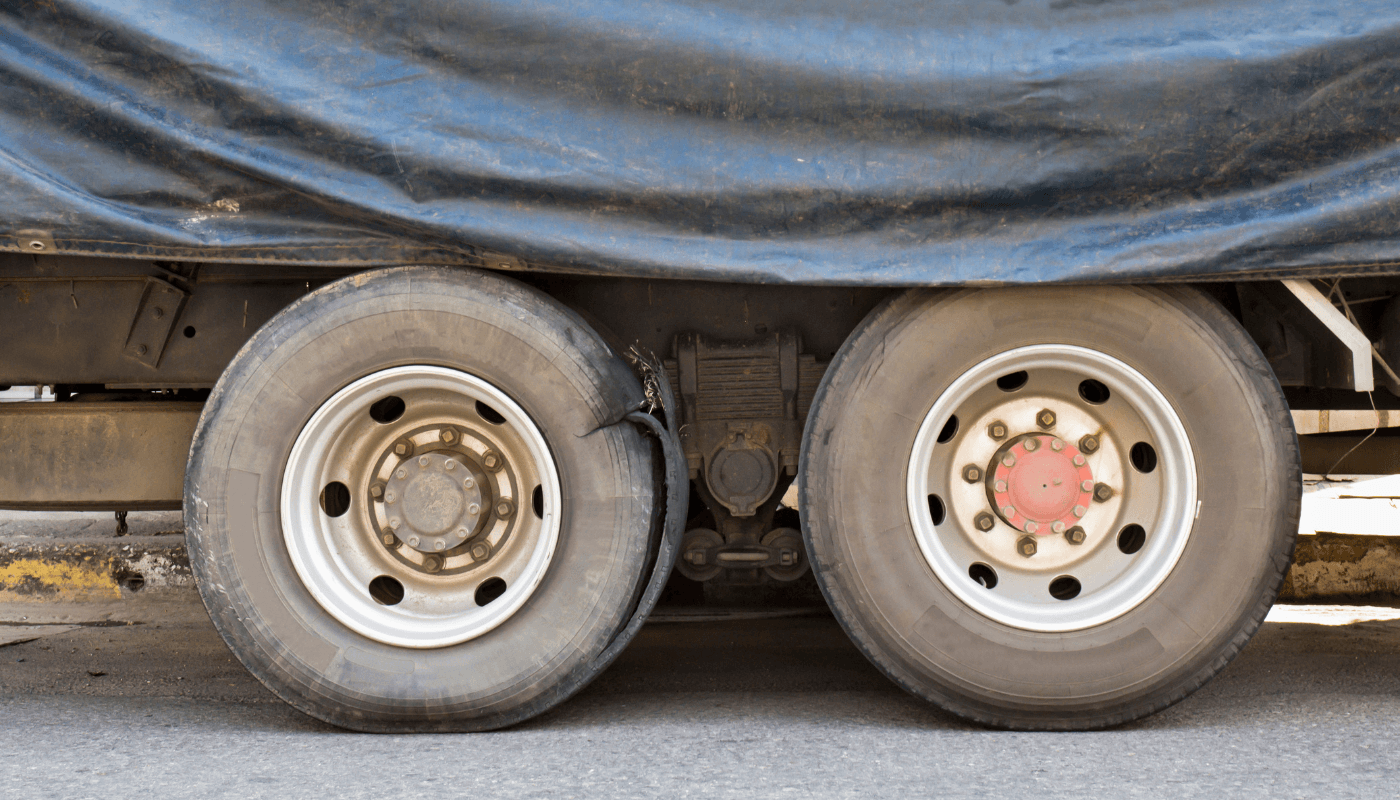
Understanding the consequences of a bald tire fine in Brazil helps you save in your fleet, not only by avoiding the fine but also by avoiding tire damage.
This is because preventing a tire from becoming bald increases the chances that it can be retreaded and gain another running cycle — around two more years of use, always depending on casing condition, application and refurbishment quality. To achieve the desired results, you need fleet tire management.
But before we discuss this asset care step further, learn more about the bald tire fine. Read on:
- What the bald tire fine is;
- What causes this fine;
- How much the bald tire fine is;
- Whether this fine can be appealed;
- Consequences of the bald tire fine;
- How to know whether a tire is bald;
- When the right time to replace a tire is.
What is the bald tire fine?
“Bald tire fine” is the name operations give to a citation that, under Brazilian law, does not concern only the tire. The rule addresses the condition of the vehicle as a whole, and a worn tire is one of the most common reasons for citation in this group — which is how the fine got its name.
In Brazil, Law No. 9.503/1997, the Brazilian Traffic Code, establishes in article 230 that it is an infraction to drive a vehicle “in poor condition, compromising safety, or failing the safety and pollutant and noise emissions inspection assessment provided for in art. 104”. This is clause XVIII of the article in the consolidated CTB text.
The specific Brazilian rule on tread depth moved to a different regulation, and this is the point most often circulated in an outdated form. It was in article 4 of Resolution No. 558/1980 of CONTRAN, the National Traffic Council, which was expressly repealed (art. 24, clause I) by CONTRAN Resolution No. 913, of March 28, 2022, in force since April 1, 2022.
In Brazil, the limit remains the same, now in art. 4 of Resolution No. 913/2022: driving a motor vehicle equipped with a tire whose tread wear has reached the indicators or whose remaining tread depth is below 1.6 mm is prohibited. Paragraph 1 of the same article adds that this remaining depth “shall be checked visually by means of wear indicators”.
The Brazilian resolution itself states, in art. 22, what noncompliance subjects the offender to: the sanctions provided for “in clauses X or XVIII of art. 230 of the CTB” — wording given by the correction published in the Official Gazette of the Union No. 63, of April 1, 2022, and this is how the text appears today on the CONTRAN portal. The sole paragraph of the same article records that this situation does not preclude the application of other penalties provided for in the Code.
What causes a bald tire fine?
In Brazil, any vehicle damage or failure that could compromise its operation and create transport safety risks may lead to this fine. Since the classification in clause XVIII refers to “poor condition, compromising safety”, assessment takes place in the specific case, in front of the vehicle.
You therefore need to pay attention to conditions such as:
- Bald tires, beyond the permitted wear level;
- A bald spare tire, if there is no suitable replacement tire, is also subject to citation;
- A burnt-out or misadjusted headlight;
- Wear in the brake system;
- Lack of stability, when the vehicle is visibly “swaying” too much;
- A weakened engine, noticeable through the vehicle “jumping” or “veering”.
The spare tire item deserves a note, because this is where mistakes are most common. In Brazil, the Brazilian Traffic Enforcement Manual (MBFT/2022), from CONTRAN, describes in code sheet 672-61 when to issue a tire citation: “Vehicle equipped with a tire or tires (including the spare)” whose tread wear has reached the depth indicators (TWI) or whose remaining depth is below 1.6 mm. The spare tire therefore undergoes the same check. A “punctured or deflated spare tire”, however, is directed by the manual to another classification, code 663-72 (art. 230, IX).
How much is the bald tire fine?
In Brazil, sheet 672-61 of the MBFT/2022 — which covers tires below the limit — provides the full classification, legally based on art. 230, XVIII: serious severity, a fine as the penalty, vehicle detention for rectification as an administrative measure, a score of 5 and the owner as the offender. In other words, depending on the issue, the vehicle is detained until the situation is corrected. If the citation was for bald tires, they must be replaced before the vehicle returns to its route.
In Brazil, the amount comes from art. 258 of the CTB, which classifies infractions punishable by a fine into four categories. In clause II, a serious infraction is “punished with a fine in the amount of R$ 195.23” (wording given by Law No. 13.281/2016). Paragraph 2 of the same article notes that, for an aggravated fine, the multiplier or specific additional index is the one provided for in the Code itself.
The points in Brazil have the same origin: art. 259, clause II, of the CTB assigns five points for a serious infraction — the same five recorded in the MBFT sheet.
This detail often goes unnoticed in fleets. In Brazil, art. 257, paragraph 7, gives the main driver or vehicle owner 30 days from notification of the citation to identify the offender; if the deadline passes without identification, the main driver or, in their absence, the owner is liable for the infraction. Paragraph 8 of the same article, as worded by Law No. 14.229/2021, provides that, if the offender has not been identified and the vehicle belongs to a legal entity, a new fine shall be issued to the owner, while retaining the original infraction fine, with an amount equal to twice the original fine.
Regarding payment in Brazil, art. 284 establishes that a fine paid by the due date stated in the notification costs eighty percent of its amount. Paragraph 1, as worded by Law No. 14.599/2023, provides for payment at 60% for anyone who, through the electronic notification system referred to in art. 282-A, declares the choice not to submit a preliminary defense or appeal and acknowledges committing the infraction, provided enrollment in the system took place before the citation notification was sent.
Can you appeal a bald tire fine?
Yes, as with any other citation in Brazil, there is an administrative route provided for in the CTB itself. The process is the same:
- Preliminary defense request. Art. 281-A requires the citation notification to state the deadline for submission, which shall not be less than 30 days from the notification's issuance date. If the defense is rejected or not submitted on time, art. 282 provides for the penalty to be imposed and the owner or offender notified.
- First-level appeal, with the Administrative Board for Infraction Appeals (JARI). Under art. 285, the appeal is filed with the authority that imposed the penalty and has suspensive effect; upon receiving a timely appeal, it forwards it to JARI within 10 days of filing.
- Second-level appeal. Art. 288 provides that JARI decisions may be appealed within thirty days of publication or notification of the decision. Who rules depends on who imposed the penalty: under art. 289, clause II, when it comes from a state, municipal or Federal District traffic body or entity, the ruling falls to CETRAN or CONTRANDIFE, respectively; under clause I, when it comes from a federal body or entity, it falls to a special panel comprising the Jari General Coordinator, the President of the Board that assessed the appeal and one additional Board President.
It is worth noting two caveats in the Brazilian Code itself, because they change the decision to pay or appeal: under art. 286, an appeal against a fine can be filed within the legal deadline without paying the amount; and under art. 284, paragraph 2, payment does not imply waiving administrative challenge, subject to paragraph 1 of the same article. None of this is a legal opinion — it describes what the regulation establishes, and each citation has its own particularities.
The consequences of driving on bald tires
The bald tire fine is the least of the issues you will face, because driving with tires at an accelerated level of wear has many other consequences you need to avoid.
Among them: casing fatigue, rejection for retreading, increased operating costs and premature tire loss.
It is worth breaking down each one, because they are linked. Casing fatigue is the compromising of the structure supporting the tire, and its condition determines whether the asset can still be refurbished. This leads to rejection for retreading: the tire no longer delivers new cycles and is discarded early. This pushes operating cost up because a new tire purchase is brought forward — and premature loss means the asset leaves operation before delivering what it could have delivered.
And how do you know whether a tire is bald?
A bald tire is characterized by having already lost all its grip on the ground, creating risks such as hydroplaning and skidding on the road.
The best way to know whether it is approaching this condition is to keep track of tread wear and identify whether it is about to go past the 1.6 mm mark by measuring tire tread depth.
The Brazilian regulation also provides a visual shortcut. Under art. 4, paragraph 1, of Resolution No. 913/2022, remaining depth is checked through wear indicators; and art. 3, item “a”, requires every tire to be manufactured or refurbished “with wear indicators placed at the bottom of the tread pattern” — what the resolution calls, in art. 10, the Tread Wear Indicator (TWI). Sheet 672-61 of the MBFT/2022 says the same in one sentence: “The minimum tire tread depth is 1.6 mm and must be checked by means of depth indicators (TWI) built into the tread itself”. When the tread reaches their level, the tire is already at the limit.
This is a process within tire management, in which those responsible for the fleet periodically check fleet tires, measuring both pressure and tread depth.
This way, they can identify whether tire wear is regular, moderate or accelerated and take the necessary corrective measures. An inspection with a recorded date and responsible person also allows that tire's history to be reconstructed later, item by item.
It is also important to watch for rubber deformities, such as cuts, bulges, cracks or other types of damage. These usually indicate that the tire is no longer in suitable running condition.
When is the right time to replace a tire?
There is no universal number. As a market reference, a new tire's useful life is estimated at somewhere between 40 and 60 thousand kilometers traveled, making that the time to replace it — but this is an industry average, not a rule.
Tires can show signs of severe wear after only 4 thousand km traveled, while others could travel up to 80 thousand km without becoming bald.
However, many factors influence tire performance and wear, from tire type and application to each driver's driving practices, calibration and road condition. That is why the reliable replacement trigger is the sign on the asset itself, not the odometer. When your assets show these signs, it is time to replace them:
When tread depth reaches the wear limit: in Brazil, the legal limit is 1.6 mm — but many operations work with a safety margin and schedule replacement before that, at around 2 mm;
Bulges appearing on the surface: bulges indicate a tire casing issue, making refurbishment impossible.
Visible punctures or cuts: check whether you are using the right tire for your operation. In this case, refurbishment is also impossible.
That is why we emphasize the importance of carrying out tire management processes. With the right actions, you generate enough knowledge to calculate asset replacement forecasts and also CPK (cost per kilometer) for each make and model.
Besides identifying the right time to replace a tire, this helps identify which models perform best in your application and supports purchases that generate greater savings for the operation.
Want to know more about tire management? See how to implement tire control in your fleet in our free resource (in Portuguese).
Frequently asked questions
How much is the bald tire fine?
What is the minimum tire tread depth?
Can a bald spare tire also lead to a fine?
Can you appeal a bald tire fine?
When should you replace a tire before it becomes bald?
What happens to a tire driven bald?
// newsletter
Fleet management content, straight to your inbox
Articles on tires, maintenance and fleet operations. No spam.