Brazil's weight law: axle weight limits and fines
 Jade Zart 6 min read
The weight law is a regulation well known to companies that operate fleets and deal with freight transport in Brazil.
It sets weight and dimension limits for the heavy cargo vehicles used in each operation.
It is very important to understand this law, because failing to meet its requirements can result in fines, in addition to the possibility of the vehicles and/or the cargo being held.
Below, learn about:
- What the weight law is;
- The importance of the weight law;
- How the weight law works and what its limits are.
What is the weight law?
The weight law is the set of rules that establishes the maximum weights allowed for trucks and cargo combinations to travel on Brazil's roads and highways, in addition to defining suitable dimensions for different traffic locations.
These rules are based on the Brazilian Traffic Code (CTB) and on the regulatory rules of the National Traffic Council (CONTRAN). The CTB governs traffic on land roads open to circulation in Brazilian territory, while CONTRAN establishes regulatory rules and guidelines for Brazil's National Traffic Policy.
Its main purpose is to prevent vehicle overloading and ensure that weight is distributed evenly on trucks. This is essential to avoid stability problems that can result in accidents and rollovers along the way.
What is the importance of the weight law?
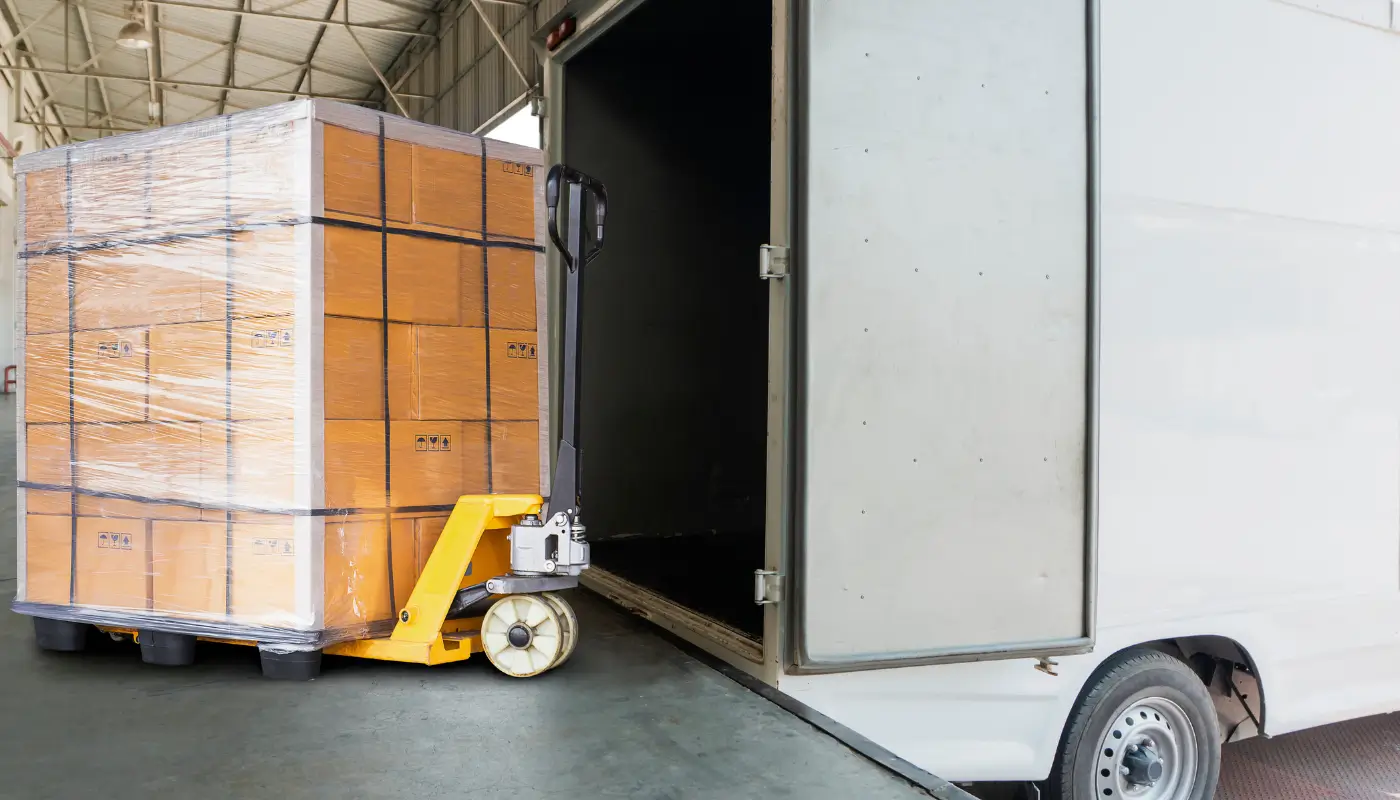
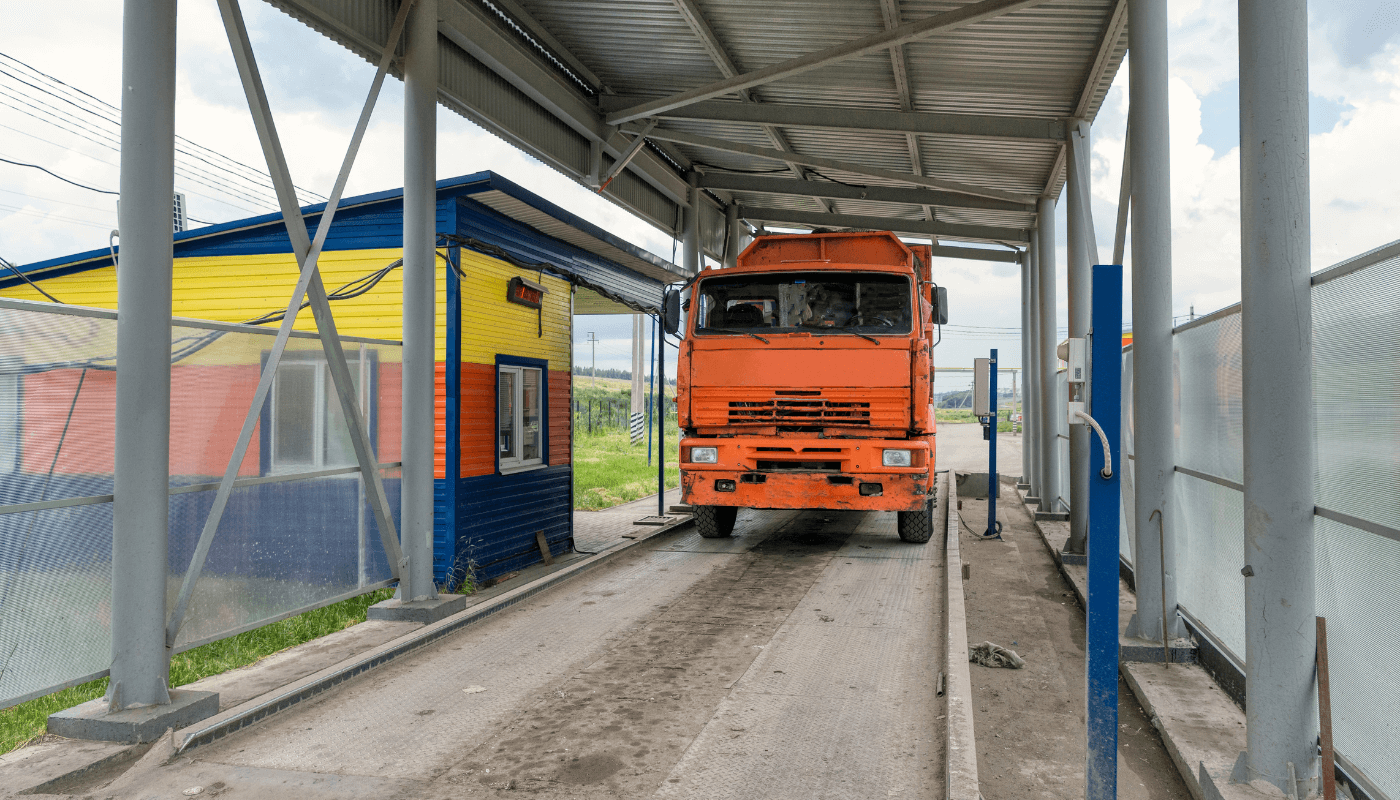
Mandatory weighing of trucks on all of Brazil's roads is an essential practice that is part of planning transport operations. It aims to ensure compliance with regulations, preventing overloaded vehicles from traveling.
In addition, the main goal of the weight law is to prevent accidents. Overloading a vehicle can result in loss of stability, which, in turn, can cause rollovers and other types of accidents.
In this way, the legislation aims to protect the integrity of both drivers and other road users — like many of the other traffic laws for vehicle fleets.
Another relevant point is the financial impact that overloading can cause.
After all, overloaded vehicles face greater wear on their tires, structure and components, leading to higher maintenance service costs, reducing the vehicle's useful life and harming the efficiency of transport operations.
How does the weight law work in your fleet?
The weight law applies to a variety of transport vehicles, including trucks, truck tractors, wheeled tractors, trailers, buses, semi-trailers and combinations involving trucks with two or more axles.
The main rules that guide how this law works are:
Type of cargo
The weight law considers not only the vehicle's total weight but also the type of cargo carried. This is because different types of cargo may require specific vehicle configurations and weight limits.
Therefore, the regulations can vary depending on what is being transported.
Maximum weight per configuration and per axle
One of the essential rules of the weight law is the determination of the weight limits applicable to the vehicle, to the vehicle combination and to the weight transmitted per axle. This distinction is important because enforcement can look both at the gross vehicle weight or gross combination weight and at the load transmitted to the road by each axle, as the case may be.
In practice, this helps ensure that weight is distributed evenly and safely, avoiding overloading individual axles and reducing risks in the operation.
For the main types of configuration in transport trucks (Brazilian truck classes), the limits presented for the combination are:
- Toco: 16 tons;
- Trucado: 23 tons;
- Toco + LS semi-trailer: 41.5 tons;
- Romeu e Julieta trucado: 43 tons;
- Trucado + LS semi-trailer: 48.5 tons;
- Toco + vanderleia semi-trailer: 46 tons.
Tolerance for excess weight
The updated weight law recognizes that, in some situations, obtaining precise weight measurements can be challenging. Therefore, it is common for there to be a tolerance for excess weight, although this tolerance is strictly limited and varies according to the vehicle's total weight.
For vehicles with a gross vehicle weight (PBT, in the Brazilian acronym) equal to or less than 50 tons, enforcement should look at the gross vehicle weight or the gross combination weight (PBTC, in the Brazilian acronym). In this context, the tolerance is 5% on the PBT or PBTC limits.
In addition, Brazil's Law No. 14.229 of 2021 provides for a tolerance of 12.5% on the limits of gross weight transmitted per axle to the surface of public roads.
However, it is essential to emphasize that these limits and tolerances apply to the transport of divisible cargo. When transport involves indivisible cargo, other regulations come into force, and a special authorization is often required to meet the legal requirements.
Maximum dimensions
In addition to weight limits, the weight law also establishes maximum permitted dimensions for cargo vehicles. This includes the vehicle's height, width and length, which must comply with the regulations to avoid problems during transport.
The permitted dimensions are 2.60 meters for the vehicle's width and 4.40 meters for its height. As for length, it can be 14 meters for non-articulated vehicles or 19.80 meters for articulated vehicles with two or more units, in the case of a truck, bus or trailer.
Citations and fine amounts
Failure to comply with the weight law can result in citations and penalties that vary according to the severity of the infraction. It is essential to understand how citations work and what fines are associated with excess weight.
A citation can only be issued at the time of weighing when the vehicle or the vehicle combination exceeds the established weight limits.
In general, the amount of the fine for excess weight is R$ 130.16. However, there is an additional amount for every 200 kg over the established limit:
| Excess weight | Additional amount |
| up to 600 kg | R$ 5.32 |
| between 601 and 800 kg | R$ 10.64 |
| between 801 and 1000 kg | R$ 21.28 |
| between 1001 and 3000 kg | R$ 31.91 |
| between 3001 and 5000 kg | R$ 42.56 |
| above 5001 kg | R$ 53.20 |
Responsibility
To ensure compliance with the weight law, it is important to understand who is responsible for making sure the fleet's vehicles are compliant. This responsibility falls both on the company that owns the vehicles and on the drivers in charge of operating them.
In general, paying the fine is the responsibility of the vehicle's owner, which means that, if the vehicle belongs to the company, the company is in charge of paying the fine resulting from excess weight.
In the case of vehicles driven by self-employed or outsourced drivers, responsibility for the fine falls on the driver, since they are expected to be fully aware of their vehicle's weight limits.
However, in situations in which the weight declared on the invoice is lower than the actual weight carried, the driver may be exempted from the fine. This is due to the premise that the driver was not aware of the real information about the cargo's weight.
And to have more control and manage fines and those responsible for them in your operation, you can count on the help of a 100% free Traffic Fine Management Spreadsheet — check it out now to download it (in Portuguese).
Frequently asked questions
What are the axle weight limits under Brazil's weight law?
Is there a tolerance for excess weight at weigh stations?
How much is the fine for excess weight?
Who pays the fine: the company or the driver?
Does Brazil's weight law also limit vehicle dimensions?
What if the cargo is indivisible?
// newsletter
Fleet management content, straight to your inbox
Articles on tires, maintenance and fleet operations. No spam.