
How to control fleet maintenance plans
 Jean Zart 4 min read

Managing fleet maintenance is not easy, especially when the team is small and trucks are always on the road. Overdue or unplanned maintenance can generate extra costs, increase the risk of mechanical failures and even compromise delivery deadlines.
So how can you organize servicing, avoid unforeseen events and keep everything under control without overloading the team? Let us discuss that now:
- How can you control fleet maintenance plans and ensure they are followed?
- Is it possible to control fleet maintenance plans with a small team?
How can you control fleet maintenance plans and ensure they are followed?
Without efficient control, fleet maintenance can become a recurring problem, with unexpected vehicle downtime and high costs. To ensure your team actually carries out the maintenance plans and achieves results, follow these steps:
1 – Structure a preventive maintenance schedule
The first step is to create a clear, realistic plan for each truck. To do this, define regular servicing based on criteria such as mileage, time in use and type of operation.
In other words, you need a fixed calendar for preventive servicing so maintenance does not happen only when a problem arises.
You also need to divide vehicles into groups to stagger servicing and avoid having many out of operation at the same time.
2 – Use technology to record and keep track of maintenance
Controlling maintenance on paper or in spreadsheets can be a major challenge, especially with a fleet that is constantly on the move.
To make this easier, a maintenance management system can automate tasks such as alerts about upcoming servicing, detailed records of each service performed and quick, easy access to this history.
3 – Standardize inspection checklists
Well-structured checklists help the team check essential items at each inspection, ensuring no detail goes unnoticed. Electronic checklists also make more precise oversight possible and reduce the risk of maintenance failures.
4 – Assign responsibility for keeping track of maintenance
Regardless of team size, someone needs to take responsibility for ensuring maintenance happens.
You should therefore establish a routine for checking maintenance plans and also check whether maintenance is being carried out on time.
5 – Analyze maintenance indicators
Keeping track of metrics such as cost per kilometer traveled, mean time to repair and the percentage of corrective maintenance versus preventive maintenance helps identify failures and optimize the maintenance plan over time.
Without this oversight, maintenance management challenges accumulate, making it harder to predict failures and avoid unexpected costs.
Is it possible to control fleet maintenance plans with a small team?
Keeping fleet maintenance up to date is a challenge in itself. When the team is small, control needs to be even more strategic to avoid overload and ensure no vehicle is stopped for lack of servicing.
Let us take a practical example: a fleet of 35 trucks with only 2 people responsible for maintenance management.
Without structured planning, this team can easily get lost in operational tasks and end up resolving only urgent problems, setting preventive maintenance aside.
But with the right strategy, it is indeed possible to maintain good control, even with few resources. Some actions are essential for this:
Automate processes whenever possible
The fewer manual tasks there are, the more time the team will have to plan and keep track of maintenance.
That is why a maintenance management system automates tasks such as scheduling servicing, issuing work orders and controlling parts.
Efficient maintenance prioritization
With few employees, prioritizing what to do first is essential. So keep a clear view of the most critical vehicles, which need priority attention.
Also define urgency levels for each type of maintenance, always prioritizing the most serious problems.
Involve drivers in the process
Drivers are well placed to detect problems early. For example, creating a routine in which they complete daily inspection checklists and report any abnormality can prevent small failures from becoming bigger problems.
Work with specialized partners
If the in-house team cannot handle the entire workload, seeking support from specialized workshops can be an efficient solution. After all, having reliable suppliers helps speed up repairs and ensure the fleet returns to operation quickly.
Keep track of performance indicators
With a small team, every decision needs to be based on data.
Keeping track of mean time to repair, maintenance cost per vehicle and the percentage of corrective maintenance versus preventive maintenance therefore allows continuous adjustments to improve management efficiency.
This type of data-driven maintenance helps reduce failures and optimize available resources.
Ultimately, team size does not have to be an obstacle if there is a well-structured plan and the right tools are used. Even with a large fleet and few employees, it is possible to keep maintenance under control and avoid unnecessary losses.
And to help you get organized, we offer a free vehicle maintenance spreadsheet. Download it now and make managing your fleet easier! (in Portuguese)
Frequently asked questions
How can you ensure the fleet maintenance plan is followed?
Can fleet maintenance be controlled with a small team?
Which maintenance tasks can be automated?
How can maintenance be prioritized when the team is small?
Which indicators should you keep track of in fleet maintenance management?
// newsletter
Fleet management content, straight to your inbox
Articles on tires, maintenance and fleet operations. No spam.
Read also
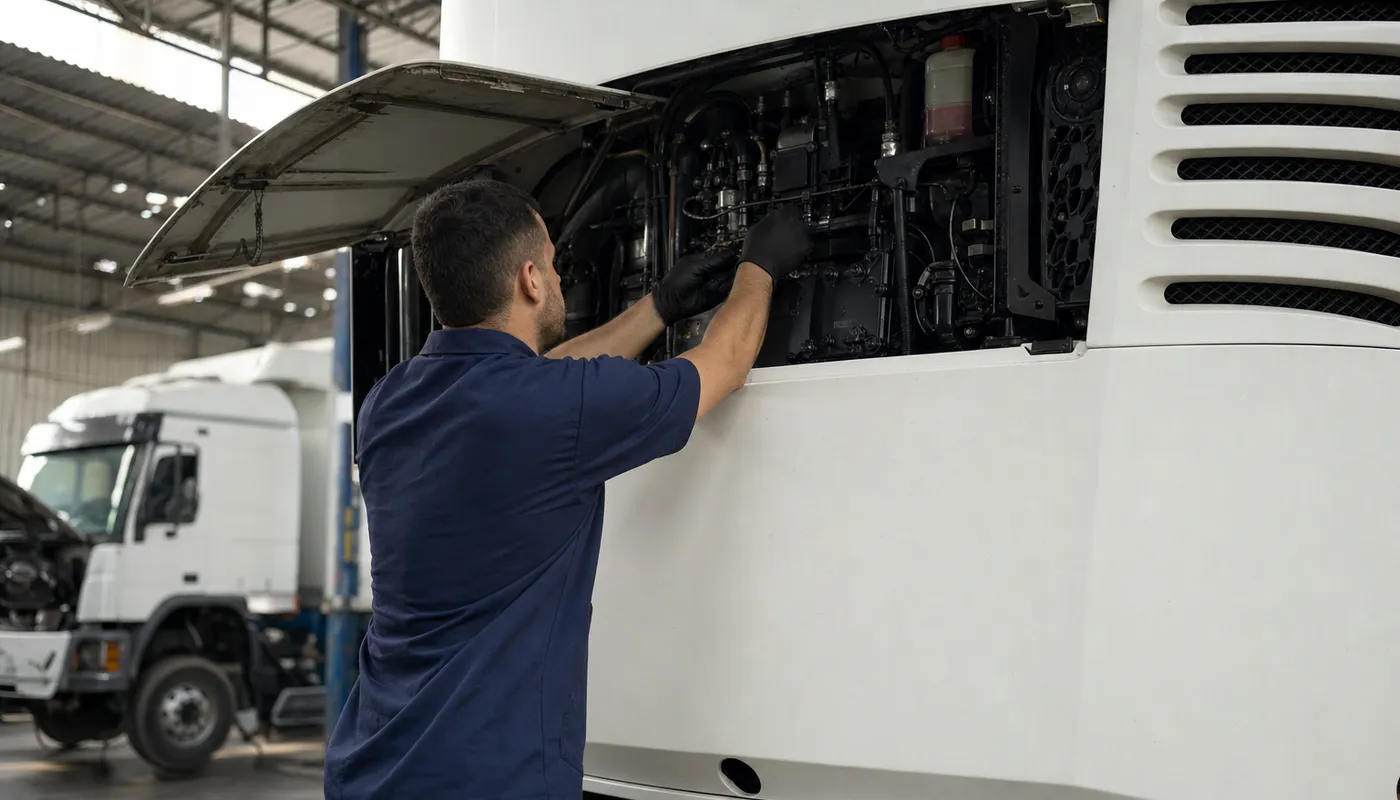 Fleet maintenance management

 Fleet maintenance management
Automatic truck: signs of transmission failure
See the signs of automatic transmission failure in trucks, fluid care tips and when to take the truck to the shop for a specialized diagnosis.
Image: Ford Caminhões
Jean Zart