How to find the correct truck tire pressure
 Luiz Felipe 6 min read
Keeping the correct tire pressure is essential for a safe trip with no surprises.
Have you read that you need to inflate your tires every 7 days?
This weekly routine is a conservative way of keeping pressure under control, because air loss happens naturally: tires can lose up to 1 psi per month. Before calibration, the pressure inspection (check) should be done frequently to avoid errors and identify situations that speed up air loss.
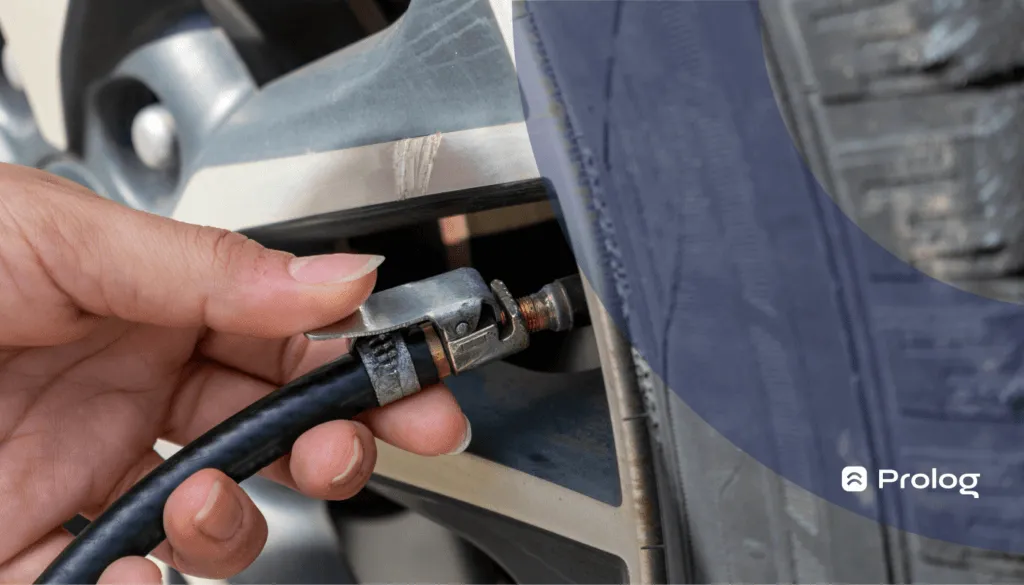
These include punctures and cuts in the rubber, sealing failures or problems with the inflation valve. A deep puncture, for example, can cause the tire to start losing pressure.
The weekly pressure inspection does not need to be treated as a fixed rule for every fleet. Manufacturers recommend checking the pressure every two to four weeks and always before longer trips or when there is additional load; in truck operations, this interval can be shortened according to the type of road, the weight carried and the history of pressure loss.
What matters is keeping track of the pressure, because it helps avoid decisions made in the dark about calibration, wear and safety.
It also reduces the many problems that can arise from improper tire calibration, such as loss of handling, longer braking distance, excessive heating, tire blowouts, aquaplaning, skidding and vehicle rollover.
Apart from these more specific issues, there is also excessive and/or irregular tread wear, which can be a consequence of not having the ideal pressure.
So:
What is the correct truck tire pressure?
This is a difficult question to answer, because each tire model has its own recommended pressure. The vehicle on which it is installed, the load applied per axle, the fitment position and even the road conditions can influence the working pressure.
For example, for a Goodyear radial tire of size 7.00R16 and load index 113/112, in a single fitment, for an applied load of 1,250 kg, the recommended pressure is 85 psi — check the chart (in Portuguese).
Can you see how there are several factors that determine the most suitable pressure?
And this is only a recommendation from the manufacturer itself, for this single tire make and model. For other tires and vehicles, the starting point should be the recommendation of the vehicle or tire manufacturer, depending on the application.
It is worth noting that adjustments to the checking routine may be necessary depending on the weather. The reading is more reliable when the pressure is measured with cold tires, before driving or after they have been stopped for long enough. That is why, during winter or with sudden temperature changes, it is prudent to pay more attention to and take more care with the calibration of the fleet's tires.
In short, the correct tire pressure depends on which models you are dealing with and on the other factors presented so far. Now, you may be thinking:
How do you find the correct tire pressure?
This answer is a little easier. All tire manufacturers already indicate the most suitable pressure for each model. However, to find the ideal calibration pressure for the fleet's tires, you need to keep track of it:
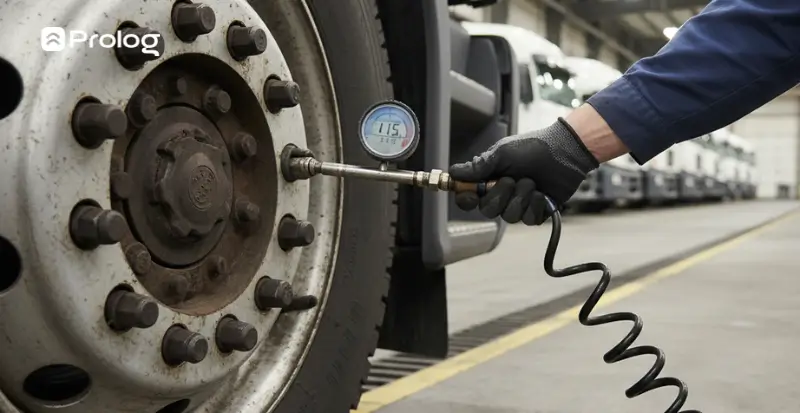
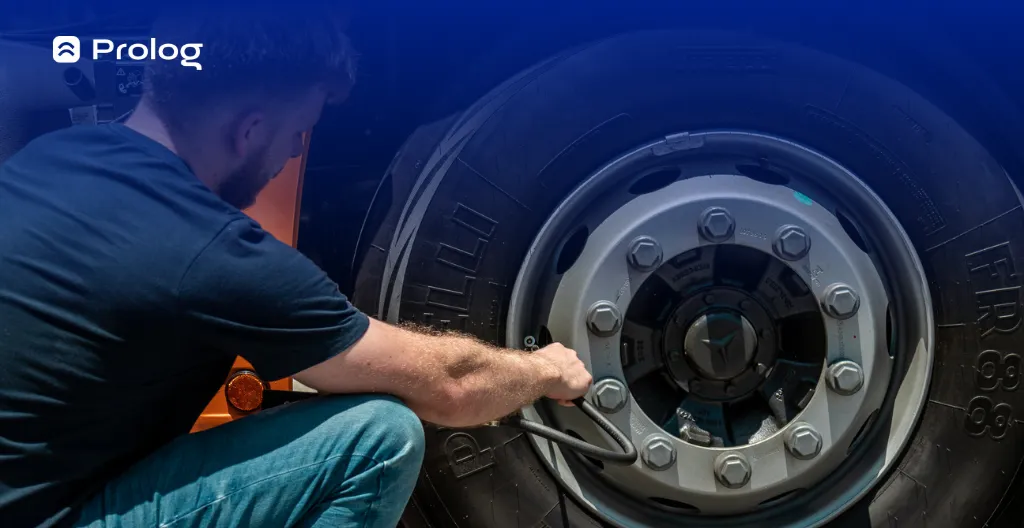
Every week, use a pressure gauge, electronic or manual, to see the current pressure. Whenever possible, take the reading with cold tires and use a reliable, accurate pressure gauge. At the same time, you need to analyze the tires' level of wear through tread depth.
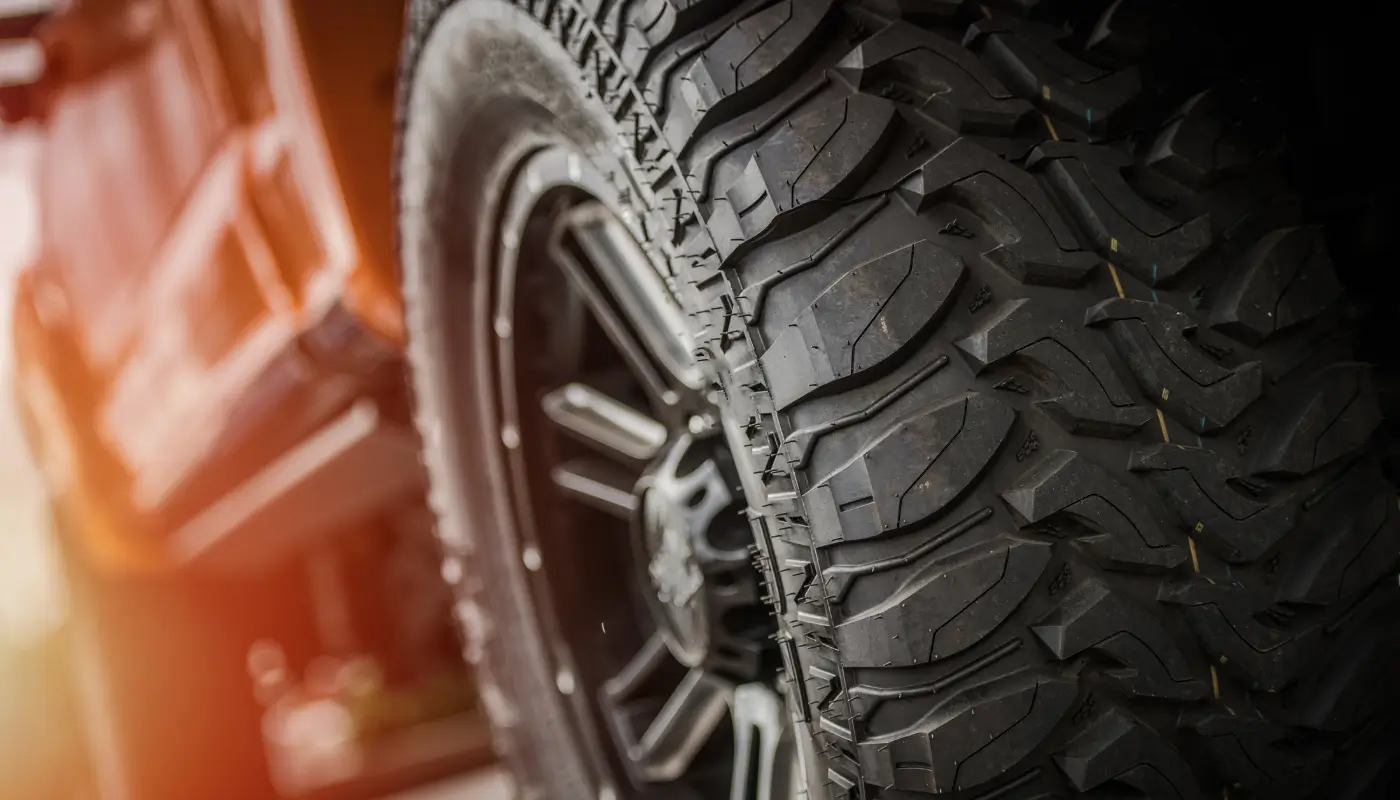
That is because this wear is directly related to calibration. When the pressure is low, wear tends to be faster and may appear more strongly on the tire's shoulders. With a high calibration pressure, on the other hand, irregular wear tends to be more noticeable in the center of the tread.
If the calibration is ideal — and there is no other problem with the vehicle (alignment, balancing, suspension, etc.) — you will notice that wear happens evenly across the entire tread.
This way, through the wear of the grooves, you can understand whether the pressure is good or needs adjustments.
In fact, many companies use the tread depth control chart to keep track of it. It identifies the expected wear for a certain number of kilometers driven. So, when a tire falls outside this pattern, the running pressure adjustments are made.
By observing the type of wear, you can tell whether you need to increase or decrease it. But, if you cannot identify it, it is worth running a few tests, checking the manufacturer's recommendation and writing down all the data to build your fleet's knowledge base!
How do you choose and use a tire pressure gauge?
The pressure gauge can be manual or digital. Consider factors such as costs and benefits for the company, also taking into account the time needed to complete the task, the precision of the measurements and how easy it is to record the readings without errors.
While a manual gauge may be cheaper, it usually brings more risk of errors in reading and in transferring the data to the control spreadsheet. The digital one, on the other hand, reduces these failures and is faster, more practical and safer to use — even though it costs a little more.
In smaller fleets, it may not be quite the time to invest yet. For fleets with many license plates, the decision should consider how many pressure inspections are done per week, how much time the team spends on them and how much rework comes from incomplete or manually filled-in records.
In addition to these alternatives, many vehicles already have tire pressure sensors installed. If you do not know what they are, you may recognize them by the acronym TPMS, used to describe the “tire pressure monitoring system”.
TPMS works with wheel sensors and braking systems to alert the driver to low tire pressure levels. Even when the vehicle has this feature, it is still recommended to check tire pressure periodically, because the dashboard alert does not replace a fleet pressure inspection and recording routine.
That is why the vehicle's sensors should not be treated as the only source for collecting operational data. Depending on the implementation, they can warn the driver about inconsistencies, but they do not necessarily give management a complete, standardized history ready for comparing all tires.
Do you need tire pressure control software?
If you intend to store and analyze operational data, yes, you need this software.
So, to understand the impact tires are having on the productivity of the team and the vehicles and, even more, on the operation's savings, the control platform is the ideal choice.
In fact, it is through it that your goal of finding the correct tire pressure becomes reality, because each pressure inspection stops being a loose piece of information and becomes part of a history per tire, vehicle, make and model.
In practice, you adopt tire management software, which includes pressure control as one of its main features — precisely because it is so important.
Your system's screens show the most recent pressure inspections, issues found, which tires need servicing or calibration, and so on.
Likewise, with the data history, the system generates automatic reports to show the best- and worst-performing tires, as well as the CPK of each make and model.
Watch our specialist and CEO here at Prolog, Jean Zart, answer even more questions about tire pressure and calibration (video in Portuguese):
Frequently asked questions
Is there a single correct pressure for truck tires?
How often should I inspect and inflate the tires?
How does tire wear show whether the pressure is wrong?
Is it worth replacing the manual gauge with a digital one?
Do the vehicle's pressure sensors replace pressure inspection?
Do I need software to keep track of tire pressure?
// newsletter
Fleet management content, straight to your inbox
Articles on tires, maintenance and fleet operations. No spam.