Truck tire calibration chart: how to use it
 Diego Paludo 7 min read
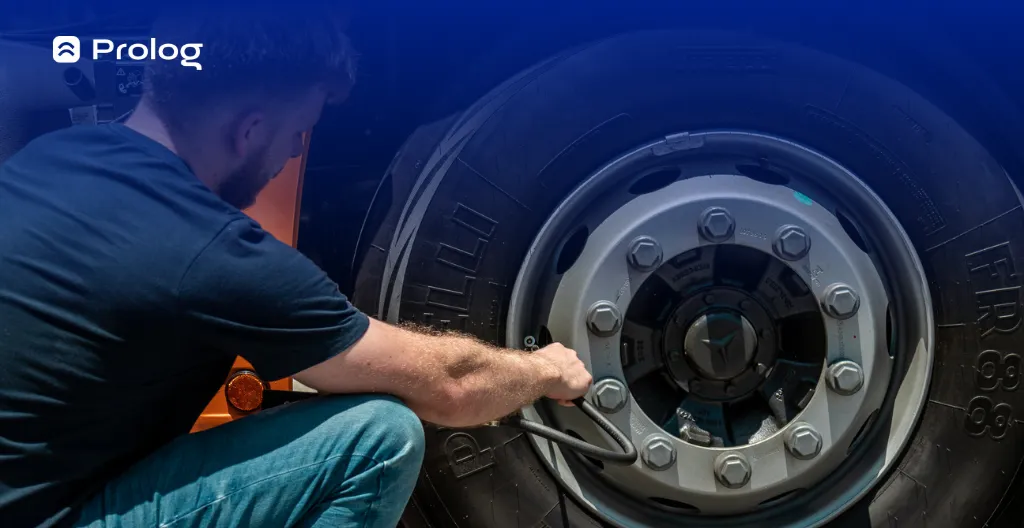
Truck tire calibration goes far beyond a routine task. It directly affects fleet performance, fuel consumption, tire useful life and, of course, operational safety.
Imagine this situation: a truck in your fleet starts a long trip with incorrectly calibrated tires. On the way, incorrect pressure can cause excessive heating, increase the risk of a blowout and compromise vehicle handling. The result? Unexpected stops, delivery delays, risks to the driver and operating cost much higher than expected.
Despite this, many managers still neglect calibration or do not know exactly what the ideal frequency is, how to perform the procedure correctly or what pressure to use for each type of truck.
Take a look:
- How do you calibrate truck tires correctly?
- What is the ideal calibration frequency for truck tires?
- What is the correct calibration for truck tires?
- Truck tire calibration chart
- How can you manage tire pressure quickly and efficiently?
- How can you increase fleet tire useful life?
How do you calibrate truck tires correctly?
Yes, there is a correct way to calibrate your truck's tires! And this is an essential step toward greater road safety, lower fuel consumption and longer useful life for these assets. Although it seems simple, this task is still widely neglected and requires attention to details that make all the difference.
The first rule is: always calibrate cold tires, meaning before the vehicle is driven. Tire pressure changes with temperature, and checking hot tires can lead to inaccurate readings. It is also essential to follow the pressure values recommended by the vehicle manufacturer, considering load weight and route type.
Another common mistake is trusting old or poorly adjusted tire inflators, which generate inaccurate data and undermine the entire tire management strategy. To avoid this, you can rely on Prolog's Electronic Tread Probe — and the data goes straight to the system, without having to write anything down manually. This avoids human errors, speeds up the routine and enables decisions based on real data.
Steps to calibrate truck tires:
- Check the recommended pressure: consult the vehicle manual first and use the pressure specified by the manufacturer for the axle, load and application. The tire sidewall shows the pressure limit it can withstand, not the ideal everyday pressure.
- Find a suitable place for calibration: carry out the inspection before driving the truck or after it has been parked long enough for the tires to cool, because a hot tire gives a less accurate reading.
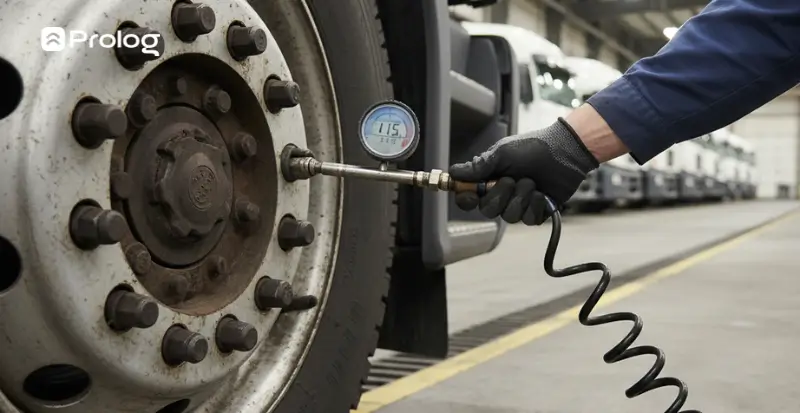
- Check each tire's pressure and adjust as necessary: use a reliable pressure meter or tire inflator. If it is below the recommendation, add air. If it is above, release air until you reach the correct pressure.
- Do not forget the spare tire: the spare tire must also be checked and calibrated according to the manufacturer's guidance and the vehicle's application.
- Maintain a regular frequency: carry out inspections on a defined fleet schedule and add checks before long trips or when carrying additional loads.
With good practices and suitable tools, you ensure greater operational efficiency and safety — and make your entire tire investment worthwhile!
What is the ideal calibration frequency for truck tires?
The ideal frequency for calibrating your fleet's tires will depend directly on your operation. There is no single answer that works for all types of trucks and routes — the key is to adapt the routine to each vehicle's actual use.
In general, the recommendation is to check pressure at least monthly and, in more demanding operations, work with shorter intervals, such as a routine every two to four weeks. Long trips and additional loads call for a check before departure.
Here are some examples:
- Heavy vehicles, such as semi-trailers and B-trains, which carry larger loads, require closer attention because pressure must match each axle's load and application.
- Trucks that travel long distances daily, with little downtime, need planned checks before trips and at regular intervals, always taking care to inspect cold tires.
- Fleets carrying sensitive or high-value cargo cannot risk failures caused by incorrect calibration. In these cases, it is worth reinforcing checks before every trip and recording the procedure as part of the operational routine.
On the other hand, vehicles that operate only in urban areas with light loads can follow a less intensive routine, provided tire wear, pressure and operating conditions are properly managed.
The important thing is not to wait for signs of wear or failure before acting. Calibration is a preventive action that maintains safety and prevents losses.
What is the correct calibration for truck tires?
(video in Portuguese) Good tire management is based on data, and that starts with ideal calibration.
To find the correct pressure, you need to distinguish between two pieces of information:
- The vehicle manufacturer's manual contains the recommended pressure values for each type of load, axle and application.
- The tire sidewall shows the maximum pressure it can withstand, usually in PSI.
But remember: the information on the tire shows the limit, not the ideal everyday pressure. The best approach is to adjust pressure based on the type of cargo carried, the route and the truck manufacturer's guidance.
For example: trucks that travel long distances with heavy loads may require different calibration from those that operate only in urban centers with smaller loads. In every case, the starting point should be the manufacturer's recommendation for those operating conditions.
Keeping calibration at the right level prevents premature wear, reduces fuel consumption and also improves stability and road safety.
Truck tire calibration chart
As you have seen, the ideal pressure varies according to fitment type (single or dual), the load supported and tire size. Below is a truck tire calibration chart:
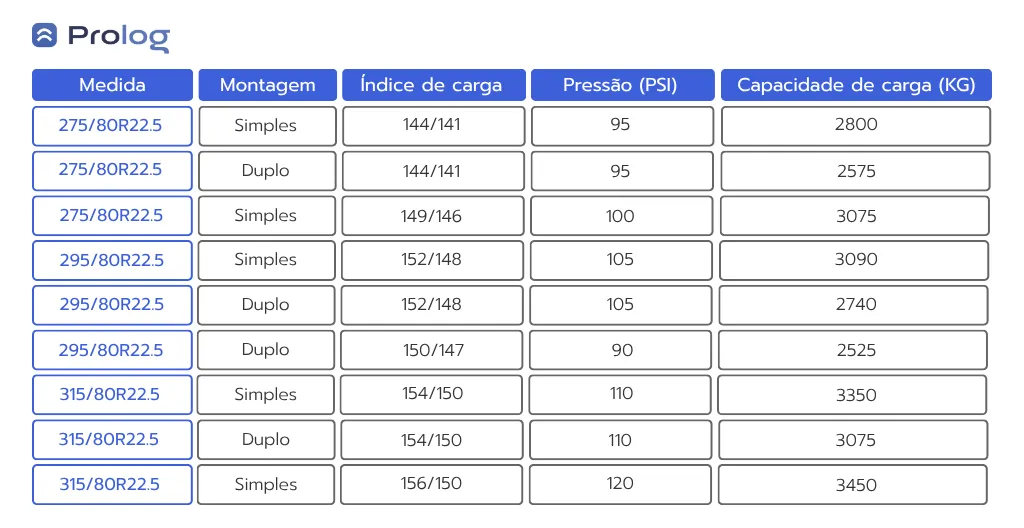
These figures are only a reference and reinforce that ideal calibration depends on the tire's actual application. Always consult the tire and vehicle manufacturers to apply the correct values.
How can you manage tire pressure quickly and efficiently?
Now that you have the truck tire calibration chart, it is time to turn this information into practical action in the fleet's daily routine.
Managing fleet tires regularly prevents premature wear, reduces fuel consumption and significantly lowers the risk of serious failures — such as a tire blowout or loss of grip in corners. Better still: this control can (and should) be quick and standardized.
Steps to manage pressure correctly:
1. Set the ideal inspection frequency
Define the interval based on the type of operation. Vehicles carrying heavy loads or traveling long distances require more frequent inspections, as well as checks before long trips or when carrying additional loads.
2. Standardize the checking process
Include inspection in the departure checklist or create a weekly control routine. This ensures that every tire goes through the same process and prevents omissions.
3. Use reliable tire inflators
Avoid old or poorly adjusted tire inflators. Inaccurate equipment undermines the entire control process and increases risks.
4. Use technology
Solutions such as Prolog Tire Management let you keep track of tire pressure with each recorded inspection, organize history and support decisions in a single platform.
5. Train the operational team
A great process is of no use if the team does not know how to carry it out. Train drivers and tire technicians on the importance of correct calibration and how to do it.
Maintaining this active control is what ensures that the data in the truck tire calibration chart makes a difference in practice. More than knowing the numbers, you need to act consistently and accurately.
How can you increase fleet tire useful life?
Poor tire management can increase costs for this asset by up to 20%. And this is not just about incorrect calibration — it also involves failures in managing rotation, tread depth, pressure, excess weight and even a lack of asset traceability.
If you really want to extend tire useful life, you need to change how data is collected, analyzed and used in practice. Tires are not all the same — and treating them as just another maintenance item can be very costly.
Here are the factors that make a difference:
- Consistently correct calibration: maintaining the correct pressure reduces uneven wear and improves safety.
- Keeping track of tread depth: measuring groove depth makes it possible to anticipate when to rotate, replace or retread.
- Smart tire rotation: alternating tire positions between axles distributes wear and extends the set's useful life.
- Attention to vehicle weight and use: calibrating according to the load carried prevents tire overloading.
- Traceability through the fire number (the identification number branded on the tire): keeping a record of each tire individually helps support decisions based on data rather than guesswork.
Managing tires with data, discipline and technology is the way to reduce waste and increase operational profitability. Good management starts with well-defined processes and ends with greater savings and road safety.
Download the free guide to increasing tire useful life and apply practical strategies that can transform your fleet management.
Frequently asked questions
How do you calibrate truck tires correctly?
Where can I find the correct pressure for each tire?
How often should fleet tires be calibrated?
How can you manage pressure in practice?
What else increases tire useful life besides calibration?
Does the calibration chart apply to any truck?
// newsletter
Fleet management content, straight to your inbox
Articles on tires, maintenance and fleet operations. No spam.