How many tires per axle on each truck model
 Luiz Felipe 7 min read
It is important to understand how many tires a truck has in order to better plan your budgets, inventory and the purchase of new assets.
However, the number can vary according to the number and types of axles each model has, since they can be single, dual or triple.
In addition, there are different types of tires to meet the needs of fleet operations. And this matters because it can affect the vehicle's handling, as well as cause premature wear on its components.
Read more below:
How many tires does a truck have?
The number of tires on a truck depends on its model and number of axles.
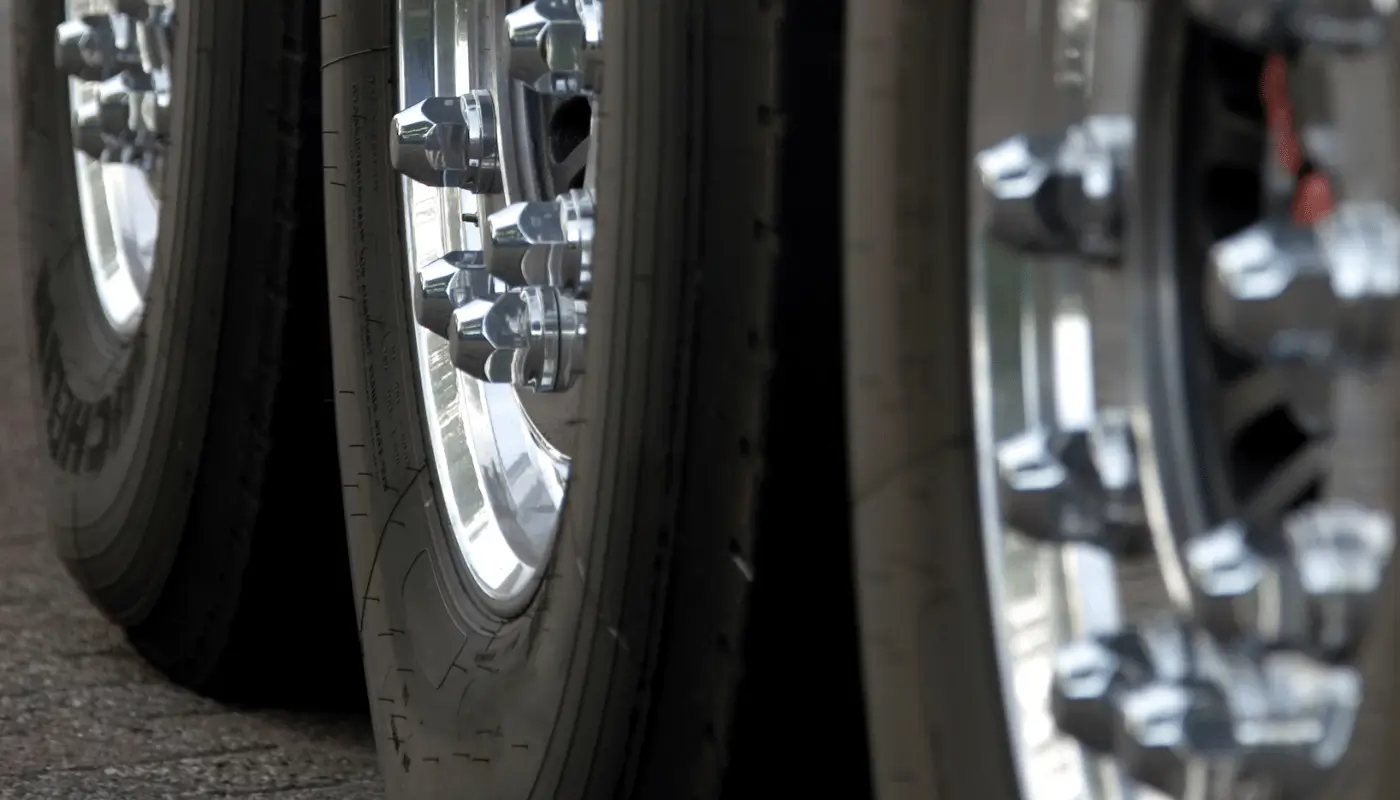
A single axle, for example, has one pair of wheels, for a total of 2 tires. A dual axle (or tandem), on the other hand, usually has two pairs of wheels, for a total of 4 tires.
To know how many tires a truck has, you also need to consider the vehicle model:
- Toco or Semi-Pesado (4×2): in Brazil, the name for a two-axle rigid truck (semi-pesado means medium-heavy). This truck has 2 axles and 6 tires in total. When we say “4×2”, it means it has 4 wheels, but only 2 of them help move the truck.
- Traçado (6×4): the Brazilian name for this configuration. This type has 3 axles, usually with 10 tires in total. “6×4” means that, of the 6 wheels, 4 are used to move the truck, giving more power especially at the rear.
- Truck (6×2): in Brazil, the name for this three-axle rigid configuration. It also has 3 axles, but may come with 8 tires. Here, “6×2” indicates that it has 6 wheels, but only 2 have the function of moving the truck.
- Bi-truck (8×2 or 8×4): the Brazilian name for this four-axle configuration. With four axles, depending on the model, it can have 12 tires (8×2) or up to 16 tires (8×4). This means it either has 8 wheels with 2 helping to move it, or 8 wheels with 4 for traction.
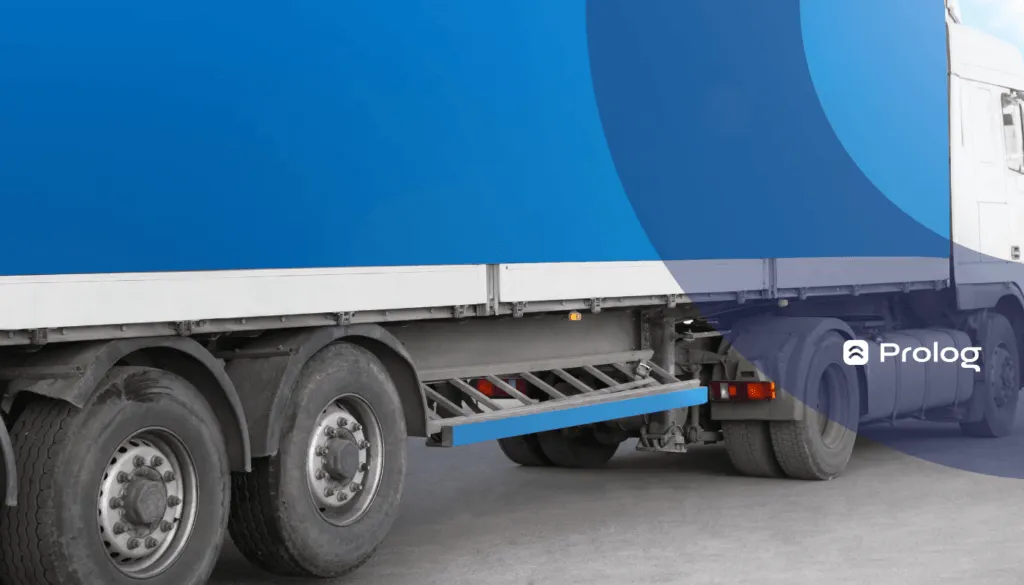
When the question is how many tires a semi-trailer truck has, the count needs to separate the tractor unit from the trailer. The truck tractor is the motor vehicle designed to pull or tow another vehicle. The semi-trailer, in turn, can have one or more axles and rests on the tractor unit.
That is why, instead of using only the configuration of the rigid truck, add the tires of the tractor unit to the tires on the semi-trailer's axles. If the trailer axle is single, use the same reference of 2 tires per axle; if it is dual, the general reference in this post is 4 tires per axle. Without knowing how many axles the semi-trailer has, the total for the semi-trailer truck changes from one configuration to another.
What are the types of truck tires?
There are several models, and each one efficiently meets the different needs of a carrier's operation. Choosing the right types of tire has a positive impact on fuel consumption and even on the preservation of the vehicle's components.
You can read about the 5 types of truck tires in more detail, but, basically, they are:
- High severity: suited to running on urban routes, such as public transit buses and trucks that make general deliveries, because they are harder and heavier.
- Low severity: they are built with a lighter structure, which makes them appropriate for vehicles that travel on paved roads and expressways.
- Medium severity: they have characteristics of the previous types, since they run both on paved roads and on steep, potholed streets. They are advisable for regional trips and offer a balance between resistance and speed.
- Off-road: they are appropriate for contact with dirt and mud. Their characteristics include high grip on the ground and greater resistance to wear. This is the case of trucks that operate in mining areas and in civil construction.
Mixed: they sit between off-road tires and regular asphalt tires. They follow the same logic for trucks that travel on both paved and dirt roads, for example, garbage trucks and agricultural trucks.
Tire Management Guide
Discover everything you need to make Tire Management more efficient.
Want to see this in your fleet? Talk to a Prolog specialist
How many tires does the fleet need to have in inventory?
This will be determined mainly by the number of vehicles in the fleet. In the tire inventory, you need an “extra” quantity for planned replacements and/or unexpected events.
This number is determined by each manager with two main pieces of information:
- Knowing how many tires a truck has — for each available model, you understand how many tires need to be in use.
- Understanding how many tires are disposed of every month — identifying the number of new tires that need to be installed on the vehicles in each period.
For example:
A fleet of 100 vehicles, counting tractor units and trailer bodies, has, on average, 2,500 tires in operation and, depending on how it is managed, can lose about 10 tires per month.
In other words, there needs to be, at a minimum:
- 2,500 active tires;
- 1 spare tire per vehicle (in the example given, 100 spare tires);
- 10 new tires (per month), for the planned replacements;
- 1 new tire per vehicle, for emergencies.
You can also buy and keep tires to be swapped according to the route traveled or weather conditions. To explain further: some tires are better suited to rainy days, because they provide better traction on wet roads.
Meanwhile, if the truck needs to run a route that only goes through an asphalt road, it uses medium- or low-severity tires. Whereas one that goes through a mix of asphalt and dirt roads should prefer to have mixed tires installed.
It is important to consider all these possibilities according to the operations carried out in your company to determine the fleet's purchases and inventory.
In fact, the main purpose of the inventory is tire control, since it is through it that you can obtain data such as the exact number of these items, and how many and which ones are available.
It therefore serves to record the number of tires, their condition and their status (such as in use, under repair and others) — being an essential part of tire management. Tire management, in turn, has already become extremely important in fleets.
Through it, early tire disposal is brought down to zero and the cost of new purchases is reduced.
How to know when to buy new tires?
Whenever you lose a tire, or send assets for retreading — actions that change the tire inventory by removing units from it — you can already consider new purchases.
In addition, with tire management, it is also possible to forecast when assets will need replacing. This is done through the control and analysis of the data collected. That way, you can identify, with little effort, the right moments to buy new tires.
Other moments that may indicate this need are when:
There are vibrations or noises
Noises and vibrations can be indicators of various issues, from worn parts to poor wheel alignment and incorrect tire calibration. That is why it is important to take the vehicle for a full inspection.
Since the tires may be the cause of these issues, you should already prepare to buy new tires, because it will be necessary to take new (or retreaded) assets out of inventory to install on the vehicle.
The tread is low
It is natural for the tire grooves to wear down over time. If the indicator is below the specified TWI (tread wear indicator), it is time to replace the tire.
You find a bubble or bulge on the sidewall
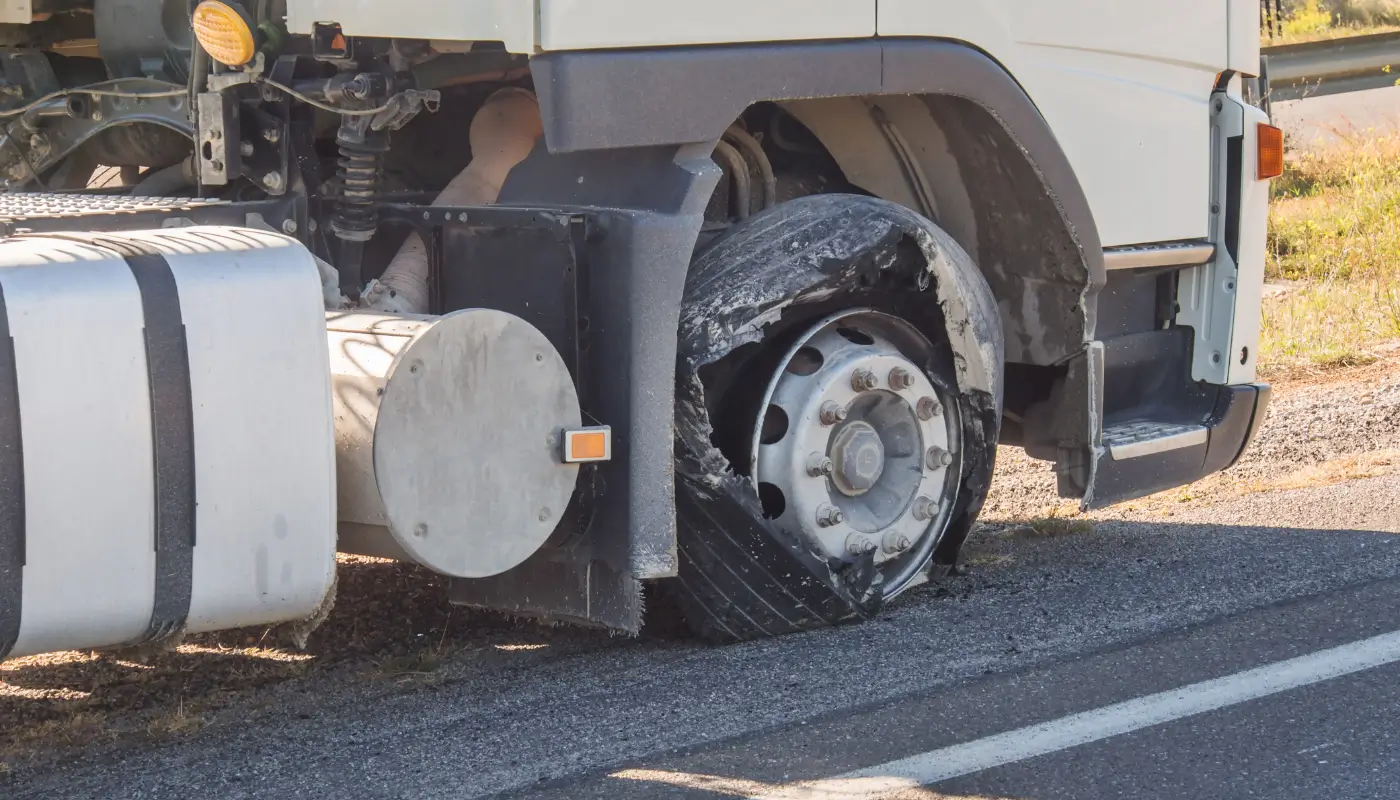
Bubbles that develop on the sidewall of the tire can be caused by manufacturing defects, as well as by air entering between the tire's various inner layers — usually caused by cuts or punctures due to low tire pressure and the impact generated on the roads.
Only a specialist can find and correctly resolve the issue, if it has a solution.
Either way, the tire needs to be removed from the vehicle and a new asset installed, which means you need to plan a new purchase.
It is close to or past its recommended service life
Most tire manufacturers recommend replacing them every five years, counting from their manufacturing date. This is because the rubber can begin to lose its properties and no longer perform as expected.
In most cases, the tire goes through retreading before it even reaches this age. But consider yourself warned!
After all, you can only get tires to perform better and last longer, which also allows more retreading, with proper tire management.
Take the opportunity to download our free tire management e-book now and learn about its benefits, the tasks involved and much more!
Frequently asked questions
How many tires does a toco truck have?
How many tires do a traçado truck and a bi-truck have?
How many tires does a semi-trailer truck have?
How many tires does a truck axle have?
What are the types of truck tires?
How many tires should a fleet keep in inventory?
When should a fleet buy new tires?
// newsletter
Fleet management content, straight to your inbox
Articles on tires, maintenance and fleet operations. No spam.