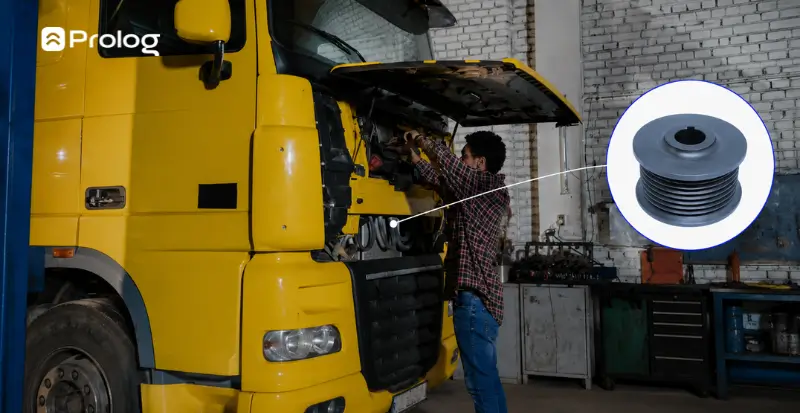
Truck engine oil: which to use and when to change it
 Jean Zart 3 min read

One of the most critical aspects of heavy vehicle maintenance is regular engine oil changes. This procedure helps protect the engine against wear and extend its useful life.
For fleet managers, understanding when and how to change the oil is essential to keep trucks operating at their best and avoid unnecessary downtime.
Read on:
- How to change truck engine oil
- When to change a truck’s oil
- Which oil goes in a truck engine
- How much a truck oil change costs
How do you change truck engine oil?
Changing a truck’s engine oil is a relatively simple process. Below, I explain the steps to carry out this task:
- Park the truck on a flat, safe surface.
- Let the engine cool a little, but not completely, so the oil flows better.
- Locate the drain plug on the engine sump and put a suitable container underneath, using a wrench to loosen the plug.
- Let the oil drain completely.
- After draining the oil, remove the old oil filter with a dedicated wrench.
- Install the new filter, applying a small amount of new oil to the filter gasket to ensure a good seal.
- After refitting the drain plug, use a funnel to fill the engine with new oil. An important note here: check the truck’s manual for the correct quantity and recommended oil type.
- Run the engine for a few minutes, checking for leaks.
- Then switch the engine off, wait for the oil to settle and check the level again with the dipstick.
- Dispose of the used oil in an environmentally responsible way at recycling centers or appropriate facilities.
- Record the oil change in the vehicle’s maintenance history to keep track of change intervals.
When should you change a truck’s oil?
The ideal frequency for changing a truck’s engine oil depends on several factors, including the oil type used, operating conditions and the manufacturer’s recommendations.
There is no single interval that suits every fleet. It varies with the service type — highway, urban, construction, mining or sugarcane operations — time in use, and mileage or engine hours. Each manufacturer specifies the interval for its engine, so the figure that applies to your fleet is the one in each model’s manual. Trucks operating in severe conditions, such as dirt roads or with very heavy loads, may need more frequent changes.
A good practice to ensure oil is changed at the right time is to maintain a regular inspection checklist for fleet vehicles. This way, you can prevent bigger engine problems, ensuring it operates efficiently for longer.
Which oil goes in a truck engine?
Choosing the correct oil for a truck engine is fundamental to ensuring it operates properly. Each truck model may have different specifications, so it is important to consult the owner’s manual or manufacturer’s instructions.
However, for most trucks, SAE 15W-40 oil is a common and widely recommended choice, especially in diesel engines.
This oil type provides good protection across a wide temperature range, making it suitable for both hot and cold climates. There are also synthetic and semi-synthetic oils that can be used, generally intended for severe operating conditions.
How much does a truck oil change cost?
In Brazil, the cost of changing a truck’s oil may vary with the region of the country and any additional services that may be needed.
On average, engine oil prices range from R$20 to R$50 per liter, and a truck may need 10 to 15 liters of oil, depending on the model. In other words, the cost of oil alone may be between R$200 and R$750.
Also, if you use a specialized workshop for the service, there will be a labor cost, which may range from R$100 to R$500.
How about avoiding truck problems and always staying informed about necessary services? Download the free fleet maintenance control spreadsheet (in Portuguese).
Frequently asked questions
How do you change a truck’s engine oil step by step?
How often should you change a truck’s oil?
Which oil should you use in a truck engine?
How much does a truck oil change cost?
What should you do with used oil after a change?
// newsletter
Fleet management content, straight to your inbox
Articles on tires, maintenance and fleet operations. No spam.