Prolog Day BH: AI and fleet management in the talks
 Jade Zart 6 min read
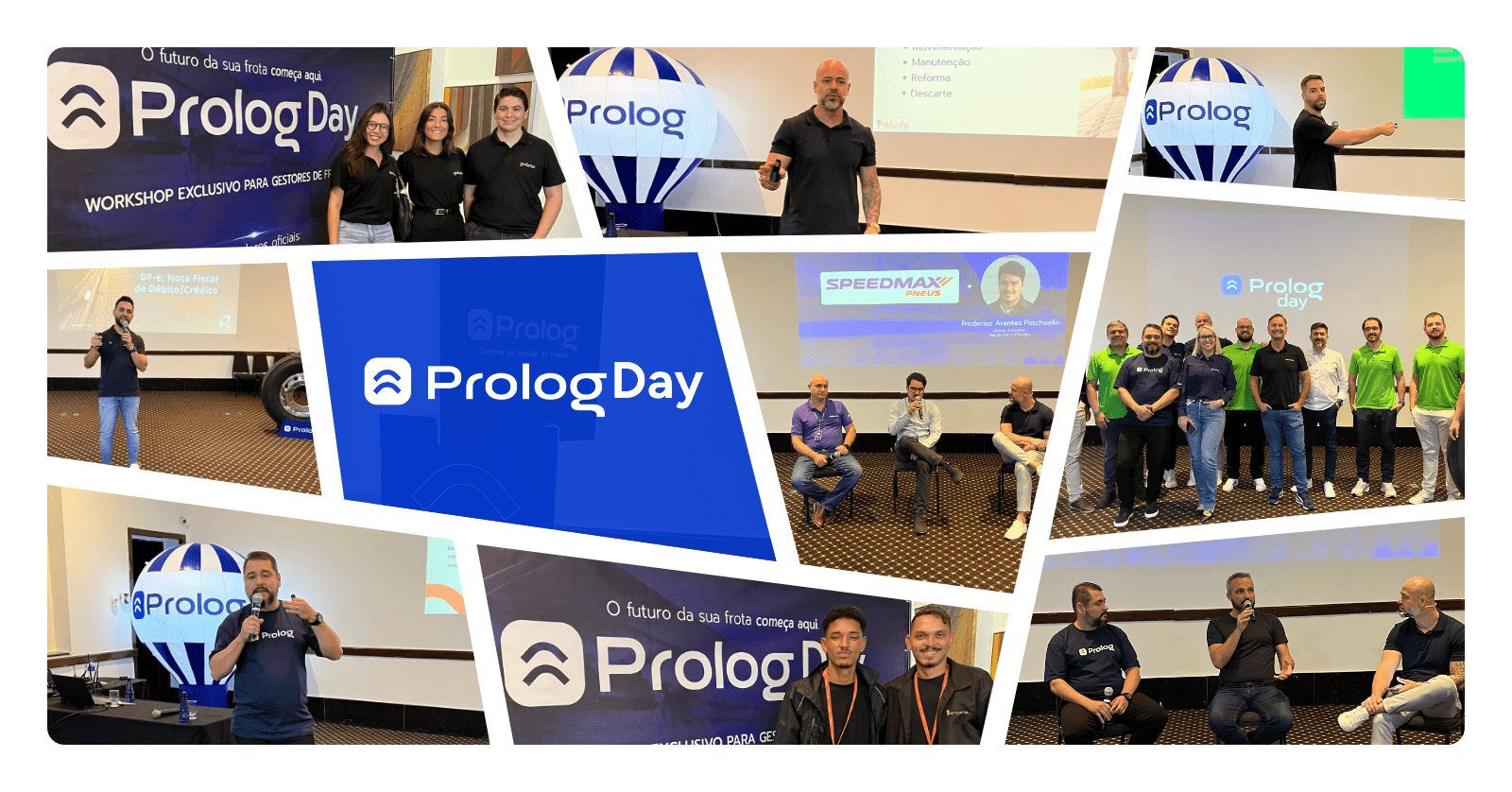
Prolog Day is an immersion in what is most current and essential in the world of fleet management. It combines innovation and practice in a simple, applicable way, showing that managing a transport operation does not have to be rocket science.
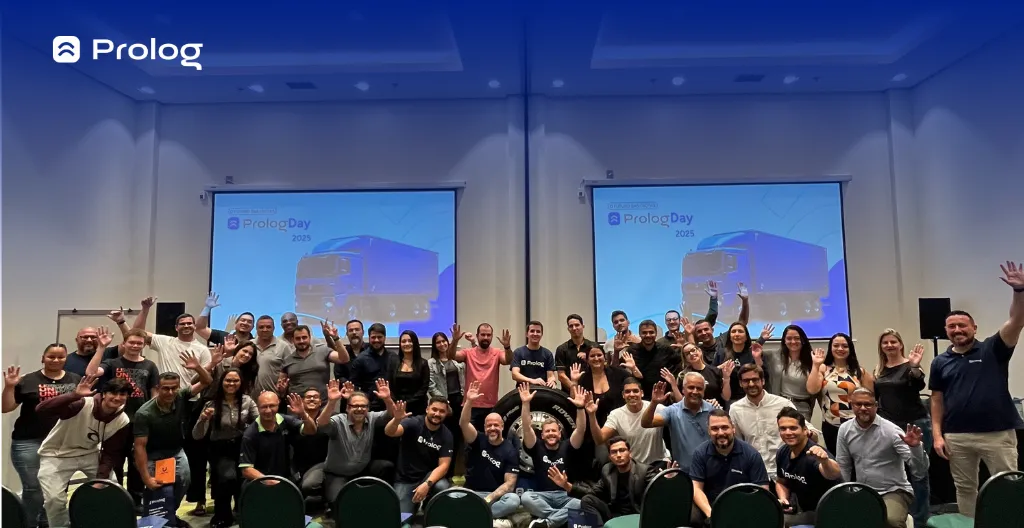
The workshop is in person and free, and this edition was held in Belo Horizonte, on March 4, with more than 100 industry leaders in attendance. About 78% of the audience held decision-making roles, which made the occasion even richer for sharing experiences and information among those who came on board and attended.
The goal of the event is not to be just another one in the segment, but rather to make a difference for those who are eager for and seek results and consolidation in the market, which is increasingly competitive and fierce.
The event brought together professionals from different regions to discuss a topic that is no longer a trend, but a reality: how to apply artificial intelligence in fleet management. Prolog Day brought to the same table names who work in the day-to-day of transport companies and know firsthand the challenges faced by transport professionals.
In this post, you will see all the highlights of the event and more:
- Culture before technology
- The tire you do not manage is costing you money
- Data versus guesswork
- Tax reform: what changes for carriers
- AI in the routine: from theory to operation
- Cases that become benchmarks
- What to expect from the next Prolog Day
Keep reading to learn about the power the Prolog Day immersion generated, absorb the knowledge and apply it in your operation.
Culture before technology
Managing a fleet is not based only on who makes the decisions. To manage efficiently, you need to take care of people. A business's culture comes before any technology adopted and any decision made.
Culture is not what is on the wall. It is what happens when no one is looking.
The topic was addressed by Kássio Seefeld, CEO and founder of Truckpag – the official partner company of Prolog Day BH – who was in charge of opening Prolog Day BH. The talk raised a point that many managers discover late: technology without organizational culture goes far, but does not always get where it needs to.
The focal topic of his talk was Innovation, culture and management in practice, and it was the moment when the audience went behind the scenes of an operation that had to change its mindset before changing its processes. What this means in practice is that, before hiring any system, the manager needs to make sure the team understands why it exists, for whom and for what.
The tire you do not manage is costing you money
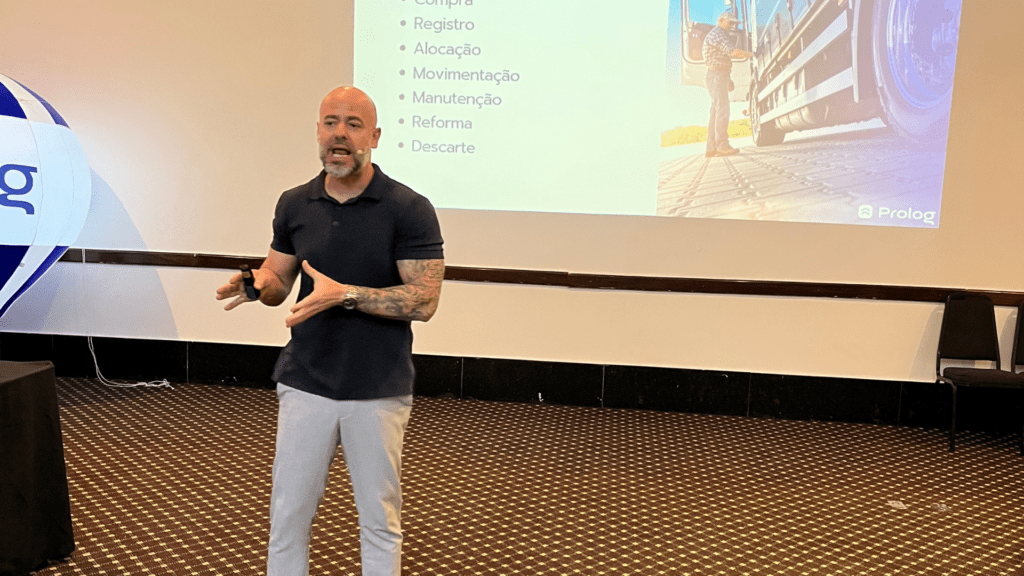
Technical specialist Diego Paludo delivered one of the most objective talks of the day, and the one that generated the most engagement from the audience, along with the one in the topic below.
In Step-by-step tire management, the topic of his talk, he debunked the argument that tires are a “fixed cost” and showed how efficient management – pressure, tread depth, rotation and tire history – turns one of the largest variable expenses into something predictable and controllable.
The most striking moment came when the audience was asked how many operations still managed tires on paper. The recognition was immediate, and with it came the realization of how much money this asset represents.
In practice, Paludo left a clear message: a transport company that measures its tires regularly spends less per kilometer driven than one that only acts when a problem occurs with the tire.
Data versus guesswork
Jonatan Fernandes led the talk Fleet management based on data, not guesswork – and the title already gives away the message.
The central point was the difference between reacting to problems and anticipating them. The talk made clear how simple indicators, when collected consistently, make it possible to identify patterns that the human eye misses in the rush of the operation's routine.
In the end, the message was direct and concise: a manager who makes decisions with data in hand makes fewer mistakes, justifies more and convinces the board faster.
Tax reform: what changed for carriers
One of the most anticipated moments of the afternoon was the panel by Rafael Brito, CEO of Rumo Brasil, on the Impacts of tax reform on carriers' day-to-day.
With the changes in progress in the Brazilian tax system, the transport industry faces uncertainties ranging from the use of tax credits to freight pricing. The panel was a lesson that went from payment linkage to practical examples to clarify the topic.
His more than 15 years of experience with TRC (road freight transport, as it is known in Brazil) made the session straight to the point: those who do not prepare now will find unpleasant surprises on the invoice – and in the cash flow.
AI in the routine: from theory to operation
Anderson Santos, another member of the Prolog team, brought the event's central topic down to the everyday level and was objective right from the start, stating that “AI is not about technology, it is about making better decisions every day”.
In the talk How to apply AI in your transport company's routine, Anderson, an official member of the Prolog team, detailed real cases in which algorithms already run in the background, from route suggestions to identifying drivers with risky behavior before an accident happens.
But the focal point of the presentation was another: AI is a concrete competitive advantage in transport, not a promise for five years from now.
“Those who use data and intelligence to make decisions will protect their margin and grow. Those who do not will operate in the dark and lose efficiency,” he said.
Also in the talk, Anderson was precise in identifying the industry's most common mistake: thinking that AI is complex, expensive and distant from the operation. In his view, the biggest obstacle is not the technology, but rather the lack of structured data to feed it.
In practice, this means that the first step is not to hire a sophisticated platform, but to make sure the operation consistently records what happens every day.
The insight Anderson brought was revealing: the industry is under real margin pressure, and the pursuit of efficiency has gone from strategic to urgent.
Cases that become benchmarks
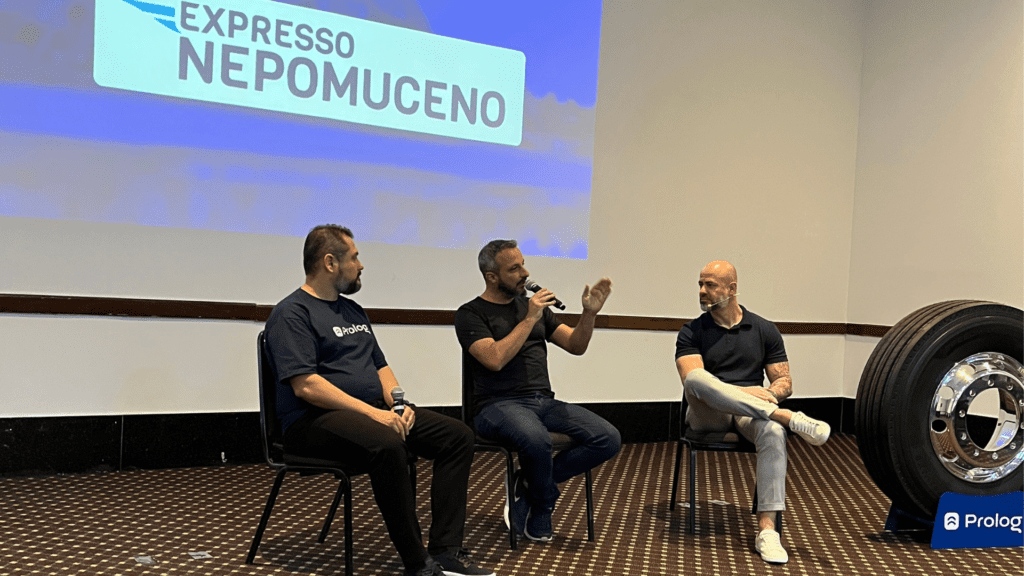
The Prolog Day BH program also featured two cases that put the real experiences of companies in the industry on stage: the SpeedMax case and the Expresso Nepomuceno case.
In both moments, what became evident was that the results came from incremental changes, not from big revolutions all at once, and that consistency in execution separates those who grow from those who merely experiment.
What to expect from the next Prolog Day
Prolog Day BH delivered what the event is meant to generate: real value for fleet managers and other professionals who actively seek full control of their operation.
The event is a stage for the audience to take a practical and objective deep dive, making clear what matters and helping them understand that efficient management and a profitable operation depend only on themselves and the decisions they make.
In this edition, expectations were exceeded. The next date on the calendar was set for Chapecó, in Santa Catarina.
The next Prolog Day was announced for Chapecó, Santa Catarina, on April 23, at 13:30, on an event page (in Portuguese).
Follow our social media to receive more information first-hand.
Frequently asked questions
What was Prolog Day BH?
Who spoke at Prolog Day BH?
What did the tire management talk show?
What was the message about AI in fleet management?
What did the tax reform panel cover?
What was announced for the next edition?
// newsletter
Fleet management content, straight to your inbox
Articles on tires, maintenance and fleet operations. No spam.