Road freight transport logistics: how it works
 Jean Zart 6 min read

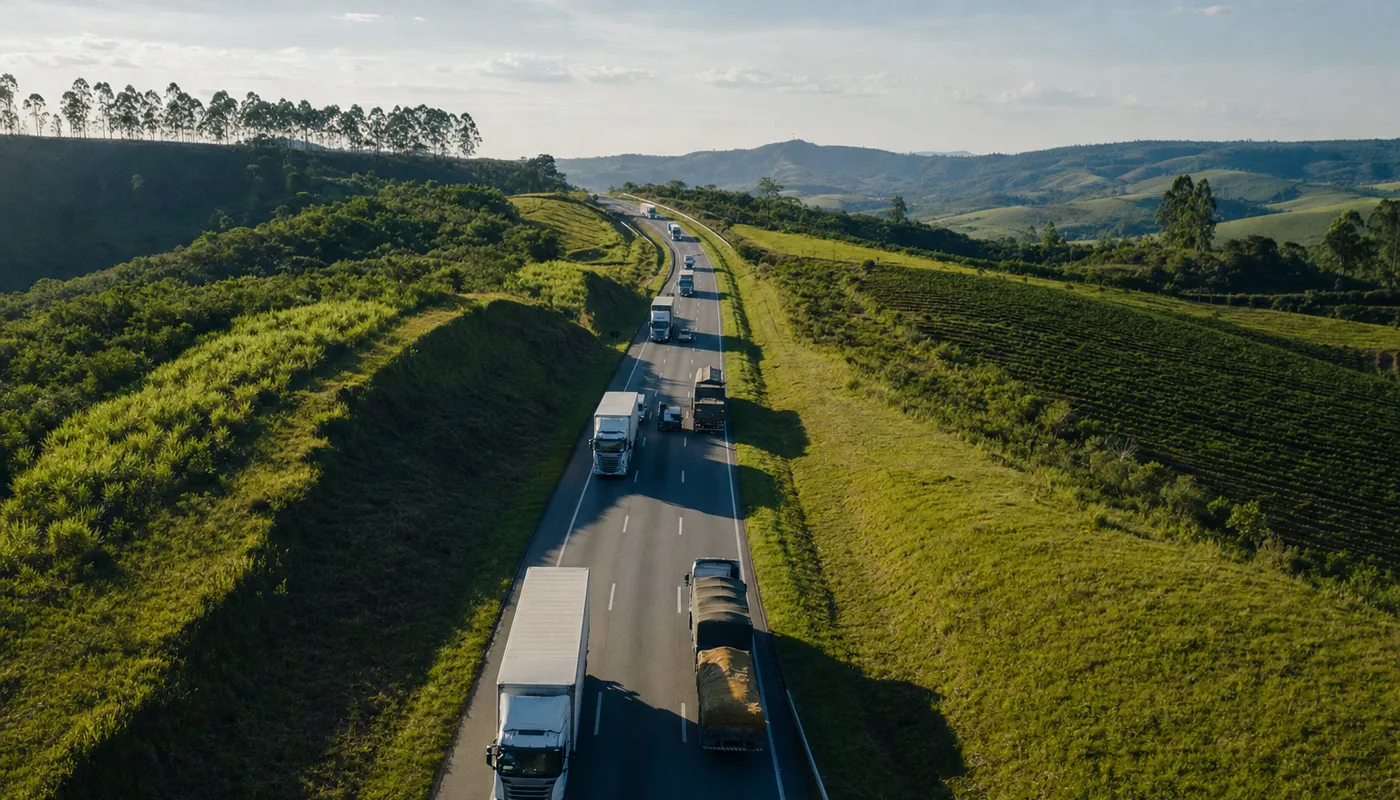
Road freight transport is Brazil's main transport mode, accounting for over 60% of goods moved in the country, according to a CNT survey (Brazil's National Transport Confederation). From food and manufactured products to consumer goods and raw materials, it connects urban regions, rural areas and ports.
Its presence in the logistics chain is linked to flexibility, accessibility and extensive reach. That does not make operations simple: every delivery depends on planning, vehicle availability, people, infrastructure and reliable information.
Operating costs, fleet maintenance, road safety, fuel consumption and route selection are recurring challenges for fleet managers. The starting point is to understand how these areas connect in daily routines, rather than treating each in isolation.
For fleet managers, understanding how this logistics works and keeping track of their own processes is essential to prioritize improvements that make sense for the operation.
Take a closer look below:
- What is road transport logistics?
- How road transport logistics works
- 4 tips to improve road freight transport logistics management
What is road transport logistics?
Road freight transport logistics brings together planning, execution and oversight of the steps necessary for goods to be delivered on time, with quality and integrity. It involves both the physical movement of freight and the decisions and records that make the trip viable.
A well-organized operation therefore involves more than sending a vehicle out on a route. It assigns responsibilities, checks documentation, prepares the vehicle and creates conditions to handle incidents while keeping safety and the agreed service in view.
How does road transport logistics work?
In practice, it works as a system connecting vehicles, drivers and infrastructure to logistics processes. The aim is to coordinate resources, costs and deadlines based on the actual conditions of each operation.
Each element contributes to operations running with fewer interruptions, including:
- Route planning
Choosing routes calls for assessing distance, toll costs, restrictions, road conditions and service windows. This step helps anticipate delay risks and compare alternatives, but planning needs to be reviewed when conditions in the field change.
- Driver management
Driver control helps check training, driving practices, working hours and rest periods. Consistent records give managers a basis for guiding the team and correcting process deviations without confusing productivity with deadline pressure.
Keeping vehicles in good condition reduces the chance of a failure interrupting a trip and contributes to proper fuel and truck use. Maintenance needs to consider the preventive plan, inspection findings and each vehicle's conditions of use.
- Regulatory compliance
Road logistics in Brazil requires attention to tax documentation, weight limits, emissions and other requirements applicable to the freight and route. Checking these obligations before a trip helps avoid fines, vehicles being held by the authorities and improvised measures that could compromise the service.
These activities need to be integrated and overseen by the fleet manager. Tools such as a traffic fine management spreadsheet (in Portuguese) can organize incidents, responsible people and resolution deadlines, provided they form part of an analysis routine.
Road logistics thus goes beyond transporting freight: it requires coordination, predictability and careful use of available resources.
4 tips to improve road freight transport logistics management
Fleet management is an important part of addressing the challenges and making the most of the advantages of road transport. The four areas below work best when adapted to the company's circumstances and supported by indicators the team can use.
Use fleet management systems
Data on vehicles, routes and drivers helps the team identify what needs attention. Depending on the solution chosen, fleet management systems can consolidate records of route deviations, fuel consumption and driving incidents for operational analysis.
These systems may be general-purpose, such as ERPs, or specialized, such as maintenance management tools, tire management software and routing technologies. Before integrating tools, it is worth defining what data will be recorded, who is responsible for its quality and which decision each indicator should support.
Invest in preventive maintenance
Preventing mechanical failures relates to both cost and safety. Scheduled maintenance, electronic checklists and maintenance management tools help record the conditions found and arrange necessary services.
Instead of waiting for repairs after a failure, a preventive routine makes it possible to plan interventions and to check whether the service performed resolved the recorded incident.
Monitor performance indicators (KPIs)
Keeping track of metrics allows bottlenecks to be located and data-based decisions to be made. Each indicator therefore needs a clear definition, a comparison period and someone responsible for analyzing variations.
Fuel consumption, average delivery time, corrective maintenance frequency and vehicle idle time are examples of indicators that can guide decisions. They do not explain a result on their own: route, load, vehicle condition and changes in operations must also be considered.
Regular oversight helps prioritize investigations, review routes and identify services that deserve attention. The goal is not to produce reports for their own sake, but to turn records into verifiable actions.
Some KPIs fleet managers can keep track of are:
- Average fuel consumption per vehicle: helps compare similar vehicles and uses, and investigate variations outside the norm.
- Fleet utilization rate: shows the relationship between vehicles in use and the available fleet; a low rate may indicate idle capacity or a need to review planning.
- Average delivery time: helps assess routes and punctuality, provided the causes of delays are recorded.
- Frequency of preventive versus corrective maintenance: allows managers to keep track of whether planned services are being performed and which incidents require correction again.
- Vehicle idle rate: measures downtime and may reveal bottlenecks, waiting or excess capacity.
With these indicators monitored, managers can test adjustments to routes, load distribution or the maintenance plan and assess results in their own fleet. KPI analysis is useful when it preserves the context explaining the numbers.
Invest in technology integration
Combining digital solutions with management systems can reduce duplicate data entry and make information more accessible to decision-makers. Integration should be planned to avoid inconsistent master records and reports that do not match the actual process.
For example, Prolog's electronic tire tread probe connects to the management system via Bluetooth, sending measurement data for recording at the time of the inspection.
Similarly, solutions such as IoT sensors for keeping track of engine or brake conditions can be integrated with management systems according to the company's chosen needs and architecture. Before adopting a technology, establish how data will be checked and what action should be taken when an anomaly occurs.
Road freight transport logistics is complex, but planning, reliable records and ongoing review help managers turn recurring problems into opportunities for improvement.
Want more practical, exclusive tips to optimize your fleet management? Subscribe to our free newsletter now and stay up to date on industry best practices and trends!
Frequently asked questions
What is road freight transport logistics?
What share does road freight transport have in Brazil?
How does road transport logistics work?
How can road freight transport management be improved?
Which KPIs should road fleet managers keep track of?
// newsletter
Fleet management content, straight to your inbox
Articles on tires, maintenance and fleet operations. No spam.