Sustainable transport: what the fleet controls
 Luiz Felipe 8 min read

Although it may seem counterintuitive to talk about sustainability in transport, it is an essential measure today.
Transport, especially road transport, is one of the largest contributors to pollution and to the exploitation of natural resources. According to Brazil's National Energy Balance 2026 (base year 2025), published by EPE (in Portuguese), the Brazilian government's energy research company, the transport sector accounted for 34.0% of final energy consumption in the country in 2025, the largest share among all sectors, and concentrated most of the anthropogenic emissions associated with the Brazilian energy matrix that year: 220.8 of the 442.3 million tonnes of CO₂ equivalent. For this reason, and with agreements being created worldwide to stop the damage to nature, talking about sustainability has become fundamental.
How it works within transport and which measures are needed to apply it in fleet management and transport operations is something you can see below. Learn more about:
- What is sustainability in transport?
- Why does it matter?
- Benefits of sustainability in transport;
- How to contribute to sustainability in transport.
Want to see this in your fleet? Talk to a Prolog specialist
What is sustainability in transport?
Sustainability in transport is a practice that aims to reduce — and, where possible, eliminate — the actions that harm the environment in companies that work with vehicle operations.
The burning of fuels, for example, which releases harmful gases into the atmosphere, is one of the biggest challenges faced. Even more so when we talk about heavy vehicles powered by diesel.
The exploitation of oil itself to produce gasoline and diesel is another problem that transport generates.
In these cases, the solutions sought come from two sides: the manufacturing of vehicles and the production of less polluting fuels. This second side has a recent figure: in Brazil, the share of biodiesel blended into mineral diesel rose to 15% (B15) in August 2025, and the transport sector closed 2025 with 26.1% renewables, according to the same National Energy Balance. It is a change that reaches the fleet without replacing vehicles — and that does not replace what the operation does with the vehicles it already has.
Why is sustainability in transport important?
The importance of promoting sustainable transport lies in ensuring that our resources do not run out and in reducing the population's exposure to air pollution, which is associated with respiratory problems such as asthma and allergies and with eye irritation.
Just as each country makes agreements and commitments to take actions more favorable to reducing environmental impacts, according to the identification of the most harmful actions in each place, each sector that drives the economy needs to do its part.
In the case of transport, the greatest attention is on issues such as the burning of fuels and the disposal of tires. In addition, urban mobility is affected by fleet traffic on local roads, something that is also part of sustainability strategies.
It is worth separating two environmental problems that are often confused. The recovery of the ozone layer — the subject of projections reported in 2023 (in Portuguese) — results from the elimination of ozone-depleting substances under the Montreal Protocol, signed in 1987, and not from the greenhouse gas emissions of transport. According to the UN (in Portuguese), if current policies are maintained, the layer is expected to return to 1980 values by around 2040 in the rest of the world, by 2045 in the Arctic and by 2066 in Antarctica.
What the transport operation controls is the other front: fuel consumption, the emission of local pollutants and the disposal of the waste that maintenance generates. It is in this area that the fleet's sustainable actions make a measurable difference — and that is why it is worth treating them as a routine, with an indicator and a person responsible, and not as a one-off campaign.
In general, you should make the company more sustainable because it brings benefits such as:
Reduces air and noise pollution
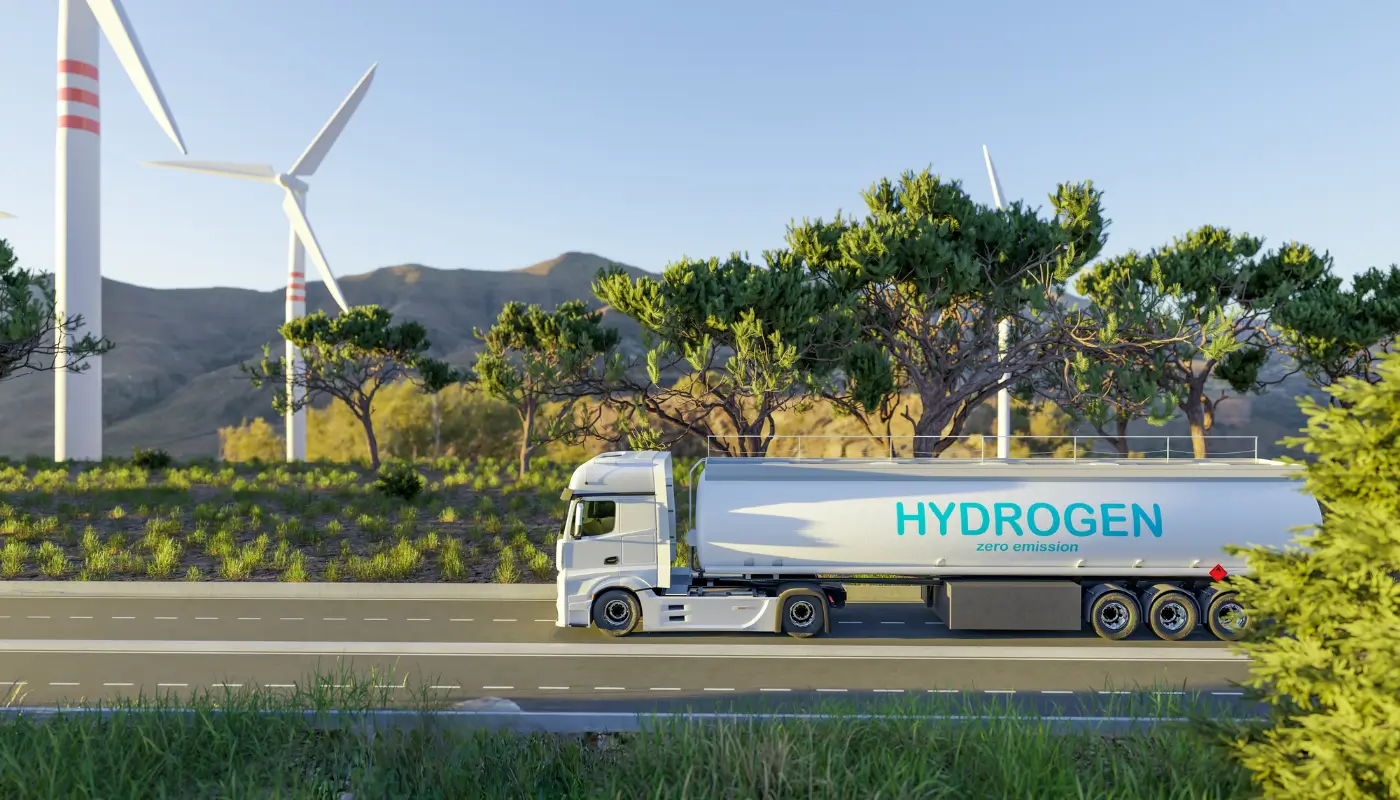
Using less polluting vehicles, such as more modern ones or even electric ones, is an alternative that has a great impact on sustainability.
With the more economical models, fuel is burned more efficiently and better used along the routes. Electric vehicles have no tailpipe emissions and less noise. It is worth noting that the electric vehicle's environmental footprint is not zero: it shifts to the generation of electricity and to the manufacturing of the batteries, stages that continue to consume natural resources.
Electrification is also uneven across vehicle types. Brazil's National Energy Balance 2026 (in Portuguese) records 396.8 thousand cumulative registrations of electrified vehicles in Brazil up to 2025 and consumption of 745 GWh of electricity in road transport that year, with cars accounting for more than 90% of all vehicles. For truck and bus fleets, therefore, the short-term path still relies more on efficiency, maintenance and fuel than on replacing the asset.
Brings greater organization to transport processes
At times such as vehicle maintenance, precise control is needed to identify whether vehicles are using more fuel than they should or whether they have an oil leak — another problem with a high impact on the environment.
That is why implementing sustainability in transport also has the benefit of creating more organized processes in the transport operation. Consumption per vehicle, the interval between changes and the destination of waste only become indicators when someone records each event; without this record, the environmental gain remains a matter of perception.
Raises employee awareness of sustainable actions
Environmental causes are a subject that should be addressed in the fleet's day-to-day so that everyone becomes aware of which actions can preserve the environment.
As they adapt to the routines, employees may even bring new ideas for actions to be carried out within their departments in transport. The driver and the mechanic are usually the first to notice a tire out of calibration, a clogged filter or a leak — almost always before any report.
Encourages the development of sustainability in other areas of the market
This happens for two reasons: first, the areas related to transport begin to be encouraged by sustainable actions and try to adapt to meet the new measures proposed.
Second, because if a sector with as much environmental weight as transport manages to reduce its impact, other sectors can also play their part. In large supply chains, this effect may arrive through contracts, when the shipper starts to ask for environmental information from whoever transports its cargo.
How can you contribute to sustainability in transport?
Use the right products
Choosing products such as oils, lubricants and fuels suited to your vehicle is fundamental for it to work properly.
In addition, Arla 32 is another element you should pay attention to and use correctly in truck fleets. According to Ibama (in Portuguese), Brazil's federal environmental agency, it is a clear solution of urea in demineralized water used to control the emission of nitrogen oxides (NOx) in the exhaust gas of vehicles with diesel engines, with a urea concentration of 32.5% and a specification set by Normative Instruction No. 23 of August 11, 2009. Also according to the agency, since 2012 heavy vehicles produced in the country have been fitted with the selective catalytic reduction (SCR) system, because of the emission limits established by Conama Resolution No. 403/2008 (Conama is Brazil's National Environment Council), and the use of the reducing agent is mandatory.
Follow the maintenance schedule
Following a preventive maintenance routine is the best way to identify when a problem is starting and take the right measures right away.
From an environmental standpoint, the items that pay off most are those that affect consumption and emissions: calibration and alignment, air and fuel filters, the injection system and the exhaust aftertreatment — which, when defective, makes the vehicle once again emit what the design was meant to avoid, even if it keeps running normally.
Dispose of products correctly
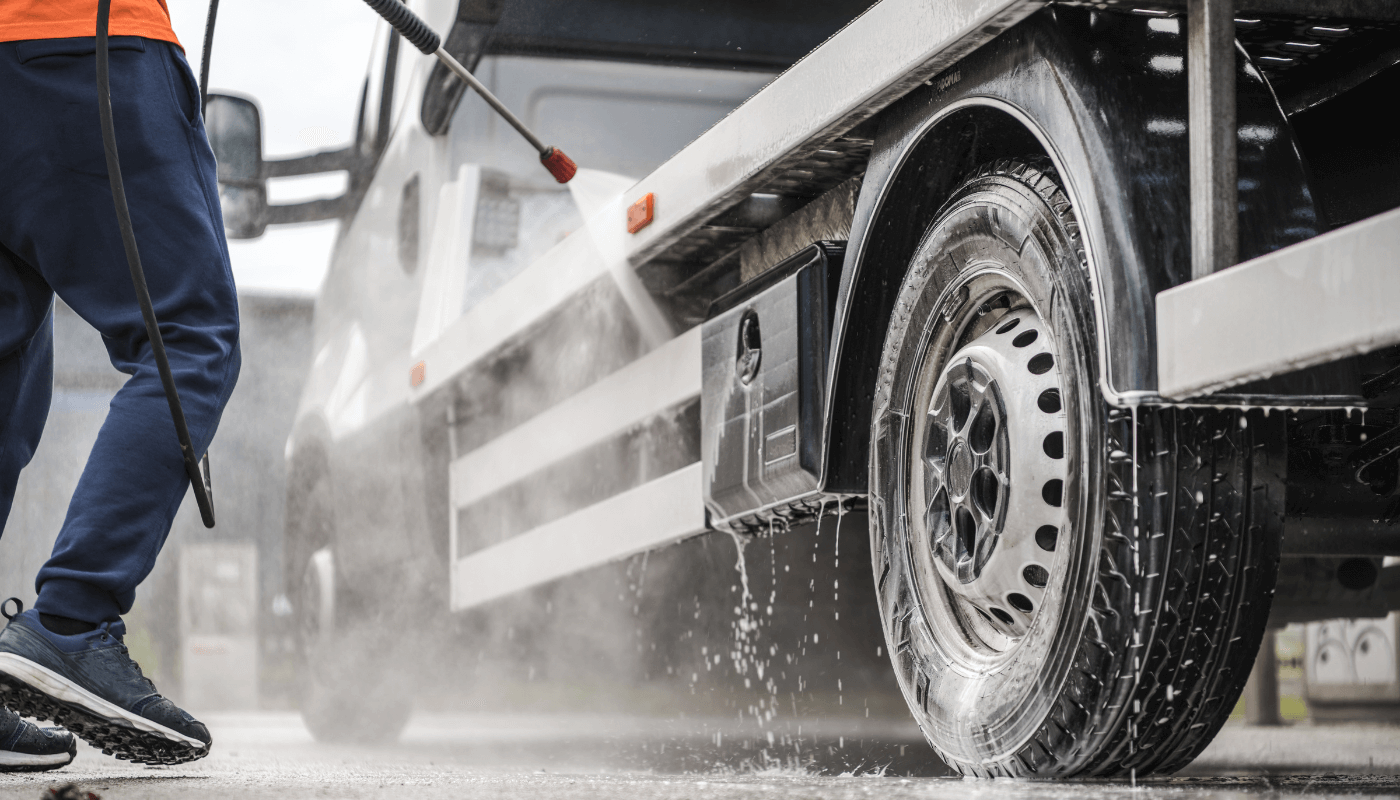
The materials mentioned above that are used to contribute to sustainability in transport also need sustainable disposal. Even the packaging needs specific disposal, because it is contaminated with the liquids.
If thrown into ordinary trash, they can also contaminate soil and water, causing problems with soil fertility and even health problems. In Brazil, two of the most common types of maintenance waste have a specific federal rule to consult: Conama Resolution No. 362 of June 23, 2005 (in Portuguese) establishes that all used or contaminated lubricating oil must be gathered, collected and given a final destination in a way that does not negatively affect the environment and allows the maximum recovery of its constituents; and Conama Resolution No. 416 of September 30, 2009 (in Portuguese) prohibits the final disposal of tires in the environment (in Portuguese), including abandonment, dumping on vacant lots, disposal in sanitary landfills and open-air burning.
Practice defensive and eco-driving
Defensive driving practices include keeping a steady speed along a route, not accelerating or braking abruptly, respecting traffic signals and signs, driving well rested and without medication, and so on.
Eco-driving involves many of the same actions, but the most important result it generates is a reduction in fuel use and the release of fewer polluting gases into the atmosphere.
The gain, however, depends on repetition: without anyone keeping track of the results and without feedback for those who drive, the old habit tends to come back, and a one-off training session usually yields less than a short, periodic conversation about the consumption on each route.
Optimize the routes used
Eco-driving also needs the fleet manager's help when planning the operation's routes. You should look for paths with fewer stops on the road, avoiding traffic lights, corners and curves.
Choosing the shortest path is the answer in many cases, but be careful with the issues mentioned above, because they make your fleet less productive and less environmentally friendly. It is worth measuring before deciding: a shorter route with stop-and-go traffic can consume more fuel than a longer route driven at a constant speed.
Keep discovering other actions to transform your operations and contribute to sustainability in transport.
Frequently asked questions
Why is sustainability in transport important?
How large is transport's share of Brazil's emissions?
What can the fleet do to be more sustainable?
Does the electric truck solve transport emissions?
How should fleet maintenance waste be disposed of?
// newsletter
Fleet management content, straight to your inbox
Articles on tires, maintenance and fleet operations. No spam.