Tire control tool: free spreadsheet or system?
 Jean Zart 9 min read
A tire control tool is essential for the operation of any vehicle fleet.
At Prolog, we understand the importance of detailed control to ensure the best tire performance and durability, factors that have a direct impact on operating costs and vehicle safety.
To meet this need, we developed a free online tire control tool, in spreadsheet format, for a more manual approach, in addition to digital management with our electronic tire inspection kit and the Prolog system.
Below, I will explain a little more about each of these questions related to tire management tools:
- What a tire control tool is
- Why start controlling tires with this type of tool
- How the free online tire control tool works
- Which metrics and indicators can be analyzed with this free online tire control tool
- The next step: digital and automated tire control
- Where to start with tire management
What is a tire control tool?
A tire control tool is a means of helping fleet managers keep track of and manage vehicle tires in a more efficient and organized way.
It can range from simple spreadsheets to digital systems that organize the collection, recording and analysis of data on tire performance and condition — like the one we developed here at Prolog.
The main goal of a tool for this purpose is to ensure that tires are always in good working condition, extending their useful life and improving the safety of fleet operations.
There are two main types of tire control tools:
Excel or Sheets spreadsheets
Basic and accessible tools, usually in electronic spreadsheet format, that require manual data entry. They are suitable for smaller operations or for those starting to implement a tire control system.
Tire management system
More advanced tools that digitize the inspection process and centralize the data collected by the team, for example with electronic tread probes for pressure and tread depth. These systems can support individual control of each tire and the analysis of the fleet's history without relying on scattered notes.
Why control tires with this type of tool?
For me, one of the main reasons to use a tire control tool is to organize the management of these items. In an experience I had at a logistics company, where the idea for the technology project to control tires was born, there was a serious lack of information and tires were lost very quickly, with little use made of them.
I thought it was a huge waste, and that is why I believe that managing tires with the help of the right tools, recording and analyzing data, is essential. It also brings several other benefits, such as:
Lower operating costs
Efficient tire control helps maximize useful life and avoid frequent replacements, resulting in lower operating costs.
More than that, by using a tire control tool, you can better manage maintenance and anticipate future needs, optimizing the available resources and also making smarter purchases.
Longer tire life
Keeping detailed control makes it possible to keep track of tire wear and condition, ensuring that tires are always in excellent working condition.
Tasks such as regular calibration and analysis of tread depth are essential to extend the useful life of tires, avoiding premature replacements.
Fuel savings
Keeping tires correctly inflated not only increases tire durability, but also generates fuel savings. Well-maintained tires reduce rolling resistance, improving the vehicles' fuel efficiency.
Fuel savings are a direct benefit of proper tire maintenance, also helping to reduce operating costs on an ongoing basis.
Safety and legal compliance
Keeping tires in good condition is crucial to avoid issues such as skidding, loss of vehicle balance and hydroplaning, for example.
In addition, complying with road safety standards avoids fines and penalties, both avoiding unnecessary costs and protecting the company's reputation.
Efficient tire control ensures that all vehicles in the fleet meet safety requirements, minimizing the risk of accidents and legal issues.
Easier identification of issues and improvements
A tire control tool makes it possible to identify issues before they become serious, making it easier to carry out preventive maintenance.
By analyzing the data collected, you can identify patterns and trends, allowing continuous adjustments and improvements in fleet management. This results in a more efficient and reliable operation, with fewer interruptions and unexpected issues.
How does the free online tire control tool work?
Prolog's free tire control tool is a free online spreadsheet (in Portuguese) that lets you record, keep track of and analyze several aspects related to tire maintenance and performance.
It works for managing smaller operations, because all records are entered manually. You should collect the data with the tools already used in the fleet's routine and enter the updated data at each new inspection or service performed.
Its main features are:
- Configuration of vehicles, tires, mechanics and operators: the spreadsheet lets you configure the fleet's vehicles, specifying the tires used, and register the mechanics or operators responsible for maintenance.
- Registration of vehicles, tires and services: it allows detailed recording of vehicles and tires, including information about services performed, such as replacements and repairs.
- Service reports: the tool generates a dashboard that can be used as a report on the services performed, helping with the analysis and planning of future maintenance.
- Tire inspection control: it makes it easier to keep track of regular inspections, recording tread depth, tire pressure and other relevant conditions.
In practice, you fill in the first tabs of the spreadsheet, such as the vehicle registration tab, and that information is automatically carried over to the following tabs.
For example, when you fill in the vehicle registration, the license plates are automatically pulled into the services and inspections control tab, making the process easier and ensuring data consistency.
In addition, the spreadsheet is designed to be intuitive and easy to use, even for those who are not very familiar with spreadsheets.
And since it is a free tool, it is available to any fleet manager who wants to improve the control and management of their vehicles' tires.
Which metrics and indicators can be analyzed with this free online tire control tool?
Using a free tire control tool allows fleet managers to keep track of and analyze metrics and indicators such as:
- Tread depth
- Tire pressure
- Maintenance performed
- Mileage driven
Although they are not many, this is already essential information for analyses that can really bring improvements to your operation.
And what about the CPK calculation — can it be done with this free online tire control tool?
Well, yes, it is possible. That is, as long as you enter the data correctly and calculate the CPK on your own.
In the spreadsheet, however, this is a locked cell, because it is a more complex calculation to perform. That is why we chose to deliver it only in a more practical, highly accurate, automated way in the Prolog system.
The next step: digital and automated tire control
If the free tool already represents a big step forward in tire management, digital control takes this management to an even higher level of precision and efficiency.
With the technology offered by Prolog, you can reduce manual steps that take a lot of time and are subject to human error, while keeping the inspection carried out by a person in charge.
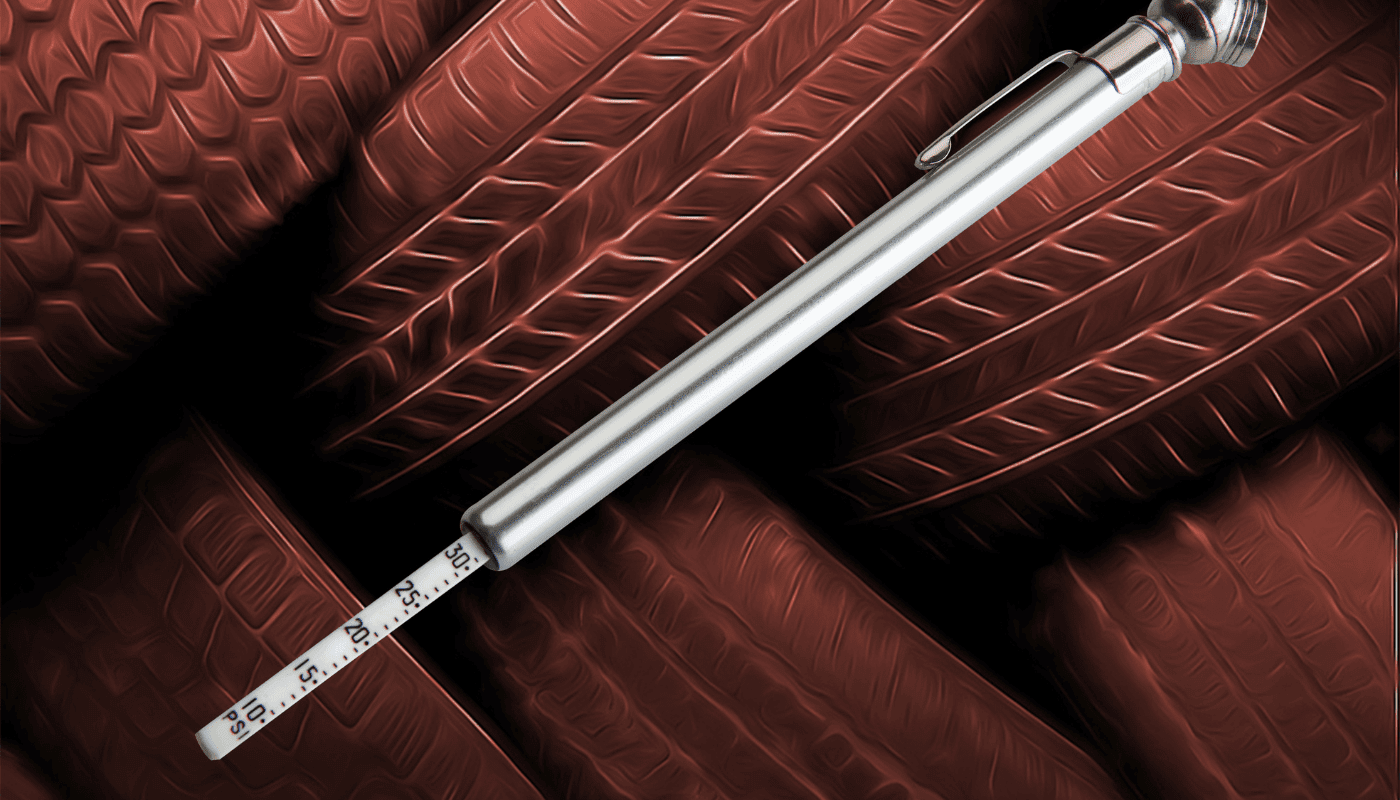
For example, measuring tire pressure and tread depth with our electronic tread probe makes it possible to identify issues more quickly during the inspection routine, flagging the need for maintenance before they become critical.
In addition, this technology sends the measurements taken by the team via Bluetooth directly to the management system. This means that the tire inspection process is semi-automated, reducing the time needed for checks and increasing the accuracy of the data collected.
One question we have already heard about using Prolog App is: “For those who still do their marking on paper, what percentage and/or return will we achieve in 6 months using this tire control tool?”
And the truth is that this is a very difficult question to answer precisely, since each operation has its own particularities — from the number of tires to the region where the vehicles operate and the level of management done today.
If you already have financial management in place, you can build a baseline comparing what you spend today on each item, such as fuel, maintenance, tires, etc., with what you will spend after you start using the spreadsheet.
Although it is not possible to give an exact savings percentage, it is fair to say that organizing information and acting on the deviations found tends to open room for reducing waste and making better decisions.
In addition, you gain practicality and functionality. To present at a board meeting, for example, you have everything at hand, in a few clicks.
Where to start with tire management?
The first action to start tire control in your fleet is fire-number branding of the tires, because this is the only way to identify tires individually. After this step, you need to start the inspection schedule and begin recording data.
If you are just starting out and have few vehicles, you can easily download and use the free tire control tool — just click here (in Portuguese)!
This even answers another question I hear from time to time: “If Prolog App is a tool and system for managing tires, why offer a free spreadsheet with the same purpose?”
And the answer is very simple:
Although this solution exists, many companies and managers still do not have the budget to purchase the product. But that does not mean they should go without keeping track of tire performance. That is why the spreadsheet is available at any time for anyone who needs it.
I always stress that Prolog's great purpose is:
“To help fleet managers take the best possible care of their tires.” – Jean Zart.
And what can Prolog offer beyond the spreadsheet?
The complete tire management system is an even more professional solution. In addition to carrying out control, as shown in the spreadsheet, you also receive the electronic tread probe developed by the Prolog team itself — which makes the data collection process semi-automatic.
Just insert the tread probe into each groove of the tire and the information is sent to the system via Bluetooth, where all the analysis and organization of the data happens automatically.
That way, in addition to indicating when wear reaches the limit set in advance by the company when configuring the system, it also indicates the occurrence of irregular wear, the tire replacement forecast, the tire rotation forecast, CPK by model and CPK by fire number (the serial number branded on the tire), among many other pieces of information.
Get to know it even better in a free demo with one of our specialists. Schedule it here.
Frequently asked questions
What is a tire control tool?
What types of tire control tools are there?
How does Prolog's free tire control spreadsheet work?
Which indicators can be analyzed with the free tire spreadsheet?
Where should tire control in a fleet start?
// newsletter
Fleet management content, straight to your inbox
Articles on tires, maintenance and fleet operations. No spam.