Fire-number branding on tires: risks and precautions
 Luiz Felipe 3 min read
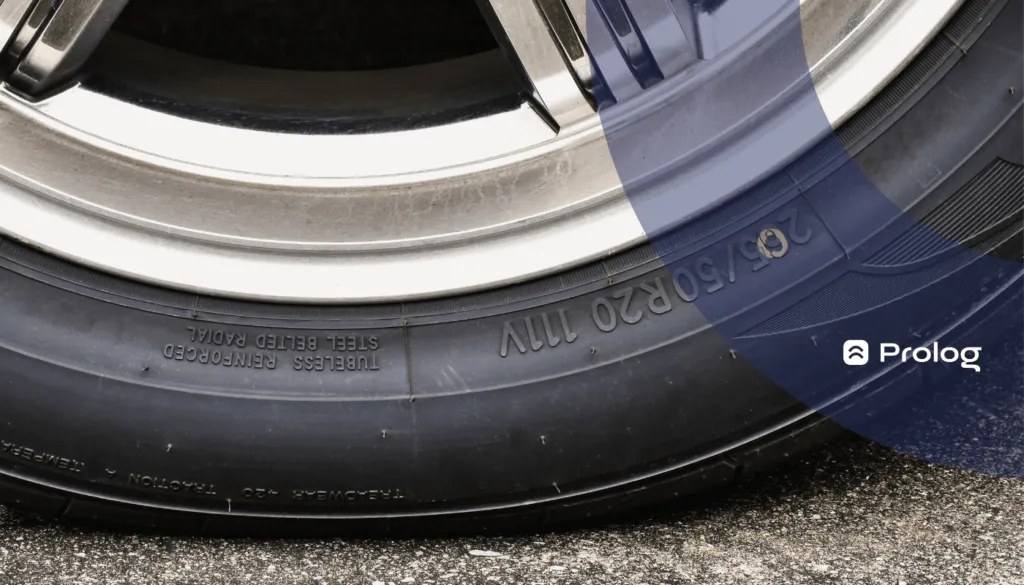
Fire-number branding on tires is a fundamental control practice in fleet management. Without it, there is no way to identify each asset individually, which opens up a range of possible issues.
The marking is done with a hot iron and burns identification numbers into the tire sidewall, which later makes it possible to keep track of each tire in the fleet.
Since no tire comes with this marking from the factory, it has to be done as soon as the tires arrive at the fleet, and this is a differentiating factor that brings many benefits.
What are the risks of fire-number branding a tire?
When the pressure on the marked area is exceeded, there is a risk of reaching the plies and damaging the tire, creating a weak point. With the pressure on the sidewalls while the tire runs, this can result in a rupture of the tire casing and even a blowout.
In addition, since there is no set time for the marking nor temperature control, the risk of burns for whoever operates the heated irons increases, on top of the risks involving the use of gas and/or charcoal fire.
That is why there are already several professional pieces of equipment for marking tires.
But whoever uses them must have the skill and knowledge to keep the branding from being too deep and damaging the tire to the point of making it unusable — and generating high costs for its replacement.
Does fire-number branding on tires damage the asset?
If the tire marking penetrates more than 1 mm deep into the tire rubber, or if it is too hot, it is possible to damage the tire irreversibly and permanently. However, if done properly, it causes no harm at all.
On the contrary, the fire-number brand on a tire allows closer control of each tire in the fleet.
How to prevent damage caused by fire-number branding on tires?
Iron branding, the simplest form and similar to the instruments used to brand cattle, is an old technique on the market. Today, there is the electric tire marker, which has significant advantages.
It has all the numbers in the same tool and also has room for the company logo. Because it has electric heating, it is also safer than the traditional rod, since it does not use fire or gas, reducing the risk of accidents.
The most interesting part is its purchase cost: lower when compared with conventional marking.
What is fire-number branding on tires used for?
Its main purpose is to make it easier to locate the tires, giving each tire this unique characteristic. This is because each tire will have a different combination of numbers (or numbers and letters). That way, it is easily identified and located.
As a result, you can always know whether the asset is in inventory or installed and, in that case, which vehicle it is on and the position used.
You can also record the data collected on each one, such as pressure and tread depth, to take actions that increase the durability of each item, as well as improve the cost per kilometer driven and the lifespan under certain conditions of use.
And there is more:
With this control, you identify the right time to send tires for retreading, avoiding the early loss of the casing.
Can you see why marking tires with a hot iron is so necessary? It brings efficiency, savings and accuracy to your tire management.
For all of this to be possible, the tire needs to be registered in the tire management software after it is marked. Something that Prolog has developed and offers, with excellence, to more than 1,500 operations in Brazil and abroad:
(video in Portuguese)
Frequently asked questions
What is the fire number on a tire?
What is fire-number branding on tires used for?
Does fire-number branding damage the tire?
What are the risks of branding a tire with a hot iron?
What is the advantage of an electric tire marker?
// newsletter
Fleet management content, straight to your inbox
Articles on tires, maintenance and fleet operations. No spam.