Tire inventory: how to organize and control it in the fleet
 Luiz Felipe 5 min read
Companies with transport fleets, especially their own fleets, have a high volume of tires in their operations, which is why they need to manage and control tire inventory.
A truck, for example, can have 4 to 12 tires — or even more for larger vehicles. Spare tires are also needed at the operation’s base so they can be replaced when necessary, whether for a planned replacement or an unexpected event such as a puncture.
This high demand for tires requires organized control and close attention when making relocations. Read on:
How do you organize tire inventory?
Tire inventory starts with defining categories. Some of the most common are: new tires, tires ready for use, tires for retreading and tires for disposal.
From there, it is important that everyone involved in inventory control knows the classifications used.
Even if tires already have a unique identification code each, one way to support and simplify management is to create codes for inventory shelves and sections.
Stock and tire inventory counts also go hand in hand. Each identification record should therefore contain details such as tire ID, size, make, model and manufacturer characteristics, and include photos if possible.
Especially when tires reach the disposal stage, a photo becomes a valuable addition, because it provides data to analyze and understand why tire disposals are happening in your fleet.
When organizing your fleet’s tire inventory, a control system can make routine activities much easier. Even more so when there are standardized processes and individual tire histories, such as wear, retreading, life cycle and cost per tire.
Who should participate in organizing inventory?
Three people in the fleet can participate in tire inventory: the fleet manager, the tire manager and the tire analyst. All have different but complementary functions.
The fleet manager has primary responsibility, especially in operations that do not yet have a specific role to look after tires. In this case, they handle everything from tire marking to casing quality analysis before sending the tire for retreading.
If there is a tire manager, they take on the tasks of organizing and classifying tires, as well as updating relocations and identifying when to add tires to inventory.
One of the analyst’s main activities is looking after tire inventory: organizing it, identifying whether control meets the fleet’s needs and seeking ways to make the process more efficient and avoid issues at this stage of the operation.
How should tires be stored in the fleet?
When storing tires in inventory, you need to follow some tips to prevent premature deterioration:
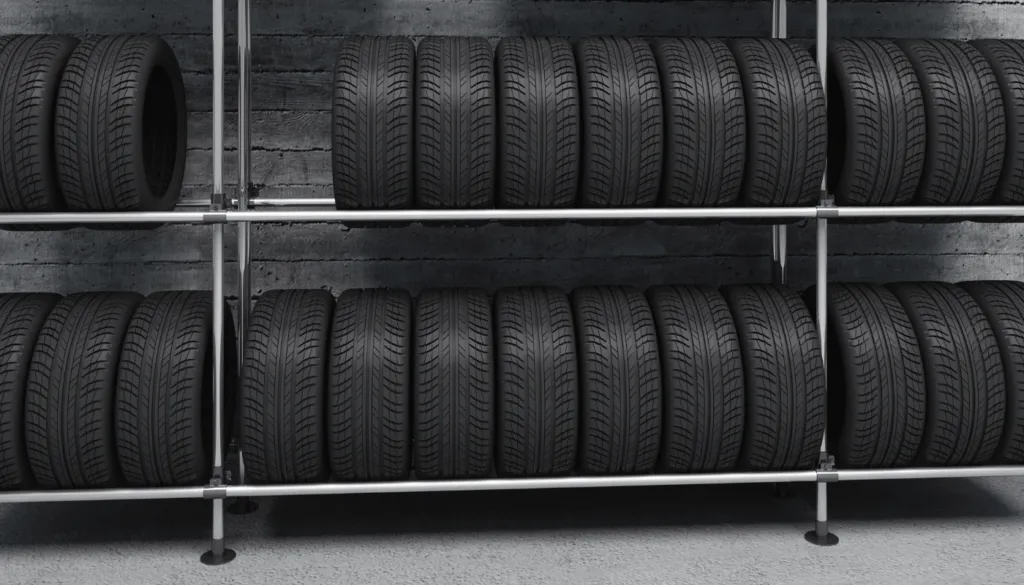
- Use shelves;
- Store tires only after cleaning and drying them;
- Avoid places that are hot, exposed to a lot of sun, dirty, wet or poorly ventilated;
- Keep tires away from aggressive chemical products such as fuels, oils and solvents;
- Use suitable packaging.
If a tire sits idle for a long time, more than four weeks, it is important to change its position to avoid wear and damage before it is even put into use on the vehicle.
How long can a tire stay in inventory?
Do not treat five years after manufacture as a universal expiry date for any tire sitting in inventory. Without a single rule confirmed in the dossier for all cases, control should avoid decisions based solely on that number.
In practice, keeping a tire in inventory is safer when it remains identified, separated into the correct category and stored in a clean, dry, cool, well-ventilated place, out of direct sunlight and away from dirty, wet or poorly ventilated areas. It is also worth recording relocations and keeping the tire’s individual history, including wear, retreading, life cycle and cost per tire, when the fleet uses a control system.
If it has already reached the end of its useful life in the fleet, it can even be removed from inventory when convenient, provided it goes for proper, correct disposal.
Sometimes companies that collect and receive used tires prefer to receive them in large volumes. In these cases, store them until enough have accumulated to arrange their collection from your operation, while continuing to separate, identify and keep track of these tires within inventory control.
Why does setting up and controlling tire inventory properly matter?
There are several reasons to set up suitable tire inventory and maintain daily control of it:
- Knowing how much, when and what to buy
Inventory, both for tires and for other vehicle parts and components, is how you can identify the amount purchased during a period, whether monthly or annually.
This is because you can control how many parts leave inventory, how many enter and which makes and models should be purchased. Over time, you create highly accurate purchasing forecasts.
- Finding a tire in inventory easily
While knowing quantities and which items need to be purchased, you should also know where they are located in inventory. This is a way to speed up tire replacements and maintenance.
Whenever a new tire of make X and model Y needs to be found, the person responsible for tire inventory should know exactly which shelf to search.
- Faster tire relocation
Tire relocation is an activity that involves replacing vehicle tires, installing new assets. But it also includes relocation within the company, such as sending items for retreading.
In other words, it also speeds up asset maintenance, because tires are always organized in the “tires to be sent for retreading” category.
- Reducing tire losses and damage to these assets
Lack of control and attention to tire inventory, as well as inadequate control, can generate more service work and increase tire losses in the operation.
For example, if tires are not stored properly or their entry date into inventory is not controlled, they may spend too long in the same position, causing tire wear.
- Greater productivity in the fleet’s routine
One of the greatest benefits is that managers and other employees do not need to walk through the entire inventory area looking for the items they need. They simply search in the system and tire inventory categories and follow the indicated codes.
The time saved in finding tires to be used or sent for maintenance is undeniable.
One way to control your tire inventory and keep track of relocations is by using a spreadsheet. Get to know Prolog’s template for fleet tire control: download it for free (in Portuguese).
Frequently asked questions
How do you organize fleet tire inventory?
How should tires be stored in the fleet?
How long can a tire stay in inventory?
Who takes care of tire inventory in the fleet?
Why control tire inventory?
// newsletter
Fleet management content, straight to your inbox
Articles on tires, maintenance and fleet operations. No spam.