Tire parts: functions and sidewall information
 Diego Paludo 8 min read
Do you know all the parts of a tire and what technical information is molded into it? It may seem routine, but none of this data is there by chance — it helps you identify wear, schedule preventive maintenance and make more accurate decisions about using or replacing the fleet's tires.
The tire casing itself carries everything you need to know: width in millimeters, the ratio between height and width, type of construction, wheel diameter, load and speed indexes, plus the manufacturing date. Knowing how to interpret each item can prevent common mistakes and ensure the best tire performance throughout the operation.
In this post, you will learn about all of this. Check out the topics:
- What are the parts of a tire?
- Tire technical information
Keep reading and see how to apply this information strategically in managing your fleet.
What are the parts of a tire?
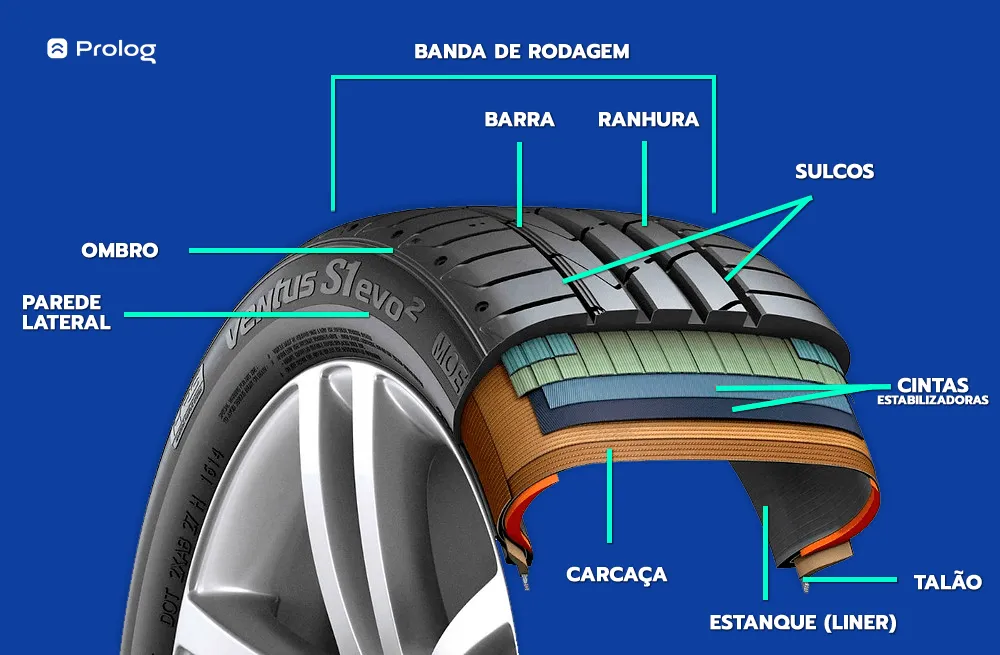
Knowing the parts of a tire is important to understand how it behaves on the road, identify wear, carry out maintenance more precisely, and know the right time to send it for retreading or replace it with a new one.
Below, you can check out the main components of a tire.
Tread
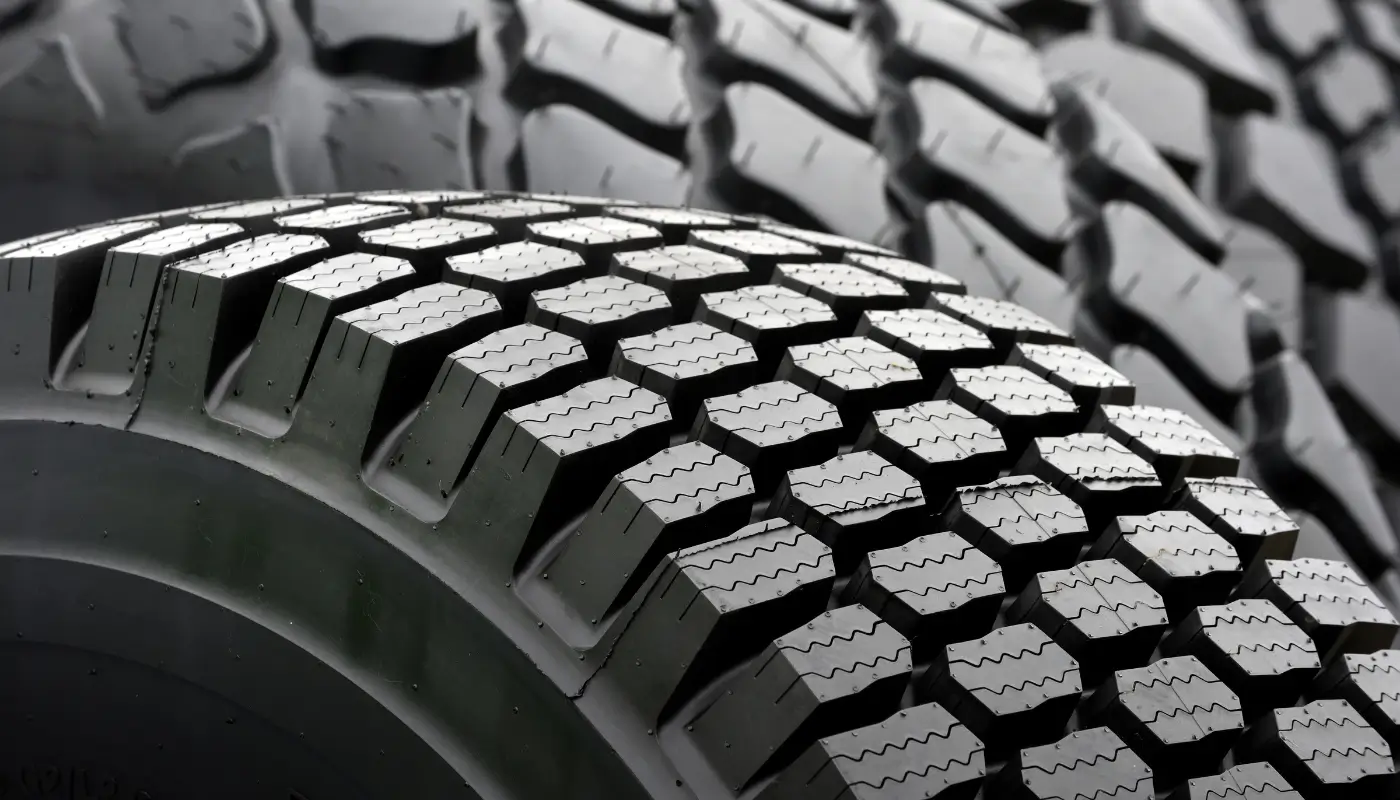
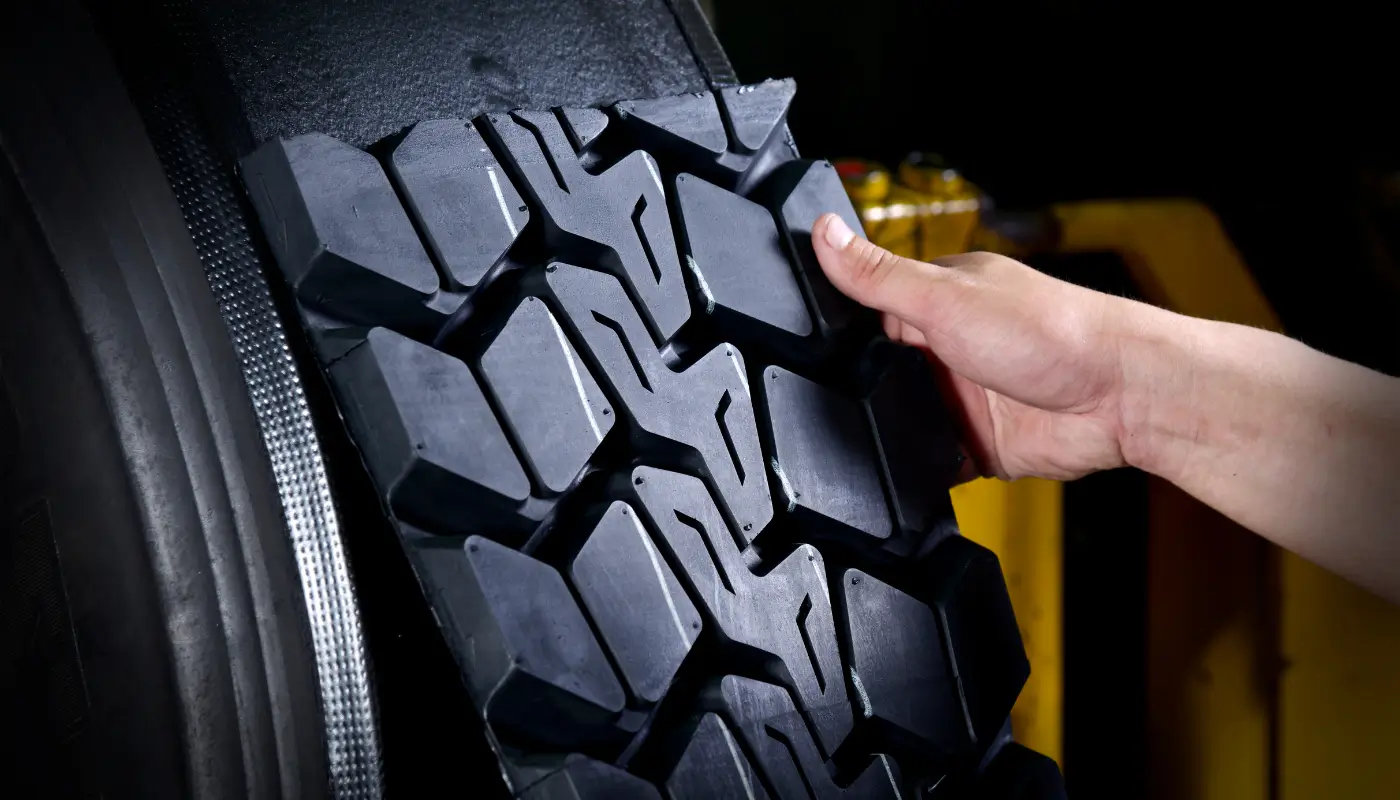
The rolling part of the tire, also called the tread, is the only component of the tire that actually stays in contact with the ground. That is why it must withstand impacts and changes in weather. And to withstand constant wear, it is made up of four main elements: grooves, ribs, shoulders and sipes — each with its own functions and characteristics.
1. Grooves:
Tire grooves cut across the tread lengthwise and/or crosswise. They are responsible for draining water, preventing skidding and helping cool the tire. In addition, they reduce noise and directly influence grip, on both dry and wet roads. It is also between the grooves that the TWIs (tread wear indicators) sit, showing the right time to replace the tire.
2. Shoulder:
The shoulders work as an extra layer of rubber on the sides of the tire. They support the load and help transfer force and weight during turns, giving the vehicle more stability. In addition, the shoulders are usually the part that suffers the most wear, due to constant impacts and stress. That is why it is important to watch this area closely, since repairs in this region are not recommended and can compromise safety.
3. Ribs:
The ribs connect one part of the tire to another and form the tread pattern. They determine the water drainage pattern and directly influence traction and tire behavior under different conditions. The type of rib also affects the noise level and even fuel consumption.
4. Sipes:
Sipes are smaller, narrower grooves found between the tread ribs. They increase the flexibility of the rubber and create more points of contact with the ground. As a result, they improve traction, reduce the risk of slipping and favor more efficient braking, especially on wet surfaces.
Sidewall
The sidewall of the tire is made of a special rubber that balances strength and flexibility. Even without directly touching the ground, this part plays an important role: absorbing the impacts caused by road irregularities. In addition, it protects the casing against external damage.
That is why it is important to avoid rubbing against curbs, rocks or other obstacles, since any damage in this region can compromise the entire structure of the tire — including whether it can be retreaded.
Casing
The casing is the main structure of the tire. Made of materials such as polyester, nylon or steel, it supports the vehicle's weight, withstands pressure and cushions impacts while the tire rolls.
It is the casing that defines the load and speed indexes, directly influencing performance, stability and comfort. Depending on its construction, the casing can be bias-ply — more flexible, ideal for uneven terrain — or radial, which offers greater stability at high speeds and reduces tire heat buildup.
Stabilizer belts
Right above the casing are the stabilizer belts — also known as plies. They are made of overlapping cords, usually polyester or nylon, coated with rubber to ensure better adhesion to the other parts.
Their function is to stabilize the tread and protect the casing against punctures and impacts. There are two main types: textile belts, more flexible and lighter, and steel belts, which offer greater rigidity and strength.
Beads
The bead is the iron part of the tire, formed by rubber-coated steel wires. It comes into direct contact with the wheel and keeps the tire firmly seated on the rim, even under high pressure.
Its main function is to secure the tire safely to the wheel, preventing air leaks and bead unseating — when the tire comes loose from the rim. A damaged bead can compromise the entire seal and the safety of the tire on the road.
Inner liner
The inner liner works as an internal rubber barrier that prevents moisture from entering the casing of radial tires (tubeless). This layer also prevents the gradual loss of compressed air, keeping the proper pressure for longer.
In other words, the inner liner contributes directly to casing durability and calibration efficiency — two essential factors for fleet performance and safety.
Tire technical information
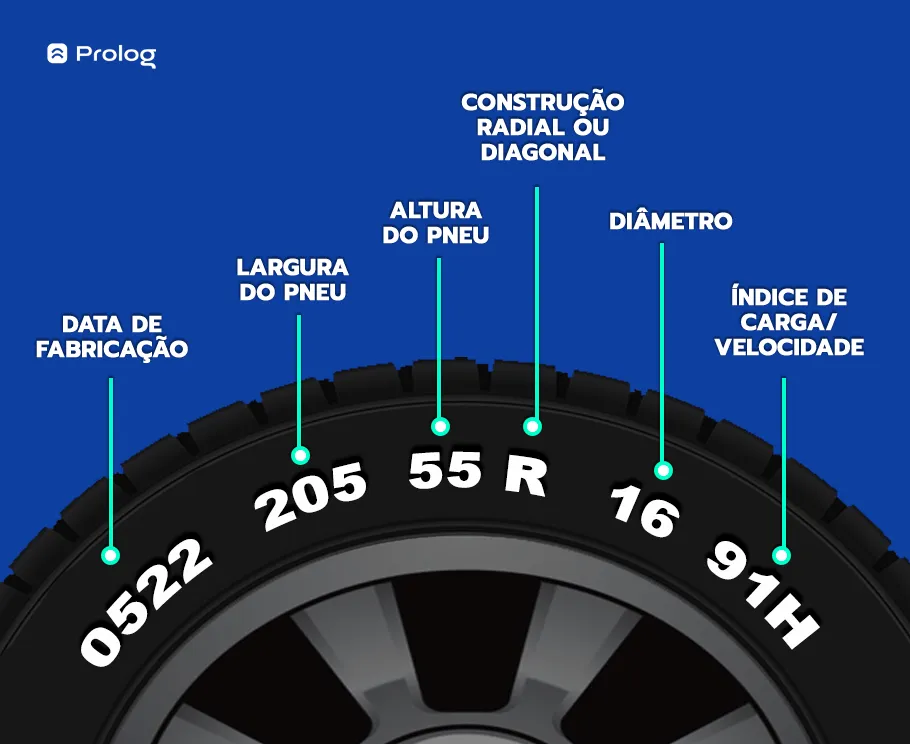
Every tire comes from the factory with a combination of letters and numbers on its sidewall, and you need to understand what each of these elements means to ensure the safety, performance and durability of these assets. This data provides important technical information, such as dimensions, type of construction and manufacturing date.
And if you want to go even deeper into each of the topics below, it is well worth checking out the Unraveling Tire Management course (in Portuguese), with technical specialist Diego Paludo. The examples used below were taken from the course's teaching material, which is exclusive (and very complete).
Manufacturing date
On the tire sidewall, you will find a four-digit code that indicates when it was manufactured, usually near the “DOT” marking (Department of Transportation). The four numbers represent the week and year the tire was produced. If the numbers are 0121, for example, the tire was manufactured in the first week of 2021.
Next to the “DOT” inscription, you may also find the series and batch in which the tire was manufactured.
Width and height
You identify the tire's width and height right at the start of the technical numbering. The first number represents the section width in millimeters, while the number after the slash (“/”) indicates the section height as a percentage of the width.
For example: in the size 295/80, the tire is 295 mm wide and its height is equivalent to 80% of that value.
Radial or bias-ply
Next, you may notice the letter “R” or its absence. The “R” indicates that the tire is radial, while the lack of the letter points to bias-ply construction. This detail shows how the internal cords are aligned and directly influences strength, grip, comfort and performance on the road.
In the previous example, the “R” in 295/80 R would confirm that it is a radial tire. If it does not appear, the tire is bias-ply.
Diameter
Next to the letter that indicates the tire's construction, you will find a number that indicates the wheel diameter, measured in inches. This value represents the size of the rim on which the tire must be mounted.
Still using the previous example: 295/80 R 22.5.
In other words, the tire is 295 mm wide, with a height equivalent to 80% of that width, radial construction and a diameter of 22.5 inches.
Load index
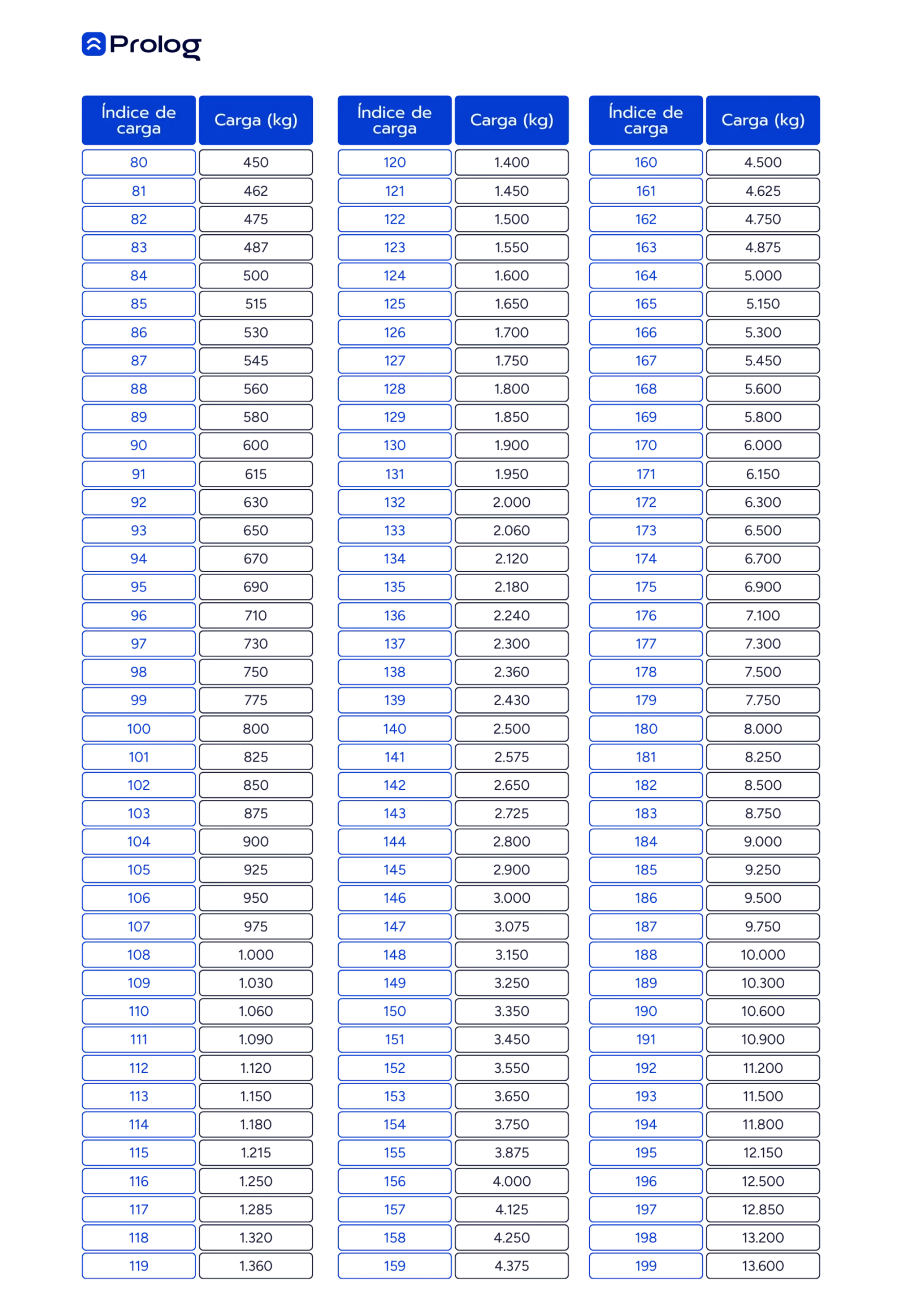
After the diameter, you will see a number that represents the load index. This code indicates the maximum weight each tire can carry when it is correctly calibrated.
For example, on the tire 295/80 R 22.5 152/148, the numbers 152 and 148 represent the load indexes for single and dual tires, respectively. Each number corresponds to a specific amount of weight the tire can carry.
To interpret the number, check the load index table below — it shows the correspondence between the number and the load carried in kilograms.
Speed index
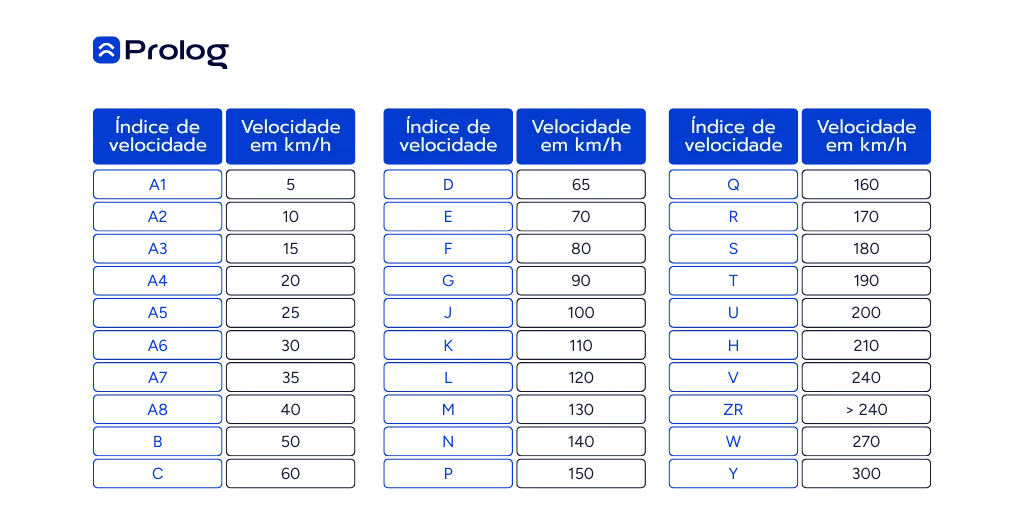
Finally, after the load index, you will find a letter that indicates the tire's speed index. This letter shows the maximum speed the tire can safely withstand and should be checked against the speed index table (right below).
Following the example 295/80 R 22.5 152/148 L, the letter “L” indicates the maximum speed allowed for this tire, which, according to the table below, is 120 km/h. Respecting this limit is essential to ensure safety and durability.
Tire branding
After purchasing the tire for the fleet, you should add its identification number — the so-called brand mark. Some models already indicate on the sidewall where to apply this mark, with the inscription “Brand Tire Here”.
By branding each tire, you ensure much more efficient fleet control. You can identify each tire individually, prevent losses and make more precise decisions about rotations, maintenance and retreading.
And if you want to learn how to take even better care of your fleet's tires and ensure much greater durability for each casing, download the Free guide: how to increase the useful life of tires (in Portuguese) now — it is practical and straight to the point, made for those who really want to cut costs intelligently.
Frequently asked questions
What are the parts of a tire?
What are tire grooves and sipes for?
How do you read the technical information on a tire's sidewall?
How can you tell a tire's manufacturing date?
What is the function of the tire sidewall and casing?
What is tire branding?
// newsletter
Fleet management content, straight to your inbox
Articles on tires, maintenance and fleet operations. No spam.