Tire tread: the 5 types and how to identify them
 Jean Zart 8 min read
Tire tread types can influence transport operations' performance, as well as costs, safety and maintenance.
This layer covering the tire and in direct contact with the ground has different patterns. These patterns can affect wet-road grip, fuel consumption, durability, noise, ease of tire rotation and the need for mounting in a specific position.
Understanding these differences is essential to choosing the ideal tire for your fleet.
See below:
- What tire tread is
- What the types of tire tread are
- What the differences between tread types are
- What makes up a tire tread
- How to identify tread types
- How to identify a tire's tread
- Which tread type is best
What is tire tread?
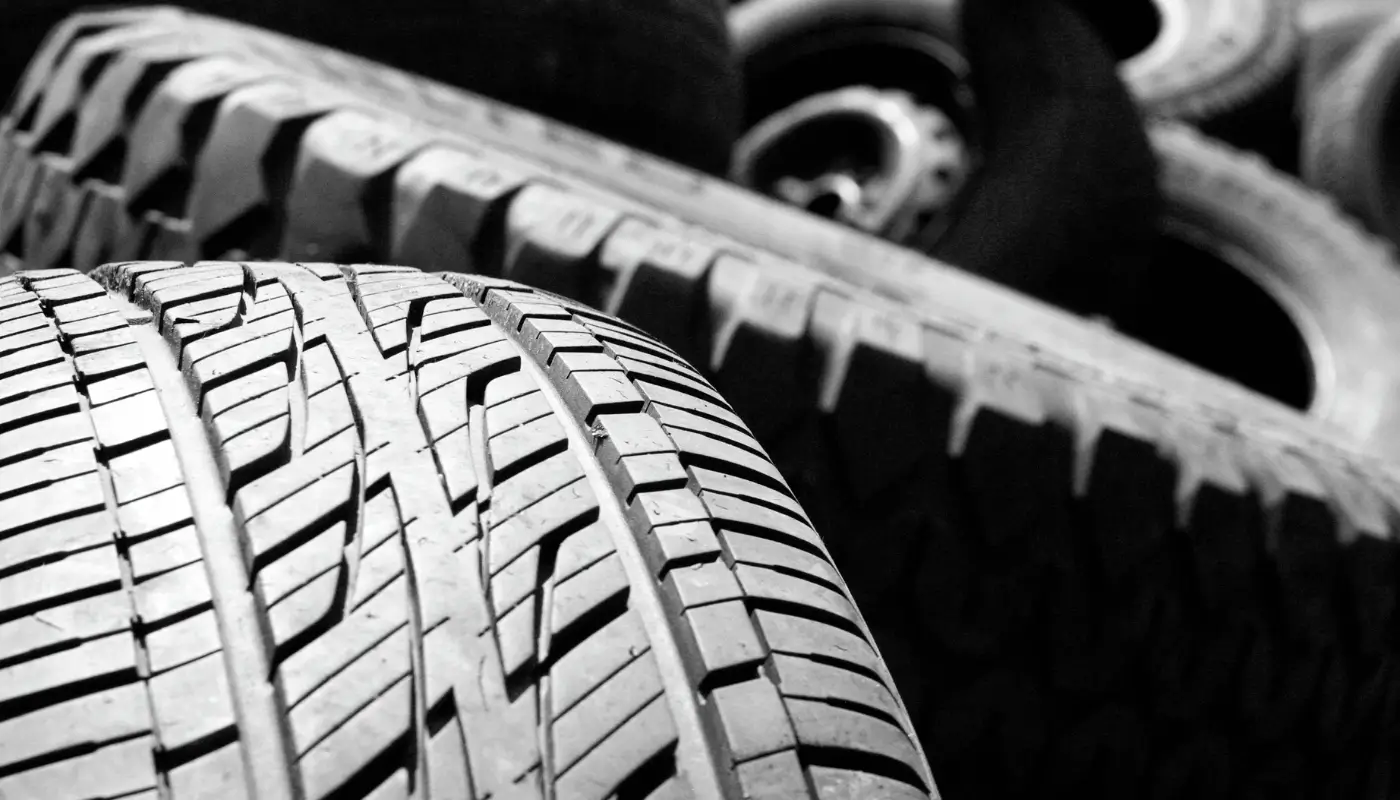
Tread is the tire's rubber layer that makes direct contact with the ground, surrounding the tire and completing its structure. It helps ensure traction, absorb impacts and provide vehicle stability.
To meet different tire needs and functions, tread combines patterns, depth and groove distribution. Grooves are channels in the tread that play a role in water drainage and tire grip on the road.
What are the types of tire tread?
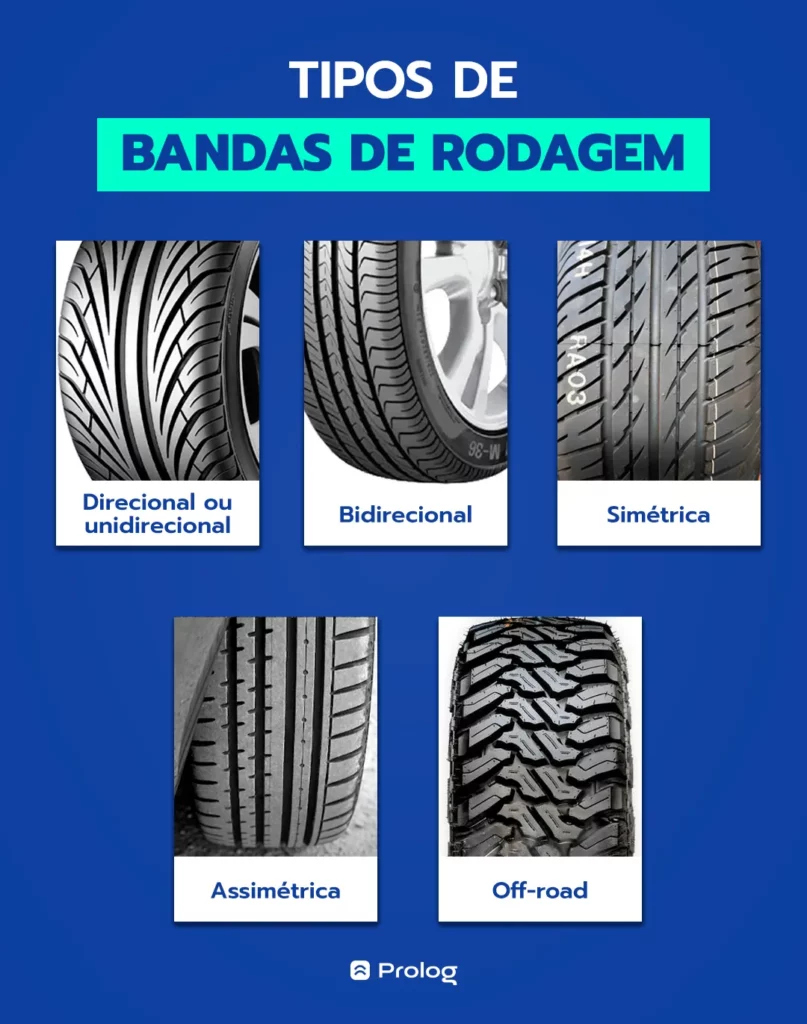
Types of tire tread.
Symmetric
Symmetric tread has a continuous groove pattern that is identical on both sides of the tire. This type is known for durability and low noise, making it a common option for highways and urban use.
Symmetric tires are generally common in transport operations because they combine simpler mounting, easier tire rotation and competitive cost.
Asymmetric
Asymmetric tread gets its name from the different patterns on the tire's inner and outer sides, indicating a correct mounting position.
This pattern difference is designed to favor cornering performance and greater grip in adverse conditions, such as wet and dry roads.
Asymmetric tires are more commonly used on sports cars and high-performance vehicles. Rather than treating this model as “the safest” in every situation, the correct approach is to assess whether pattern, load index, size and application match the vehicle and operation.
Directional (or unidirectional)
Directional tread features V-shaped grooves or arrows pointing in a single direction. This pattern enables better water evacuation, reducing hydroplaning risk and improving wet-road traction.
A directional tire is recommended for frequent wet-road driving, such as in rainy regions or at certain times of year.
Bidirectional
Bidirectional tread is less common and has a pattern that allows the tire to turn in both directions without compromising performance. This flexibility can be useful in specific situations, but it is not widely used on commercial vehicles.
Off-road
Off-road tread is designed for uneven, challenging terrain. It has deeper, more widely spaced grooves, providing excellent traction in mud, sand, stones and rough terrain.
It is simpler than other models when there are no sidewall markings for the correct side or arrows indicating mounting direction. Even so, mounting must follow the manufacturer's instructions and existing tire markings.
Want to see this in your fleet? Talk to a Prolog specialist
What are the differences between tread types?
Tread types vary in pattern, application and benefits. Each meets specific vehicle needs, but comparison must also consider size, load index, speed index and the manufacturer's recommendation. Take a look:
| Feature | Symmetric | Asymmetric | Directional | Bidirectional | Off-road |
| Pattern | Continuous and identical on both sides | Different pattern on inner and outer sides | V-shaped grooves or arrows pointing in one direction | Allows rotation in both directions | Deep, widely spaced grooves |
| Cost | Low | High | Medium | Variable | Medium to high |
| Durability | High | High | High | Variable | Very high |
| Noise | Low | Low | Medium | Variable | Medium |
| Wet-road grip | Medium | High | High | Variable | Depends on model and application |
| Load capacity | Depends on tire load index | Depends on tire load index | Depends on tire load index | Depends on tire load index | Depends on tire load index |
| Application | Passenger and light commercial vehicles | Sports and high-performance cars | Use with greater need for water drainage | Specific situations | Pickup trucks, SUVs and off-road vehicles |
| Mounting flexibility | High | Low (mounting indicators) | Low (specific rotation direction) | High | Depends on model |
| Water evacuation | Medium | High | Very high | Medium | Depends on pattern |
| Tire rotation | Easy | Limited | Limited | Easy | Depends on model |
In general, symmetric tread tends to be an economical alternative. It provides slower wear, low noise and good durability in compatible applications.
An asymmetric tire can offer good wet-road grip and cornering performance, but this does not mean it is always the safest type or supports more weight because of its pattern. Load capacity must be checked against the tire's specified load index.
Even so, its price can be higher than that of other models.
A directional tread tire is good for rainy conditions because its pattern helps drain water. It often appears in applications that prioritize wet-road grip.
Its main disadvantage is limited tire rotation, since it has a specific direction of rotation.
Bidirectional tread offers flexibility for tires to turn in both directions without compromising performance, which can be useful in specific situations, although it is not widely used on commercial vehicles.
Finally, off-road tread is designed for uneven, challenging terrain. With deeper, widely spaced grooves, it favors traction in mud, sand, stones and rough terrain, but should be chosen according to the vehicle's actual application.
What makes up a tire tread?
Grooves
Tire grooves are channels in the tread surface. They help drain water and contribute to the tire's grip on the road.
Groove depth and pattern vary according to tire type, size and application. For tires sold in Brazil, remaining tread depth must not be less than 1.6 mm.
Tread markings
In common usage, many people call the visible markings and cutouts in the tread “tread markings.” To avoid confusion, think of them as part of the pattern formed by channels, blocks and rubber areas between grooves.
These contact areas help stability, traction and even tire wear. Since the pattern changes from model to model, assessment should consider the entire tread, rather than just one isolated part of the pattern.
Tie bars
Tie bars are small raised areas connecting tread blocks. They help increase tread stiffness, improving cornering stability and wear resistance.
Rubber compound
Different compounds can be used to optimize traction, wear resistance and fuel efficiency.
High-performance tires may use softer compounds for better grip, while commercial vehicle tires may use harder compounds for greater durability.
Wear indicators
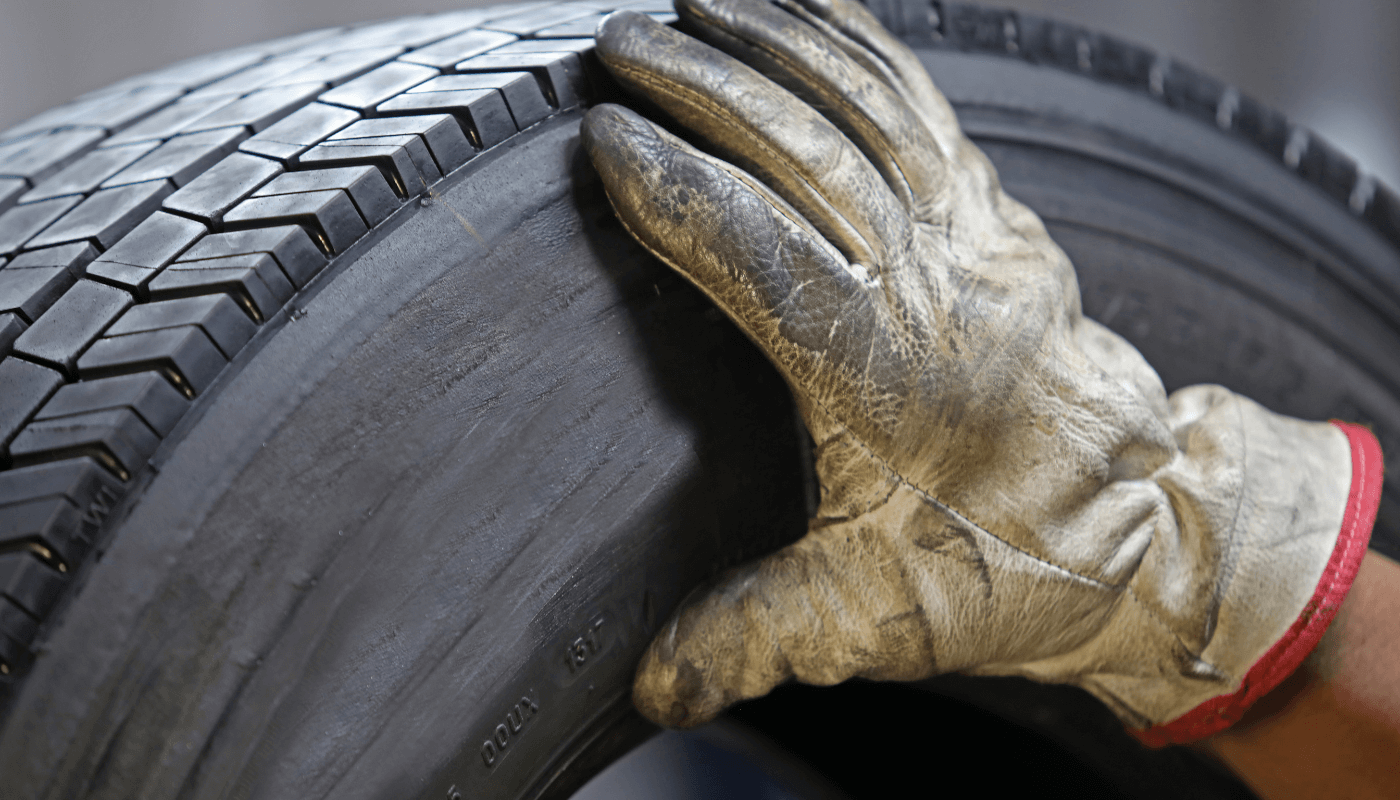
Some tires have wear indicators built into the tread, called tire TWI.
These indicators sit at the bottom of the tread pattern and help visually determine when the remaining depth has reached the critical limit. When wear reaches that point, it is time to replace the tire to maintain vehicle safety.
How do you identify tread types?
Simply look at the tire patterns and sidewall markings, as each type has distinct signs:
Symmetric tires
- Both sides of the tread are exactly the same.
- There is no outside/inside description or arrows indicating mounting position.
Asymmetric tires
- The tread has an outer and an inner side.
- The sidewalls are marked “externo/interno,” “outside/inside” or “aussen/innen,” indicating the correct mounting side.
Directional tires
- They have arrows on the tread specifying the direction of rotation.
- You may find expressions such as “sentido de rotação” or “direction of rotation” marked on the tires.
Bidirectional tires
- They generally have no specific markings indicating an outer or inner side because they can be mounted in either direction.
- They have deeper, widely spaced grooves for better traction on uneven terrain.
- Identification may include markings indicating their specific use, such as “off-road” or similar.
- These tires may have markings indicating the best mounting direction to optimize traction on rough terrain.
How do you identify a tire's tread?
Identifying a tire's tread may seem simple, but it is important to pay attention to details to ensure you are making the right choice for your fleet.
Start with a visual inspection to check grooves and patterns on the tire surface. Then read the sidewall information, especially where it indicates the outside, inside or direction of rotation.
If in doubt, consult a professional. They can provide specific guidance and ensure you use the most suitable tires for your needs.
Which tread type is best?
To choose the best tread and, consequently, the best tire, it is essential to consider your vehicle's specific needs and the terrain where it will be used most.
To make the best decision, consider:
Operational needs
If the vehicle is mostly used on highways or in urban areas, symmetric tread tires may be the best choice because of their durability and low noise.
For sports or high-performance vehicles requiring greater grip and cornering stability, asymmetric tread tires may be suitable. They usually offer good performance on both dry and wet roads, provided the specification is compatible with the vehicle.
In regions with heavy rain or humidity, directional tread tires are recommended because their water evacuation capacity reduces hydroplaning risk.
For vehicles facing rough terrain, mud, sand or stones, off-road tread tires are essential. They provide superior traction and durability in extreme conditions.
The costs involved
Symmetric tires tend to be cheaper and are a good choice for fleets needing an economical solution.
High-performance tires, such as asymmetric and directional models, on the other hand, may have a higher initial cost. The decision should consider safety, efficiency, useful life, tire rotation possibilities and compatibility with the operation.
Tire durability and maintenance
Ease of tire rotation is an important factor to consider. Bidirectional tires offer rotation flexibility, while directional tires have limitations due to their specific direction of rotation.
Using tires with TWI can also help maintain safety, as this feature visually indicates when tread has reached a critical wear level. During monthly maintenance inspections, it is worth checking appropriate pressure, tread wear and tire damage.
Using a tire management system
To optimize tire selection and use in your fleet, consider implementing a tire management system.
These systems help organize inspections, record tire wear, plan preventive maintenance and manage replacements, ensuring your fleet operates with tires in good condition.
See how such a system works in practice: schedule your free Prolog App demonstration.
Frequently asked questions
How do you identify a tire's tread type?
Which pattern suits highway and urban use?
Does tread type limit tire rotation?
What are grooves and tread markings for?
How do you know when it is time to replace a tire?
Is an asymmetric tire worth the higher price?
// newsletter
Fleet management content, straight to your inbox
Articles on tires, maintenance and fleet operations. No spam.