Fleet tire recycling: regulations, steps and benefits
 Jade Zart 11 min read
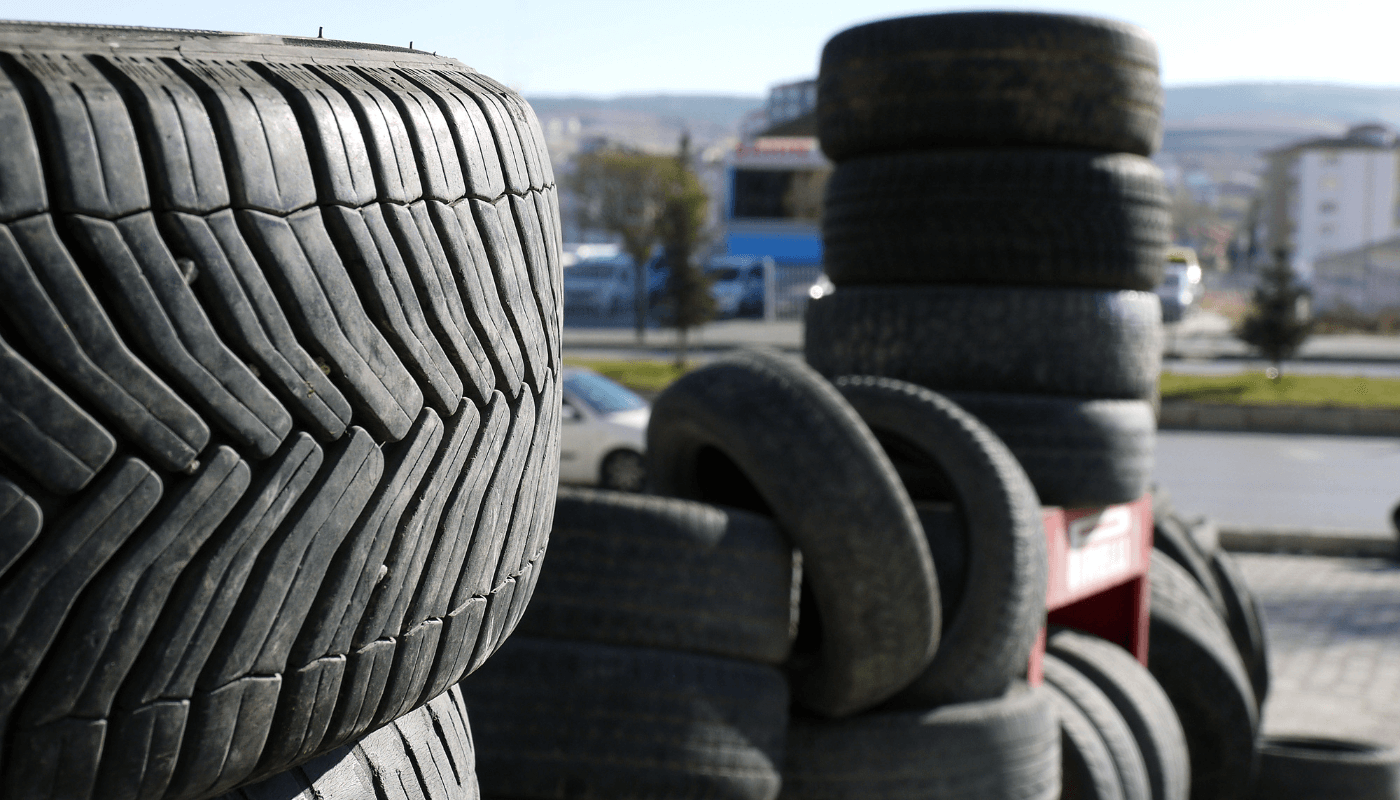
Tire recycling is a practice that contributes to the sustainability and ESG compliance of the vehicle fleet.
This process comes into play when the tire reaches the end of its useful life, involving reverse logistics with the manufacturer or a partnership with companies specialized in the disposal of old tires and in recycling them.
Before any decision, however, it is worth getting three terms straight that the market often uses as synonyms and that the Brazilian standard treats as distinct things. In Brazil, Resolution No. 416 of September 30, 2009, of CONAMA (the National Environment Council) defines an unserviceable tire as a used tire "that has irreparable damage to its structure and is no longer fit for driving or for refurbishment" (Article 2, item V); treats as a refurbished tire a used tire that has undergone a process of reusing the casing to extend its useful life, in the modalities known in Brazil as recapagem, recauchutagem and remoldagem (Article 2, item IV); and reserves the expression environmentally sound end-of-life processing for procedures in which the tire loses its original form and its elements are reused, recycled or processed by a technique accepted by the competent environmental agencies (Article 2, item VI). The same resolution states, in Article 1, § 2, that "tire refurbishment is not considered manufacturing or proper end-of-life processing".
The distinction is not legal hair-splitting: it changes what the fleet can do with each casing and in what order.
Read on:
- What do companies do with old tires?
- When can a tire be recycled?
- What are the benefits of tire recycling for the fleet?
- How do I recycle the fleet's tires?
What do companies do with old tires?
What happens to old tires is an important concern for companies that run vehicle fleets.
Before looking for someone to take the tires (through collection, sale as scrap or donation), the step that saves time is separating what is still usable from what is no longer usable, because the two piles follow different paths. It also helps to know that a tire is not ordinary waste: Brazil's National Solid Waste Policy (Law No. 12.305 of August 2, 2010) lists tires, in Article 33, item III, among the products whose manufacturers, importers, distributors and retailers are required to structure and implement reverse logistics systems.
Once this separation is done, there are several options available for the responsible disposal of used tires:
- Recycling
Recycling is one of the most sustainable alternatives.
Specialized companies can process old tires, shredding them and turning them into reusable materials, such as recycled rubber or fuel.
This approach helps reduce waste and environmental impact. It is worth noting a limit that the Brazilian standard places along the way: under the sole paragraph of Article 12 of CONAMA Resolution No. 416/2009, "the simple transformation of unserviceable tires into rubber chips is not considered final destination". Shredding is a step in the process, not its end.
- Retreading
Tires in good condition can be retreaded, which means the casing is reused and the worn rubber is replaced, extending its useful life.
This saves resources and reduces the need to manufacture new tires. In the definition of CONAMA Resolution No. 416/2009, recauchutagem is the process in which the used tire is refurbished "by replacing its tread and shoulders", unlike recapagem (tread-only retreading), which replaces only the tread, and remoldagem (remolding), which also covers the entire surface of the sidewalls (Article 2, item IV). When talking to the supplier, asking for the correct name of the process avoids comparing quotes for different services.
- Energy generation
In some industrial facilities, old tires can be used as fuel to produce energy.
It is a more sustainable option compared with the use of fossil fuels. This route comes with an express condition: in Brazil, the sole paragraph of Article 15 of CONAMA Resolution No. 416/2009 establishes that "the use of unserviceable tires as fuel in industrial processes may only be carried out if there is a specific standard for their use". In the practice reported to the environmental agency, it is a major route: in the 2025 Tire Report of Ibama (the Brazilian Institute of Environment and Renewable Natural Resources), covering the base year 2024, co-processing (use in clinker kilns as a partial substitute for fuels and as a source of metallic elements) accounted for 41.06% of the total sent to end-of-life processing, followed by granulation (29.01%), lamination (26.68%) and pyrolysis (3.25%).
- Responsible disposal
One point deserves extra attention here: in Brazil, a sanitary landfill is not an accepted destination for tires, even if the landfill is licensed. Article 15 of CONAMA Resolution No. 416/2009 expressly prohibits "the final disposal of tires in the environment, such as abandoning them or dumping them in bodies of water, vacant lots or wetlands, disposal in sanitary landfills and open burning". Law No. 12.305/2010, in Article 47, also prohibits dumping untreated waste in the open and burning it in the open or in facilities not licensed for that purpose.
The path set out, therefore, is not choosing between recycling and landfilling: it is sending the casing to responsible disposal through reverse logistics (a collection point, a storage center or a return at the establishment that does the tire change). Keeping tires in the yard while waiting for a solution is not neutral either: the sole paragraph of Article 10 of the same resolution prohibits storing tires in the open.
When can a tire be recycled?
The main indication for determining whether a tire is no longer fit for use is tread wear, which directly affects the tire's performance.
This limit has a number and a standard: in Brazil, Resolution No. 913 of March 28, 2022, of CONTRAN (the National Traffic Council) prohibits, in Article 4, "the circulation of a motor vehicle fitted with a tire whose tread wear has reached the indicators, or whose remaining tread depth is less than 1.6 mm". The check is visual, using the tread wear indicators (TWI) molded into the bottom of the grooves.
Reaching that point, however, does not mean the tire is ready for recycling, and this is where the difference between refurbishment and end-of-life processing stops being vocabulary and becomes a decision. Being taken off the road and becoming unserviceable are different things: under CONAMA Resolution No. 416/2009, an unserviceable tire is one with irreparable damage to its structure, which is no longer fit either for driving or for refurbishment (Article 2, item V). And Article 14 is direct in prohibiting "the final destination of used tires that are still fit for refurbishment processes, according to the technical standards in force".
In the fleet's routine, the order that follows from this is: first assess whether the casing can still withstand refurbishment and, only then, send to end-of-life processing whatever cannot. That judgment is up to the refurbisher or the licensed end-of-life processor, based on technical standards.
What are the benefits of tire recycling for the fleet?
Reduced environmental impact
By preventing used tires from ending up in sanitary landfills or being disposed of improperly, we reduce the risk of soil pollution and contamination of natural water sources.
Tire recycling also reduces the exploitation of natural resources.
To give a sense of the scale this represents in Brazil, Ibama's 2025 Tire Report records, for the base year 2024, a national end-of-life processing target of 826,062.98 metric tons and a processed total of 784,111.58 metric tons, or 94.92% of the target. The same report lists 1,197 registered collection points in 2024, of which 1,115 are in municipalities with a population above 100,000 inhabitants.
In addition, all of these issues are part of sustainable actions in the fleet and contribute to the company's ESG compliance.
Revenue generation
Finally, tire recycling can have a positive financial impact for the fleet.
Many of the recycled materials that come from tires, such as granulated rubber, can be sold or used in other industrial processes.
This additional revenue can help offset the costs associated with recycling and, potentially, generate some profit for the fleet.
A word of caution on expectations: the one who turns the casing into granulate and sells the material is the end-of-life processor, not the fleet. For the manager, the return usually appears before that, in the casing that reaches the end of its life intact and can still be refurbished. The amount that may be paid for the casing varies with region, volume and buyer, so it is best treated as an estimate to negotiate, not as a list price.
Company reputation
The practice of tire recycling demonstrates the company's commitment to environmental responsibility and sustainability.
This can have a positive impact on the company's reputation, attracting customers, business partners and even investors who value environmentally conscious organizations.
Responsible management of used tires can also align the fleet with environmental regulations, avoiding fines and sanctions. Since the prohibitions in Article 15 of CONAMA Resolution No. 416/2009 and Article 47 of Brazil's Law No. 12.305/2010 cover conduct such as abandonment, irregular disposal and open burning, keeping the casing within the formal circuit is what gives documentary backing to this claim before an auditor or a customer.
How do I recycle the fleet's tires?
To recycle the tires in your fleet, follow these steps:
Proper storage
Gather all of the fleet's used tires in a specific storage location, avoiding contact with water and moisture, which can speed up the degradation process. Beyond the care for preservation, there is the regulatory requirement already mentioned: in Brazil, Article 10 of CONAMA Resolution No. 416/2009 requires temporary storage to ensure the conditions needed to prevent environmental and public health damage, and its sole paragraph prohibits storage in the open. An uncovered yard tends to collect standing water, which becomes a sanitation issue before it becomes an environmental one.
Contacting specialized companies
Look for tire recycling companies or specialized collection centers.
Many of these companies have the knowledge and facilities needed to recycle tires safely and effectively. They can also direct the tires to various processes, such as shredding, retreading, energy generation and others.
If you do not know the most suitable recycling method for the fleet's tires, these companies can also recommend the best alternative based on the needs and the recycling opportunities available in the region. When selecting the partner, ask for the environmental license number: in Brazil, Article 13 of CONAMA Resolution No. 416/2009 provides that the license of end-of-life processors must specify installed capacity, emission limits for the process used and operating conditions.
There is also a route provided for in the Brazilian standard that often goes unnoticed. Under Article 9 of the same resolution, tire retailers are required, "when a used tire is exchanged for a new or refurbished tire, to receive and temporarily store the used tires delivered by the consumer, at no cost to the consumer", adopting control procedures that identify origin and destination. On the other side, Law No. 12.305/2010 establishes, in Article 33, § 4, that consumers must return products after use to retailers or distributors. In other words: in Brazil, the tire change is already, by law, an exit point for the casing.
Cooperation with the manufacturer
Some tire manufacturers offer reverse logistics programs for tire recycling.
Consider contacting the fleet's tire supplier to see whether they have recycling options. The interest on the other side is concrete and has a regulatory basis: in Brazil, under Article 3 of CONAMA Resolution No. 416/2009, for each new tire sold in the replacement market, manufacturers and importers must provide proper end-of-life processing for one unserviceable tire, a 1-to-1 ratio converted into weight for control purposes.
Process oversight and documentation
Keep records of the recycling process, including the number of tires recycled and the methods used.
This not only helps maintain transparency, but can also be useful for sustainability reports and compliance with environmental regulations. A clarification of scope avoids unnecessary work: in Brazil, the obligation to register in Ibama's Federal Technical Registry (Cadastro Técnico Federal) and to report the end-of-life processing falls, under Articles 4 to 6 of CONAMA Resolution No. 416/2009, on manufacturers, importers, refurbishers and end-of-life processors, not on the end consumer. What the fleet needs to keep is traceability: how many casings went out, to whom, with which receipt document and which declared destination.
Awareness and training
It is important for the fleet's employees to be aware of the recycling procedures and of their role in them. In practice, the critical point is usually the tire shop and the yard: who separates the refurbishable casing from the unserviceable one, who records it going out and who knows that a tire does not go into an ordinary dumpster.
Ongoing practice
Tire recycling is an ongoing effort. Continue working with recycling companies and look for opportunities to improve recycling processes over time.
Likewise, it is important to always stay up to date on regulations and recommended practices for tire recycling to ensure that the fleet always remains compliant and maximizes the benefits of recycling. The Brazilian rules cited here (CONAMA Resolution No. 416/2009, Law No. 12.305/2010 and CONTRAN Resolution No. 913/2022) were in force when this review was carried out, but environmental and traffic legislation changes, and state and municipal rules may add their own requirements. Before finalizing an internal procedure, check the current wording and what your state's environmental agency requires.
Learn more about caring for tires up to the recycling stage in this free Tire Management Guide. Download it now (in Portuguese).
Frequently asked questions
When can a tire be recycled?
What do companies do with the fleet's old tires?
What is the difference between recapagem, recauchutagem and remoldagem, the three types of tire refurbishment in Brazil?
How do I recycle the fleet's tires?
What are the benefits of tire recycling for the fleet?
Does the fleet need to report tire end-of-life processing to Ibama in Brazil?
// newsletter
Fleet management content, straight to your inbox
Articles on tires, maintenance and fleet operations. No spam.