Used tire collection and disposal: 4 destinations
 Luiz Felipe 7 min read
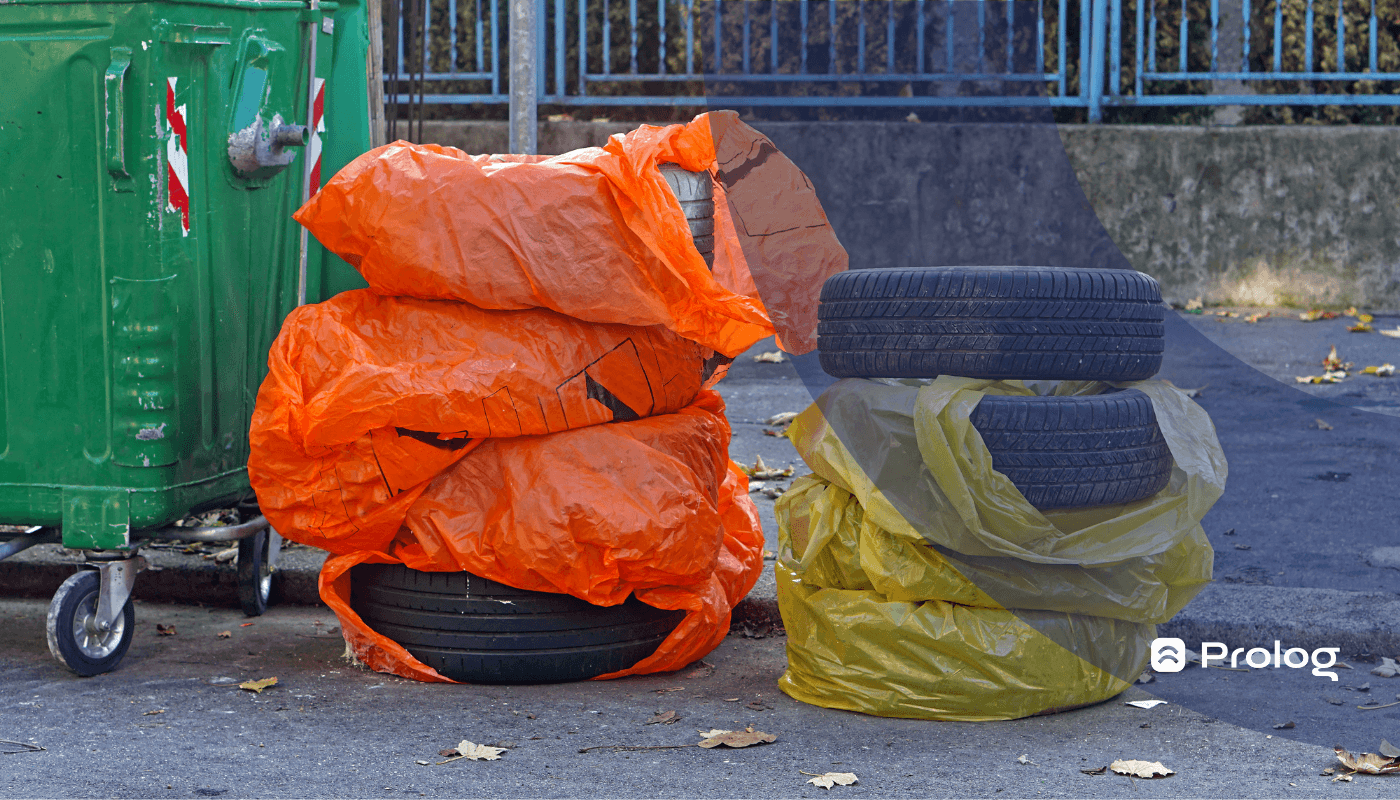
Used tire disposal should be planned with the environment, public health and the fleet's routine in mind, avoiding negative impacts such as the pollution of soil, rivers and urban areas.
Tires that are no longer in use are hard-to-handle waste because they combine rubber, steel, petroleum and other materials. When they are left abandoned for long periods, they take up space, collect water, can clog sewer systems and contribute to environmental and sanitary problems.
During this time in the environment, the tire can also become a breeding ground for disease vectors, such as the dengue mosquito, in addition to harming the landscape, soil and water when disposal is done in inappropriate places.
To avoid these problems and do your part, you are here looking for information on how to dispose of old tires properly, right?
So let us help you with this mission:
What is sustainable tire disposal?
Sustainable disposal, also known as tire reverse logistics, is sending rubber that will no longer be used to organizations or companies specialized in sorting, reuse, recycling or environmentally appropriate disposal, instead of dumping it into the environment.
When the useful life of a tire comes to an end, you need to get rid of it to make room for new tires. There is nothing better than doing so knowing that you are contributing to reducing environmental impacts and to shared responsibility for the life cycle of products.
How to dispose of used and old tires?
We will present four solutions for where you can dispose of old tires. Your job is simply to choose which option best fits your company's reality, always confirming beforehand whether the receiver works with proper disposal:
Return them to the dealer or manufacturer
Yes, you can go to the dealer where you purchased the tires and return them, completing the idea of reverse logistics. Just confirm whether the place of purchase accepts the tire back for disposal, as not all of them follow the same intake process.
If you do not remember where the purchase was made and have no record of it, check the tire's make and try to return it to the factory itself or through the channels indicated by the manufacturer. This option may be more viable, especially for makes that are already well known and established on the market.
Hand them over at the tire shop
When tires are replaced, it is very common to leave them at tire shops. The shop is responsible for handling the tire properly and also understands the importance of correct disposal, making it a more practical option for those who are already replacing tires on a daily basis.
However, seek assurance that the used tire disposal really is sustainable.
After all, there is no point in sending tires to a place that will simply dump them on a vacant lot without even understanding the impact it is causing — or worse: knowing, but not caring about environmental issues.
Take them to a collection point
Many cities have a collection point for recyclable materials. The best way to find out where it is located is to ask city hall. These places usually accept various types of recyclable waste and materials harmful to the environment, such as dry-cell batteries, cooking oil and storage batteries.
So they may also accept tires and handle them appropriately. In some municipalities, collection points do not accept tires because there is already a disposal company specifically for tires or a local reverse logistics system of its own.
Hire a disposal company
There are some companies that work with tire disposal, collecting the tires and carrying out a series of assessments in order to give each discarded tire the appropriate destination.
After receiving, sorting and cleaning the tires, the company can determine whether the tire still allows some reuse, whether it should go to recycling or whether it needs another environmentally appropriate destination. What matters is that the tire does not return to the environment improperly.
Tires that do not return to use in the fleet can go through reuse, recycling or upcycling processes, that is, creative reuse. These are uses for the parts of the tire, which can be turned into new items such as poufs, stools, coffee tables and other products, depending on the condition of the material and the process adopted by the company responsible.
Why pay attention to sustainability in tire management?
When it comes to tire recycling, it is not just talk, you know? In Brazil, reverse logistics is one of the instruments provided for in the National Solid Waste Policy (PNRS), alongside actions such as selective collection, reduction, reuse, recycling and treatment of solid waste.
The PNRS also works with shared responsibility for the life cycle of products and with the protection of public health and environmental quality. By the same logic, dumping tires into bodies of water or burning them in the open goes in the opposite direction of what a sustainable operation needs to pursue.
In addition, improperly disposed tires can serve as containers for disease-spreading insects, a public health issue that has been debated in Brazil for years.
By disposing of used tires properly, your company helps reduce environmental impacts, avoids unnecessary accumulation of waste and improves the organization of the yard and of maintenance.
What to do beyond raising awareness of used tire disposal?
Acquire less polluting vehicles
Vehicles are responsible for a large share of the pollution in big cities. Even though they are more expensive, trucks powered by natural gas, bioethanol or other less polluting alternatives can help the environment when they make sense for the operation.
If you have the resources, it is worth considering electric vehicles or other lower-emission options within the fleet's reality. Besides helping to care for the planet, choices of this kind can be part of a broader efficiency and sustainability strategy.
Optimize routes
Investing in shorter routes is not only good for the company's pocket.
Having trucks travel less on the highways can reduce consumption, wear and emissions. When this is not possible, you can optimize routes by analyzing where there is less traffic, fewer stops and less idle time.
This is because, when the vehicle is stopped with the engine running, fuel is wasted and polluting gases are emitted. Route planning, more realistic delivery windows and keeping track of the main bottlenecks help make the fleet more efficient.
Keep to the preventive maintenance schedule
With maintenance up to date, you keep trucks from burning more fuel than necessary. What is more, prevention helps with tire care, increasing useful life and avoiding early disposal when the casing can still be used, including through processes such as retreading.
This care also depends on routine: keeping track of pressure, wear, alignment, balancing, the load carried and the application conditions helps spot problems before the tire has to be taken out of service. The more organized the maintenance history is, the easier it becomes to decide whether the tire can still run, whether it should be retreaded or whether it has reached the time for disposal.
Train drivers to be more conscious
Of course, those who drive also need to be responsible. Some practices with the truck, such as shifting gears properly, using the air conditioning in moderation, avoiding sudden acceleration and driving prudently, are sustainable actions.
Because it is an increasingly debated topic, solutions in every sector are constantly emerging.
Seeking specialized professionals to run awareness training for the whole team and also keeping an eye on the new technologies that emerge are ways to transform your fleet to be more sustainable.
Adopt tire management software
With the help of technology, it is faster and easier to organize tire history, record inspections carried out by the team and identify failures that may be accelerating tire disposal and preventing the tire from truly being used to the fullest.
A company that faced this issue (and solved it) is Conlog, a transport company that adopted Prolog's tire management and went from an average of 8 tires discarded per month to zero. Tires stay in use longer and purchases go down, also generating less waste and fewer impacts on nature.
In addition, a truck checklist becomes indispensable. With it, inspections are practical and repairs become faster. But, beyond that, the system, for both checklists and tires, helps generate reports from the data entered by the team.
It is a matter of analyzing and creating sustainable practices based on the available data.
Check out some types of reports that are available: 8 reports to understand your fleet's tires.
Frequently asked questions
Where can used tires be disposed of correctly?
Is tire disposal required by law?
What happens to a tire handed over to a disposal company?
Why are improperly disposed tires a problem?
Besides correct disposal, what makes a fleet more sustainable?
Is it possible to reduce the number of tires discarded in a fleet?
// newsletter
Fleet management content, straight to your inbox
Articles on tires, maintenance and fleet operations. No spam.