Tractor unit: what to inspect and how often
 Luiz Felipe 5 min read

The tractor unit is a fundamental piece of equipment in transport companies and fleets.
It is responsible for turning a semi-trailer into a complete vehicle for freight transport and the transport of goods. With its power and strength, the tractor unit contributes to the safety and agility of logistics operations when it is in good working condition.
To keep it running well and support the fleet's performance, you need to inspect its parts and components periodically. Learn more about:
- Why inspect the tractor unit?
- How do you inspect a tractor unit?
- What should be checked during the inspection?
- How often should the tractor unit be inspected?
Why inspect the tractor unit?
Tractor unit inspection is essential to ensure the safety and efficiency of the truck fleet.
The tractor unit is the part responsible for moving the semi-trailer, so it is essential that it be in proper working condition. Inspection is also important to prevent mechanical failures that can cause accidents and delays in cargo delivery.
During the inspection, items such as lights, engine and drive tires are checked. The main goal is to identify problems and arrange the necessary repairs before they become more serious. In Brazil, before putting the vehicle into circulation on public roads, the driver must check that the mandatory equipment is present and in good working order, as required by the Brazilian Traffic Code (CTB).
How do you inspect a tractor unit?
The tractor unit should be inspected with the help of a checklist. In other words, a list that gathers the main items that need to be assessed for wear, failures, broken parts or other incidents that may occur.
The inspection should also be done by a qualified professional. Because it is a simple task that does not require in-depth knowledge of the vehicle's mechanical and electrical systems, the driver usually carries out this general assessment before starting the operation.
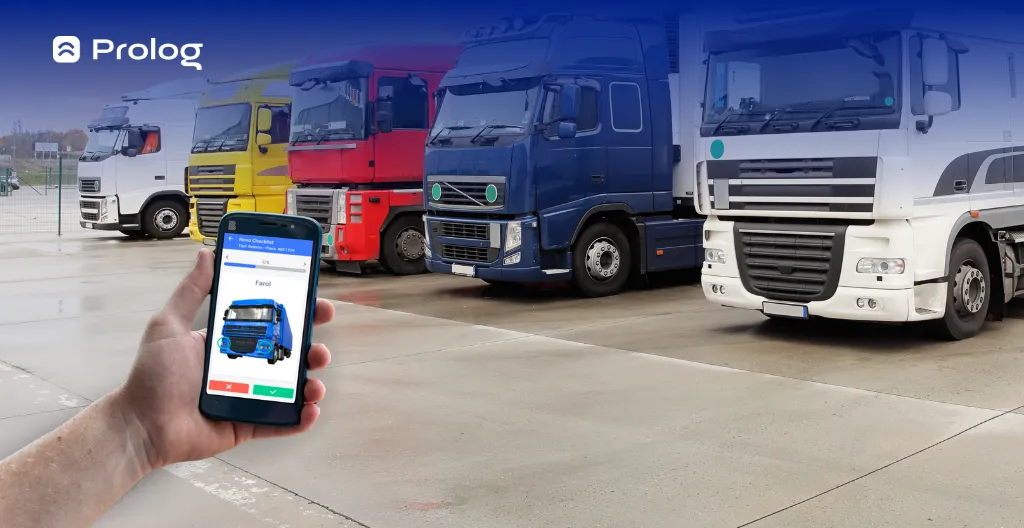
Before leaving on their daily route, each driver takes the checklist model set for their vehicle and checks each item listed there, indicating whether there are problems with the vehicle and what they are. When the fleet uses a digital checklist, this record is easier to forward to whoever keeps track of the fixes and schedules maintenance.
Which inspection checklist type should you use?
The paper checklist is a great resource for those who do not yet carry out any kind of control or vehicle inspection. However, it has limitations that can hold back productivity and operational efficiency results.
For example, information can get lost, take a long time to reach the workshop or cause a service not to be performed because the checklist was not delivered to the person responsible for scheduling maintenance.
With the electronic checklist, this risk decreases, because the inspection information becomes available more quickly to the team in charge and can generate work orders when a nonconformity is indicated, depending on how the tool used by the fleet is configured.
The main difference between the paper and electronic checklist lies in how pending issues are recorded, looked up and handled. The digital one tends to reduce rework, loss of information and form-filling errors, without depending on physically carrying sheets between driver, manager and workshop.
It also makes it easier to customize and edit each checklist model you create in your fleet. In addition, it can be used on a mobile phone and helps drivers with little familiarity with technology when the form is simple, straightforward and suited to the operation's routine.
What should be checked during the inspection?
The tractor unit comprises the front part of a truck, made up of the cab, engine and drive wheels, and its main purpose is to couple and move the semi-trailer for transport.
That is why all the parts that make it up should be inspected:
- Lights: turn signals, position lights, high and low beams, brake light and reverse light, hazard lights, etc.
- Engine: transmission oil, steering oil, air filter, water level, belts, etc.
- Suspension: shock absorber, springs, balancing, alignment.
- Brakes: front, rear, drums, linings, pads.
- Electrical: battery, cab climate unit, alternator, starter motor, locks and windows, etc.
- Exterior: cleanliness, body, bumper, windshield, rearview mirror, etc.
- Interior: pedals, levers, seat belt, seats.
- Safety: reverse alarm, reverse camera, proximity sensors, horn, etc.
- Accessories: power cable, jack, fire extinguisher, warning triangle, etc.
- Tires: drive tires, pressure calibration, spare tire, wear, etc.
- Other: documents, CRLV (Brazil's vehicle registration and licensing certificate), insurance.
Another factor to consider is the vehicle combination.
If the tractor unit is coupled to a tipper semi-trailer, a grain semi-trailer or a semi-trailer, there are three different checklist models for trucks to be used, which can be combined with the tractor unit's to make the inspection faster and more practical.
What is the ideal frequency for inspecting the tractor unit?
Tractor unit inspection should be done regularly, following the manufacturer's recommendations, the fleet's maintenance plan and the transport safety standards that apply to the operation.
How regularly the inspection is done depends on two main factors: how often the vehicle is used and the mileage it covers. The type of cargo, road conditions, failure history and how critical the vehicle is to the operation also come into this analysis.
Investigating problems that may be more serious, such as an engine oil leak, takes more time and effort. This does not mean ignoring visible signs day to day: stains, a strong smell, a warning on the dashboard or a change in the vehicle's behavior should be recorded and sent for assessment.
In practice, the fleet can split the routine into quick checks before departure and more complete inspections at intervals defined in the maintenance plan.
In general, the frequency of complete inspections should follow the manufacturer's manual, the actual use of the tractor unit and the operation's internal safety rules, instead of depending on a single fixed interval for all vehicles.
If the truck is used more frequently and in conditions that can increase the impacts it takes, such as dirt roads, heavy loads or long distances, the inspection should also be done more frequently.
There are items that should be assessed superficially every day. Among them, whether the headlights and reverse lights work, as well as the pedals and levers that are essential for starting and braking the vehicle.
Ready to start inspecting the tractor units in your fleet? Check out a free tractor unit checklist model for you to download, print and use today (in Portuguese).
Frequently asked questions
Who inspects the tractor unit?
How often should the tractor unit be inspected?
What needs to be checked every day?
Which items go on the tractor unit checklist?
Do I need a separate checklist for the semi-trailer?
Is it worth replacing the paper checklist with an electronic one?
// newsletter
Fleet management content, straight to your inbox
Articles on tires, maintenance and fleet operations. No spam.