Unplanned maintenance: what it is and how to avoid it
 Jean Zart 4 min read

To ensure safe and efficient operations, it is essential to adopt different types of maintenance, ranging from preventive maintenance to corrective maintenance. However, one of the greatest challenges is unplanned maintenance, which can generate unexpected costs and affect fleet productivity.
Below, learn about:
- What unplanned maintenance in a fleet is
- The difference between planned and unplanned vehicle maintenance
- What about unscheduled maintenance?
- Examples of unplanned maintenance
- How to deal with unplanned maintenance
- How to avoid this type of issue in a fleet
What is unplanned maintenance in a fleet?
Unplanned maintenance occurs when fleet vehicles need unexpected repairs, usually due to mechanical failures or wear that was not previously identified.
This type of maintenance is not included in the fleet service schedule and happens as an emergency, directly affecting the flow of operations.
When this happens, the fleet manager needs to act quickly to minimize losses and ensure that the vehicle returns to operation as soon as possible.
The difference between planned and unplanned vehicle maintenance
Planned maintenance is scheduled in advance as part of a regular preventive maintenance schedule.
It includes activities such as oil changes, tire checks, brake inspections and other services carried out at defined intervals to ensure that the vehicle is always in good condition.
Unplanned maintenance, on the other hand, occurs unexpectedly, usually due to a failure that was not detected in time or a lack of adequate preventive maintenance.
The issue with this type of maintenance is that, in addition to causing unexpected downtime, it is usually more expensive, as it generally involves more complex repairs or replacing damaged components.
The difference between the two types of maintenance directly affects fleet management:
While planned maintenance allows managers to better control costs and downtime, unplanned maintenance generates unexpected costs and reduces fleet productivity, as the vehicle is out of service longer for emergency repairs.
What about unscheduled maintenance?
Many fleet managers wonder whether there is a difference between unplanned maintenance and unscheduled maintenance. The answer is that, in essence, both terms refer to the same situation: a mechanical failure or issue that needs to be corrected but was not included in the maintenance schedule.
So, when we talk about unscheduled maintenance, we mean the same situation as unplanned maintenance — a need for repair that arises as an emergency and was not anticipated.
Examples of unplanned maintenance
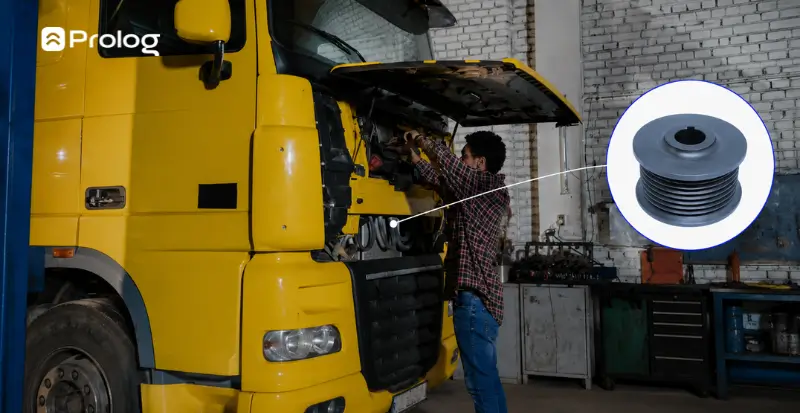
In practice, there are several examples of unplanned maintenance that can occur in a vehicle fleet. Issues such as brake system failures, excessive tire wear or engine breakdowns are typical examples of unplanned situations.
How do you deal with unplanned maintenance?
When an unavoidable unplanned maintenance situation occurs, such as a minor accident on a route, the fleet manager needs to know how to deal with the issue efficiently. Some strategies for handling this situation include:
- Act quickly
When an unexpected issue arises, it is essential that the maintenance team act as quickly as possible to minimize vehicle downtime. Waiting can make the situation worse and increase repair costs.
- Assess the urgency
Not all unplanned maintenance requires an immediate solution. In some cases, temporary repairs can be made so that the vehicle can continue operating until a permanent repair can be scheduled at a more convenient time.
- Request quotes and schedule the service
As soon as the issue is detected, it is essential to schedule the repair as soon as possible to avoid further damage. It is also important for the manager to keep a close eye on repair status to ensure it is completed by the deadline.
And how can you avoid this type of issue in a fleet?
Although it is difficult to eliminate unplanned maintenance completely, there are several strategies that fleet managers can adopt to avoid or minimize its occurrence.
One is to establish a preventive maintenance schedule. Regular inspections and component replacement according to manufacturer recommendations help identify issues before they become serious and are the best way to avoid surprises.
Another way to avoid unscheduled services is to use tools such as tire pressure monitoring sensors and telemetry systems that can provide real-time information on vehicle condition, allowing managers to identify failures early.
Driver training is an important factor that cannot be overlooked. Well-trained drivers take better care of vehicles and are better able to detect abnormalities in components.
Training drivers to carry out visual inspections and report issues is also an action that will help prevent minor defects from developing into major failures.
Last, but still highly relevant, you should keep a detailed maintenance history. Keeping this type of record of every repair and maintenance service carried out on vehicles allows you to identify failure patterns and act preventively, avoiding recurrence of the same issues.
By adopting good preventive maintenance practices, you can reduce unplanned maintenance issues and keep your operation running.
To help you with this task, download our maintenance control spreadsheet for free (in Portuguese).
Frequently asked questions
What is unplanned maintenance in a fleet?
What is the difference between planned and unplanned maintenance?
Are unplanned maintenance and unscheduled maintenance the same thing?
What are examples of unplanned maintenance in a fleet?
How can you avoid unplanned maintenance in a fleet?
// newsletter
Fleet management content, straight to your inbox
Articles on tires, maintenance and fleet operations. No spam.