How to know when to replace your fleet's tires
 Luiz Felipe 4 min read
Is it time to replace your fleet's tires? Learn the signs that your fleet's vehicles need new tires.
After all, it is about avoiding failures and accidents and reducing spending in the company's transport operations. Tires are often one of the biggest freight transport costs, largely because of inadequate care.
Learn more.
When is it time to replace fleet tires?
Let us break it down by topic:
Tread depth
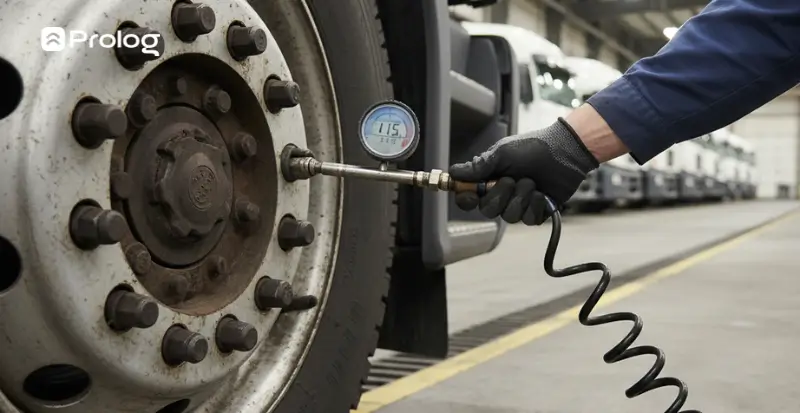
This is the most important control to carry out on fleet tires. Depth can be measured with manual or digital tools, but we always recommend a digital one because it is more practical and already enters the data into a system that automates inspection analysis and organization.
In other words, it indicates whether a tire can continue running based on its current tread depth. If it needs retreading or it is time to replace fleet tires, you will have the dates at hand to plan more calmly.
In any case, in Brazil a tire's wear limit is 1.6mm. As soon as tread depth reaches that level, the tire must be replaced immediately.
However, it is worth remembering that the recommendation is not to let tires reach that figure, ensuring the possibility of retreading and extending tire use with a new tread.
Surface bulges
Any bulge indicates the end of a tire's life because it means the damage is more serious — the problem is in the casing.
Bulges can be caused by the vehicle hitting potholes or incorrect calibration below the recommended pressure for the tire, among other reasons. The risk of driving with this type of problem is high, because the tire can burst and cause an accident.
So, if bulges are found during inspection, it is time to replace the fleet's tires.
Drying
Whether from exposure to sunlight or the use of unsuitable (or low-quality) products, tire drying is common over time. Besides being a problem in itself, it can also cause other issues and bring forward the decision to take the tire out of service.
For example, tire deflation or rubber rupture.
Visible punctures
If there are visible punctures, take the tire out of service for assessment. Do not treat a puncture as automatic disposal: any puncture needs to be checked by a qualified professional before deciding to repair or replace the tire.
Something you can (and should) consider is changing the tire make or model. Sometimes, a puncture can also occur because the wrong type of tire is being used for the road ahead.
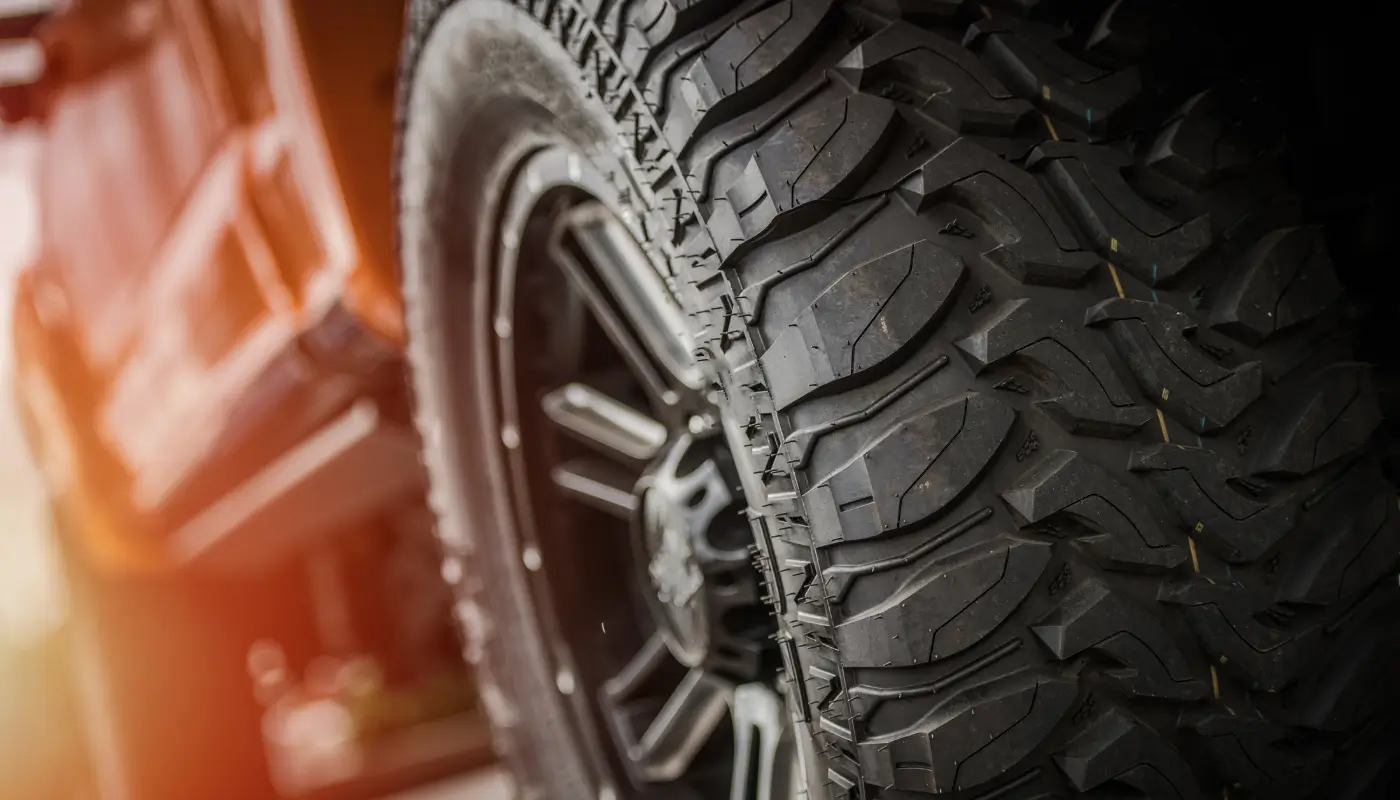
A trip combining asphalt and dirt roads requires a medium-severity tire or even a mixed-use tire. Both types are more appropriate than a low-severity tire, which is more sensitive and ideal for trips only on paved highways.
That said, a punctured tire is not necessarily lost. You can take it to a qualified professional to assess whether repair is possible before disposal.
How can you save on fleet tires?
To begin with, you need tire management. Mark and register tires in a control system to know exactly what is spent on purchases and/or refurbishment, services performed and kilometers traveled.
Other information you can also keep track of includes tread depth and tire pressure.
With all this information, you gain essential knowledge: which tire offers the best value for money.
This means you save in various ways through tire management:
- Extending tire useful life;
- Avoiding premature casing losses;
- Identifying the tire with the best CPK for each operation.
In addition, caring for fleet tires also:
- Saves fuel and vehicle repair costs;
- Avoids fines for infractions of vehicle upkeep regulations in Brazil.
What is needed for good tire control?
First of all, you need a plan. Know what kind of tool you will use and who will be responsible for each task.
The driver normally performs the tire inspection, leaving the fleet manager to analyze all the data, generate insights and make decisions that improve fleet performance.
How much these tasks are broken down into smaller parts depends on the chosen control method. For example, spreadsheet control means the driver will make all notes on paper and then transcribe them into the computer spreadsheet.
Or the manager may have to organize the data on their computer personally. With a digital system, however, all inspection information is entered and updated automatically. Reports are automated too. The manager therefore only needs to select the report type to analyze and focus their energy on making smart decisions.
Fleet tire replacement is part of the process and is very important. But the process before it is even more important! First, you need to understand whether the tires are worthwhile so you can then make better purchases.
To learn even more about tire management, download our free resource Tire Management Guide: making your management more efficient. (in Portuguese)
Frequently asked questions
What tread depth requires a tire to be taken out of service?
A bulge has appeared on the tire. Can I keep driving until the next maintenance?
How can fleet tire spending be reduced?
Spreadsheet or digital system for tire control: what is the practical difference?
Does a tire puncture mean I need to buy another tire?
// newsletter
Fleet management content, straight to your inbox
Articles on tires, maintenance and fleet operations. No spam.