Yard tractor: the vehicle that moves semi-trailers
 Jade Zart 6 min read
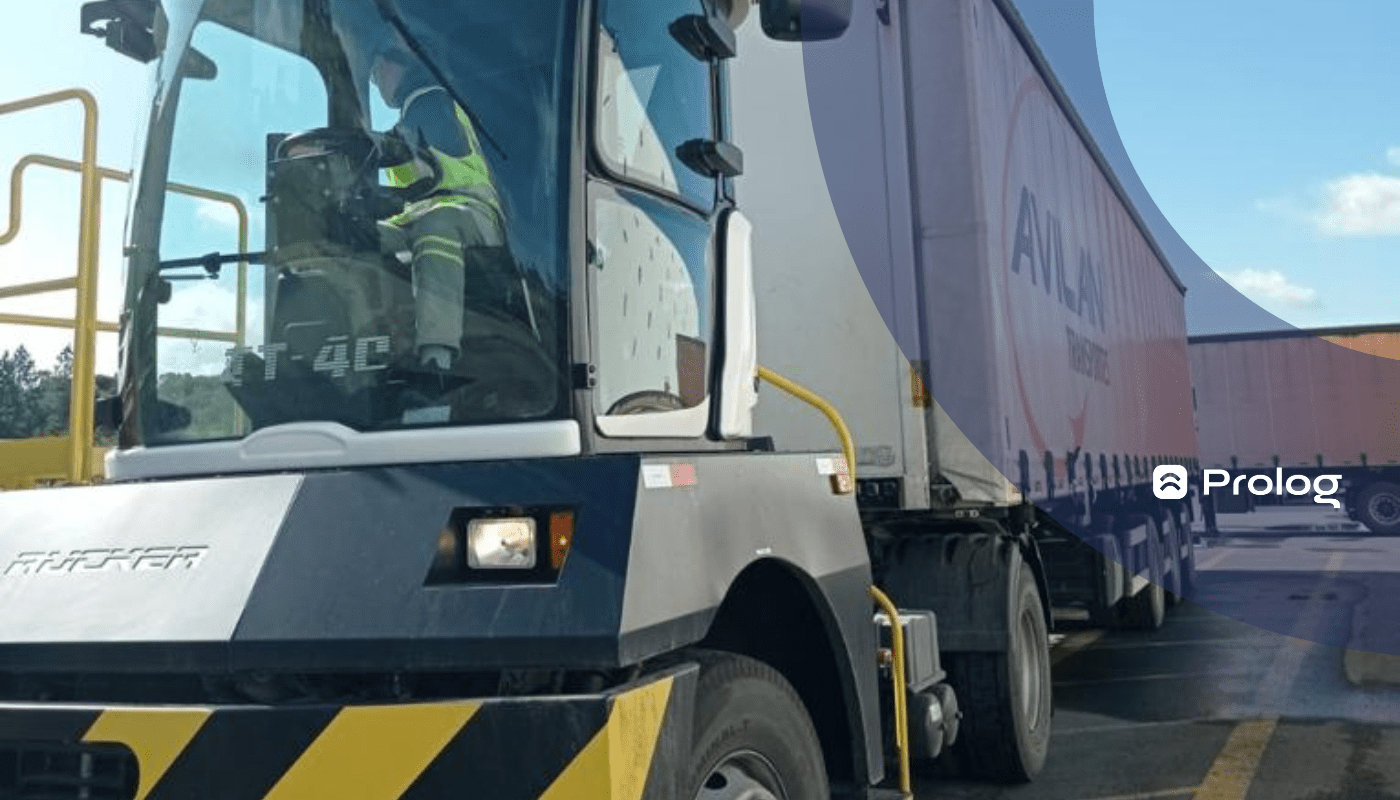
The yard tractor is equipment designed to move containers and semi-trailers with greater agility within yards, terminals and industrial areas.
Although it is still less well known than the on-road tractor unit, it tends to gain ground in operations that need to move many semi-trailers and heavy loads throughout the day.
This happens because, in yard applications, the equipment is designed for frequent cycles of forward and reverse driving, repeated coupling and uncoupling and short trips, usually with a heavy-duty automatic transmission.
In models such as the Trator Terminal TT 40, produced in Brazil, the operation can also gain agility in coupling, since the vehicle lifts the semi-trailer and cargo combination with the hydraulic fifth wheel. This type of solution can help reduce manual steps and make maneuvers faster, in addition to contributing to the control of operating costs, such as those related to fuel spending and yard time.
In practice, the gain depends on the model, the type of operation, the intensity of the maneuvers and the way the fleet organizes its loading and unloading cycles.
Learn:
- What is a yard tractor?
- Why is a yard tractor necessary?
- What are its main characteristics?
- What care is needed to maintain a yard tractor?
What is a yard tractor?
Also called a “cargo handling tractor”, the yard tractor is a vehicle designed for maneuvering semi-trailers in the yard. It can also appear in operations with container carriers, machinery and other heavy loads, working at transport companies, distribution centers, sugarcane fields, steel mills, ports, container terminals, warehouses, industrial areas and companies with high cargo turnover.
These vehicles can have lifting pistons, which keeps the operator from wasting a lot of time on fifth wheel coupling. In the case of the TT 40, for example, the semi-trailer and cargo combination is lifted with the fifth wheel, and the operator can carry out part of the process from inside the cab; after that, the electrical and air connections still need to be made.
In addition, on the same model, locking and unlocking the kingpin are done automatically, from inside the cab, a solution designed to reduce the operator's trips down from and back up into the cab during a routine with many couplings.
In most cases, these vehicles spend a lot of time with the engine running. And, because they run at low speed and over short distances, they are often fitted with an hour meter — which makes more accurate maintenance control possible.
Want to see this in your fleet? Talk to a Prolog specialist
Why is a yard tractor necessary?
It is mainly indicated for operations that require fast movement of trailers, in which semi-trailers need to be coupled and uncoupled constantly. This makes it an alternative for maneuvering operations that need to combine productivity, predictability and safety for the operator.
In fleets that have many semi-trailers and/or handle containers, the yard tractor can affect agility and productivity, especially when there are repeated trips, busy docks, tight yards and the need to fit trailers into small spaces.
In some cases, the yard tractor is license-plated. However, when it runs only in the yard, it does not need license plate registration, which can become an advantage for the operation.
Ports, container terminals, distribution centers, warehouses, industrial areas and companies with high semi-trailer turnover are some of the places where you will find the yard tractor.
What are its main characteristics?
The answer here depends on the model, but these vehicles usually consist of a cab, can be diesel-powered and use an automatic transmission. Load capacities, engine type, fifth wheel configuration and cab features vary according to the manufacturer and the application.
We can take as an example the operation of the Trator Terminal – TT 40, a model produced in Brazil, which does not require cranking the semi-trailers' landing gear up and down, because it has a system in which the 5th wheel is hydraulic and lifts the semi-trailer and cargo combination.
Another characteristic of the TT 40 is a wheelbase shorter than that of conventional trucks, allowing a smaller turning radius. This favors maneuvering in yards and areas with little space. In addition, the vehicle is equipped with a low-power, high-torque engine.
When assessing fuel economy, productivity and total cost of operation, it is worth analyzing current data on the model, work cycle, weight moved, idling time and intensity of the maneuvers. Without this breakdown, any percentage tends to be unreliable for comparing different operations.
The TT 40 has a maximum 4×2 towing capacity of up to 132 tonnes and a fully automatic Alisson transmission. Its axle is AxleTech, with a vertical load capacity on the 5th wheel of up to 25 tonnes.
Some features of the model's cab also include:
- Cushioning;
- Large glazed area;
- Ergonomic seat with air suspension;
- Hydraulic steering with control levers;
- Telemetry.
Because it is manufactured in Brazil, its components may be easier to find at parts dealers than those of imported models, which may have more expensive maintenance or depend on specific availability. Even so, the comparison should consider the maintenance contract, the service network, how critical the operation is and the actual downtime history.
What care is needed to maintain a yard tractor?
One of the main concerns should be the tires, since they face a lot of movement that raises the rubber's temperature and generates a lot of drag on the drive axle.
For this reason, the tires may run for less time than those of a conventional truck in certain operations, but their durability can still be extended with good tire management, proper calibration, frequent inspections and control of the damage found in the yard.
Although designed for heavy-duty activities, the yard tractor also needs care like any other vehicle in the fleet. The best approach is to keep up its preventive maintenance, use a checklist to inspect the items it is made of and include it in the management systems.
Some elements that should be included in the checklist for checking the vehicle are:
- Tires;
- Horn;
- Operation of the automatic coupling;
- Fuel level and consumption;
- Pneumatic hoses.
With precise control of these and other items, the vehicle tends to have a more predictable operation. Because it is used in a severe routine of coupling, reversing, braking, short trips and long periods with the engine running, it should be part of the fleet's inspection and maintenance routine, instead of being treated as a separate piece of equipment.
Want to know more about the yard tractor? Join our exclusive WhatsApp group for fleet managers (in Portuguese) and talk with many experienced professionals from the logistics and transport industry!
Frequently asked questions
What is a yard tractor used for?
What is the difference between a yard tractor and an on-road tractor unit?
Does a yard tractor need a license plate?
What care does a yard tractor require?
What should go on the yard tractor checklist?
Does a yard tractor use less fuel?
// newsletter
Fleet management content, straight to your inbox
Articles on tires, maintenance and fleet operations. No spam.