Analog caliper: how to measure tire tread depth
 Luiz Felipe 4 min read
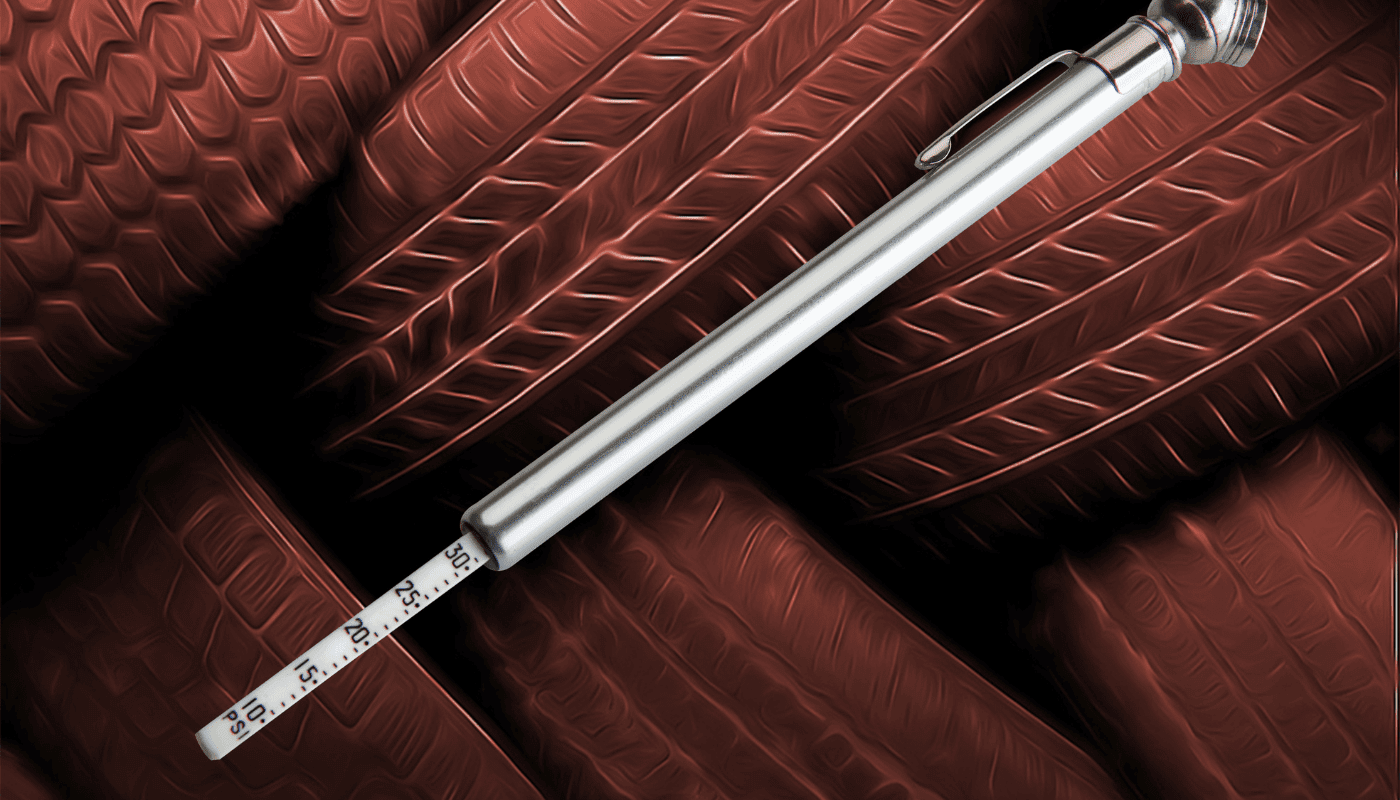
An analog caliper is a manual tool for taking different types of measurements.
In fleet management, it is used mainly to measure the tread depth of tires. This way, it is possible to identify whether it is time to replace the vehicle's tires.
Although using a caliper is quite common in transport operations, is its use really beneficial to the operation? After all, the digital caliper, which has been on the market for a few years, has the same purpose and offers greater accuracy and ease in tire management.
Draw your own conclusion after getting to know the analog (manual) caliper better and comparing it with the digital one. See below:
- What is an analog caliper?
- What is an analog caliper used for?
- How does an analog caliper work?
- Is it worth using an analog or digital caliper in tire management?
What is an analog caliper?
An analog caliper is used to measure the size of small parts. In tire management, it is a tool that helps you understand the tire's useful life, when to send the asset for retreading and so on.
The caliper's structure is like a ruler, with one measuring jaw attached to the slider and the other to the scale.
Made of sturdy metal, it is designed to prevent measurements from varying with the environment and temperature, keeping its degree of expansion low.
It is one of the tire management tools that becomes useful thanks to its precise measurements, in tenths and hundredths of centimeters, and that is exactly what sets it apart from a tape measure or a ruler.
This instrument offers up to four types of measurement: external, internal, depth and step. In the fleet, the one of greatest interest is, without a doubt, the depth measurement.
What is an analog caliper used for?
A manual caliper is used to measure the distance between two opposite sides of an object, such as drill bits, screws and tubes, and can take measurements with good precision.
In the case of tires, it measures from the bottom of the tire groove to its top (at the tread surface), identifying whether the tread depth is as expected, above 1.6 mm.
This way, the instrument can be useful in automotive, industrial and mechanical fields, and many others.
How does an analog caliper work?
Did you know that incorrect use of a caliper can interfere with the measurement result? That is why it is essential to know how to use this tool.
The first step in learning how to use a manual caliper is to define the type of measurement to be made with it: external, internal, depth or step.
On the tire, as we have already identified, it is the depth measurement.
In other words, the analog caliper should be unscrewed from the rod and inserted into the groove until it reaches its “bottom”. Once it is in position, the measurement on the “ruler” will be visible and can be noted down in your records.
It is important to measure each groove individually, to get a more precise result and be able to identify possible irregular wear on the tire.
Is it worth using an analog caliper in tire management?
The answer is: yes, it is worth it.
Even though digital tools have many more advantages for your management, the analog caliper remains a good alternative for keeping this control over the wear of the fleet's tires.
It provides precise measurements and is generally easy to use. At the end of the day, it is better to have some form of control than none, right?
To use this option, you just need to keep in mind that you need complementary tools for more complete tire management. For example, where will you note down the measurements taken during the inspection?
A tire control spreadsheet (in Portuguese), for example, becomes necessary. A tire inspection checklist can also be an option.
Compared with the digital gauge, its disadvantages are the lack of speed and efficiency when inspecting tires, as well as the impossibility of automating the recording of the data collected.
And how does the digital caliper work?
It depends on the device you are dealing with. The most common one is actually called an electronic tread probe, which works like a “gun”.
The tread probe is inserted into the groove and automatically reads the tread depth, sending the data via Bluetooth to the tire management system.
Besides caring for the tire grooves, calibration is equally important. In this case, the electronic tread probe is a great option, as it can be fitted to the hose that measures tire air pressure.
Developed by the Prolog team, the electronic tread probe has 99% accuracy in collecting pressure and tread depth data.
See more details on how this digital tool works and how it differs from the analog caliper — check out our post on the Electronic Tread Probe!
Frequently asked questions
What is an analog caliper used for?
How do you use an analog caliper on a tire?
What is the difference between an analog and a digital caliper?
Is it worth using an analog caliper in tire management?
What is the electronic tread probe and how does it work?
// newsletter
Fleet management content, straight to your inbox
Articles on tires, maintenance and fleet operations. No spam.