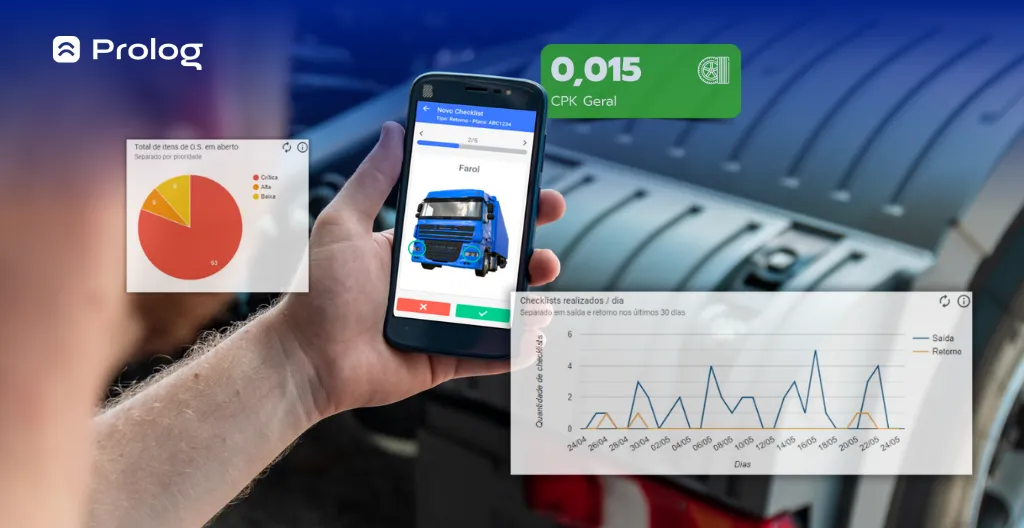
Data integration between fleet systems
 Luiz Felipe 5 min read

Data integration between fleet systems is not an impossible task, but fleet managers still frequently put it off.
This delay often takes a toll on day-to-day work. When each area works with its own database, analysis becomes fragmented, figures may not match and the team wastes time checking information that should be brought together.
If you have been postponing this integration, it is worth treating it as an opportunity to organize management, reduce rework and improve decision-making with a more complete view of the operation.
What is data integration between fleet systems and how does it work?
Data integration between fleet systems involves combining information from different systems and data sources. This combination may include tools for maintenance, refueling, tires, vehicle control, route planning, administrative management and, when the operation uses this type of solution, tracking or telemetry technologies.
The aim is for managers to stop consulting each tool in isolation and start viewing essential data at a more organized access point.
This integration works through data collection. After that, information is processed, standardized and shared efficiently, providing a more complete overview of fleet operations.
Information system integration simplifies data analysis, helps identify trends and provides more reliable input for operational and strategic decisions. This means the manager does not rely solely on scattered impressions or disconnected spreadsheets to assess fleet efficiency.
It also reduces redundant administrative tasks, saving time and resources. It is an important step toward optimizing fleet management and improving overall performance without duplicating the same data in several places.
Why centralize fleet management?
Data integration and centralization allow information such as maintenance, fuel consumption, vehicle performance, tire control, operational records and productivity indicators to be accessed in a single system or a connected analysis layer.
This is becoming increasingly important and forms the basis for a new model of data-driven management.
Collected and centralized information not only simplifies administration but also improves the ability to keep track of operations and carry out clear analyses. Decision-making therefore tends to become faster and more accurate, because it starts from consolidated data rather than isolated snapshots.
Managers can also identify patterns and trends. This allows them to adjust strategies and processes to promote continuous improvements in the daily running of their operations.
Centralizing information also helps avoid data duplication and maintaining several disconnected systems, saving valuable time and resources.
See the full list of benefits of data integration between systems:
All fleet information in one place, simplifying management.
Updated data to support faster and better-documented decisions.
Fewer chances of manual errors and information duplication.
Automated processes save the team time and effort.
Better control of maintenance, fuel and vehicle performance.
The ability to identify trends and patterns for continuous optimization.
Less resource waste and greater savings.
Greater clarity on operational records, maintenance history and cost patterns.
Greater agility for the operation in its deliveries and routes.
Keeps the company competitive in the market by optimizing operations.
Examples of data integration between fleet systems
A common example of data integration between fleet systems involves combining an operational monitoring tool, such as tracking or telemetry, with a fleet management system.
In this scenario, the monitoring tool can provide route, location, speed or driving event data, depending on the contracted features and how the operation uses these technologies.
This data can be integrated with the fleet management system, which adds information such as maintenance history, fines, costs per route and records associated with vehicles and drivers.
This enables a broader understanding of the operation by cross-referencing data such as mileage traveled, route fuel consumption, recorded incidents and maintenance history.
This way, you can assess each case better and define corrective measures based on cross-referenced information, rather than analyzing each indicator separately.
Another example would be integration between fuel management systems, maintenance systems and tire management systems, ensuring an efficient flow of information between these critical areas of fleet management.
How do you create an efficient fleet management process?
(video in Portuguese)
Structure your data-driven management
To create an efficient fleet management process, you need to start by setting clear goals and objectives for your fleet management.
Then implement data integration tools between fleet systems that allow you to centralize information on the main operational aspects.
This may include dedicated systems for maintenance, refueling, tire control, vehicle management, administrative indicators and, in operations that use such features, tracking or telemetry tools available on the market. The choice depends on fleet needs and the data that actually needs to be cross-referenced.
Also use dedicated systems for fleet maintenance management and vehicle tire control. In Prolog App, tire and vehicle data is collected according to the contracted solution, and the dashboard provides quick, centralized access to data from the main features.
In addition, establish processes for maintenance and other activities to ensure your fleet is always in proper working condition and the systems receive the necessary operational data. Without consistent data entry, integration loses value.
Finally, perform data analyses to identify opportunities for improvement and make informed decisions.
This can be easier than it seems, since management systems can already automate reports to support interpretation that better reflects the operation's reality.
Use complementary management tools and tactics
One alternative is to use Business Intelligence tools, which bring together technological processes to collect, manage and analyze organizational data. They help turn raw data into meaningful insights and can integrate with analysis tools such as Power BI.
Another alternative is the logistics control tower. It allows you to centralize data integration between fleet systems, and all operational aspects can be managed and monitored in a unified way.
This tower becomes the heart of management, allowing you to keep track of general operational indicators such as driver performance, fuel efficiency, road safety, maintenance and route productivity.
Whichever form of integration you select, it should make it easier to consolidate data, generate reports and interpret information for better-informed, faster decisions.
With the solutions available on the market, creating an efficient fleet management process is within your reach.
To do this, also rely on a complete system that brings together important areas of fleet management and allows you to share information with ERP systems or a logistics control tower through Prolog's API.
Want a free demonstration to optimize your fleet even further? Then click here and explore Prolog App fleet management software now.
Frequently asked questions
Each area of my fleet uses a different system and the figures never match. How can I resolve this?
How do you centralize fleet management in practice?
What should I look for in a system to integrate fleet data?
What is a logistics control tower and when does it make sense?
What new information appears when two systems start communicating?
// newsletter
Fleet management content, straight to your inbox
Articles on tires, maintenance and fleet operations. No spam.