What information should you seek in fleet data collection?
 Luiz Felipe 7 min read

Data collection in the transport industry and heavy vehicle operations is still not fully widespread, but it is becoming more common each year.
Fleet management is a job that demands attention, deals with high costs and constantly needs alternatives that seek to save time and money.
After all, the best way to work with solutions, especially technological ones, is by evaluating the data collected during a work routine, also with participation from drivers and other employees.
Now, to help you fully understand how important it is to stay informed and up to date on each truck’s condition, we will answer the following questions in this post:
- Do you need to collect fleet data?
- What information should you seek when collecting data in a heavy vehicle operation?
- How can you manage operational data well?
Do you need to collect fleet data?
Yes! You need to use data in transport operations. They are important for the organization and progress of every company, serving as the main ally in reaching specific goals and objectives.
Considering all the stages of a heavy vehicle fleet, there are many details involved in truck care, cargo handling and freight transport, delivery routes, documentation and safety.
Within each of these stages, there is a need to monitor routines and performance that advance the department and company. This is where data collection makes its greatest contributions.
By observing the information collected in employees’ day-to-day work, you gather what is needed to consider strategies aimed at bringing greater productivity, agility and efficiency to the team and fleet.
It also helps reduce costs and maintain consistency in the service provided.
Although it is an excellent resource, before starting the process, you also need to watch out for excessive analysis.
When the potential of data collection is well explored, you may end up getting lost and analyzing information that, although seemingly important, does not contribute to your internal knowledge base.
In other words, you waste time drawing conclusions that do not generate effective management decisions.
To avoid this, your first step should be fleet planning aimed at the reality of your business, company and fleet. This means creating objectives and defining consistent performance metrics and indicators.
Now you are ready to start collecting data and focus on the data that actually have positive impacts on the transport operation’s routine.
What information should you seek when collecting data in a heavy vehicle operation?
1 – Vehicle operation
Trucks are the foundation of the fleet; without them, moving any cargo or goods is impossible. And it is not easy to acquire new heavy vehicles whenever the fleet is short, because costs are high.
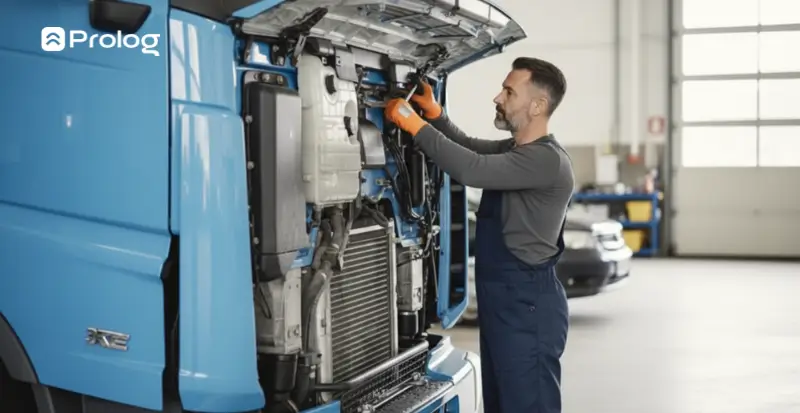
This means it is indispensable to monitor truck condition, something that can be done through preventive maintenance, with daily inspections before and after trips.
It is a precaution that seems small, but recording this information gives you greater control and detail when problems arise. These can also be corrected faster when an incident occurs.
To find the cause of problems occurring with your fleet vehicles, you need to monitor routines in various ways:
- Monitoring routes in real time to understand whether the planned route is being followed, which stops are made along the way, the average speed used and other information that helps determine whether the driver is driving properly.
- Collecting tire pressure and tread depth data regularly, following an inspection schedule, to determine the proper operating pressure for each tire model in the fleet.
- Performing vehicle checklists frequently, looking for problems in the items that make up the truck and requesting maintenance services when necessary to avoid greater consequences.
All this generates knowledge about the vehicle that, through subsequent analysis, helps identify components that may be contributing to vehicle malfunction or excessive fuel consumption.
2 – Fuel and refueling control
Since you cannot control fuel prices, the solution is to find other ways to save, right? One is to monitor spending per kilometer driven.
When a truck consumes more fuel than normal, it indicates something is wrong. But to know this, you need to collect data from all vehicles, monitoring excessive variations in refueling spending.
The reasons that may lead to this involve both the driver’s driving style and possible problems with the truck and/or tires.
For example, when tire pressure calibration is below the required level, the assets lose their strength, forcing the vehicle’s engine to work harder and burn more fuel to compensate.
What you need to analyze fuel consumption is to collect data on:
- Vehicle maintenance, identifying components that fail and how often this occurs;
- Refueling by route and distance traveled, which is possible through cargo tracking;
- Fleet tire wear, identifying its level and whether it is already time to replace tires with new ones in better condition.
3 – Tire performance monitoring
Tires are essential vehicle parts and bear the greatest exposure to damage from weight, rain, sun and poor roads. This damages the outer structure and, in some cases, the inner structure too, potentially resulting in accidents and loss of efficiency and productivity.
That is why monitoring fleet tires is fundamental. You also generate other benefits through tire management, such as fuel savings, reduced preventive and corrective maintenance and reduced early tire disposal.
To achieve all these results, you need to perform tire inspection, that is, collect pressure and tread depth measurements. These are the main data needed to reach conclusions such as:
- The tire make and model with the best performance for your operation or even for each route in the fleet’s routine;
- The tires with the best CPK in the fleet;
- The causes of premature tire wear;
- Why you are facing retread rejection;
- Among others.
These data records are sent to the tire manager, who schedules all services and can better plan maintenance and replacements.
4 – Route planning optimization
Knowing the delivery journey and its dangers is important, and only route planning and the use of fleet data make this possible.
This involves collecting data such as which streets will be on the route and their condition, whether the area carries a cargo theft risk, what traffic is like there, whether there are many curves and traffic lights, and so on.
A fleet monitoring and route planning system makes it possible to collect this information, analyze it properly and seek to optimize results, such as reducing delivery time, generating operational savings.
How can you manage operational data well?
With the help of management technologies and data integration in fleet control. The emergence of logtechs in recent years has brought innovative solutions to all areas of your heavy vehicle operation, from financial control to tire management.
Just as you need to understand which information is most important to analyze in your fleet, you should seek solutions that contribute to collecting the relevant data.
Among the alternatives, you can favor a digital checklist. A tool that assists both the manager’s and the driver’s routine, allowing inspections to be performed faster and all data to be saved automatically and available in real time in the system as inspections are recorded.
On the other hand, you may have a greater need to acquire a solution to record fleet refueling, showing the amounts spent and how often new refueling is necessary.
You can also choose tracking, route planning, traffic fine management and document control systems, and so on. There are so many options that it is worth emphasizing: efficient fleet management involves defining your priorities.
In any case, all these systems have a series of ways to make every work stage faster and safer. So using technology to benefit the fleet is the best investment you can make.
Here at Prolog, our data collection solutions are the tire management system and the electronic checklist platform. Discover how they work and everything you can analyze in a free demonstration with one of our specialists.
Frequently asked questions
I collect various fleet data and still cannot decide anything — what is wrong?
What data do I need to gather to understand fleet fuel consumption?
What can tire inspection reveal about operations?
Where should a fleet that does not yet collect data start?
Do I need a different system for each fleet area?
// newsletter
Fleet management content, straight to your inbox
Articles on tires, maintenance and fleet operations. No spam.