Logistics control tower: what it is and how to implement it
 Luiz Felipe 9 min read
A logistics control tower brings a competitive advantage to fleet management: centralized transport operations data, enabling faster, more efficient strategic decisions.
For years, technology has been spreading into every sector of the job market.
In logistics, although the need to adapt is immediate, adaptation has happened gradually. This is because a supply chain has many separate processes and different managers responsible for each area.
As a result, different logistics control software solutions emerged — to control fleet vehicles, provide financial visibility, create better transport routes and so on.
Now, the logistics control tower offers a way for all transport stages to communicate from a single place. This is the so-called 360º visibility of transport operations. Take a look:
- What a logistics control tower is;
- The role of a logistics control tower;
- How a logistics control tower works;
- Its characteristics;
- The benefits of implementing a logistics control tower;
- How to implement it in your transport operation.
What is a logistics control tower?
Also known as a “control tower”, it is a hub that brings together and digitizes supply chain information in real time, providing a complete view of fleet processes.
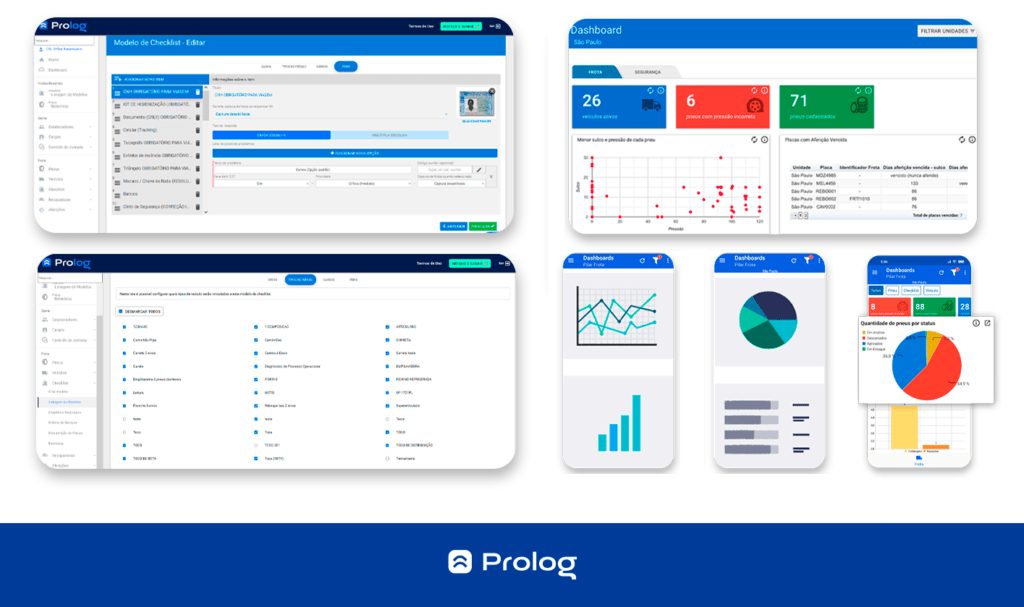
It is worth being precise about what “real time” means here. The tower does not collect anything on its own: it consumes what connected systems deliver, and each source has its own timing. A vehicle's position in transit is updated continuously when the operation obtains a tracking or telemetry service — solutions sold by specialized companies in that market, which depend on onboard vehicle equipment. Tire, checklist and workshop data, on the other hand, enters the database when a person performs the inspection or records the service. The tower displays both side by side; what it does not do is create data no system collected.
This allows fleet activities and deliveries to be planned more precisely and in a more organized way. Keeping track of trips and delivery counts also becomes easier.
It is mainly used in large companies, as an ideal solution for centralizing data and simultaneous real-time transport operations updates.
However, medium-sized transport companies can also benefit from a logistics control tower, even as a driver of growth.
What is the role of a logistics control tower?
With so much information available in this hub, it has several associated goals and functions. Here are some activities carried out in a logistics control tower:
- Real-time delivery monitoring;
- Planning demand and transport routes;
- Resolving urgent problems in real time;
- Evaluating and analyzing fleet performance indicators;
- Identifying low-productivity tasks in the routine;
- Controlling fleet vehicle idle time;
- Viewing the number and types of maintenance work being performed.
Each item on this list depends on a different data source, and it is useful to know which before building the tower. Delivery monitoring and the location of vehicles and cargo in transit come from tracking and visibility systems obtained from specialized suppliers that install equipment on the vehicle or cargo. Maintenance, inspection and tire indicators come from workshop and checklist records. Demand and route planning usually come from the ERP and routing system. The tower is the screen where all this is read together — collection continues in each source system.
How does it work?
A logistics control tower operates on three pillars: processes, people and technology. Take a look:
1 – Evaluating and defining processes
Processes are everything fleet control needs to consider to optimize operations.
What each employee does during the day, how each activity is carried out and what information is collected in each task are examples of processes in a transport operation.
In the tower, they are identified and evaluated: are they working? Do they make sense? Can they improve? This is when managers decide how to organize their fleet and establish clearer, more concise communication with their team.
This type of management also makes it possible to bring greater standardization to fleet processes. Without this step, the tower risks looking attractive but empty: the dashboard exists, but the fields meant to feed it remain blank because nobody agreed who fills in what and when.
2 – Giving information to fleet staff
People are responsible for producing high-quality analyses and seeking strategies and improvements in the fleet routine.
With all the information the team gets from the logistics control tower, they can develop hypotheses about possible improvements to the transport operation and use data to support their ideas.
This is how logistics optimization in transport begins.
3 – Using technology
Technology in transport makes everything possible. It is how data is collected, stored and centralized in one place. In other words, it is the tower's foundation.
Some technologies used include tire management software, the electronic checklist, ERP, the working hours management system and — when the operation obtains this service from a specialized supplier — telemetry too. Any SaaS solution your transport company uses can “feed” the logistics control tower.
Notice that this list mixes two families with very different data sources. On one side are telemetry and tracking systems, sold by companies specializing in these solutions and dependent on onboard vehicle equipment: they produce position, speed and driving behavior data. On the other are systems that record what a person found — the checklist completed by the driver, the tire inspection, the workshop record, the ERP entry. Both appear together on the tower screen, but the difference matters when requesting missing data: if nobody inspected, there is no inspection to display.
The working hours management system mentioned above is an example of data with an objective regulatory reference: in Brazil, art. 67-C of the Brazilian Traffic Code prohibits professional drivers from driving road passenger transport or road freight transport vehicles for more than 5 (five) and a half consecutive hours.
What are the characteristics of a logistics control tower?
Centralization and visibility
One characteristic of a logistics control tower is centralized data and real-time operation. Those responsible can see what is happening at the moment and even intervene if they notice anything unusual — always within what the connected systems can report at that instant.
The idea is to integrate all company systems, using the combination of screens available in the operations room to cross-reference data and generate even greater, better knowledge for indicator analysis and decision-making.
Fleet planning
With so much information available about the fleet's reality, planning becomes more practical and even more efficient.
Everything available in the logistics control tower creates a huge knowledge base for you to evaluate and identify faults in operational processes.
From this, you know which solution to seek and can include it in planning, also setting appropriate goals for its implementation and execution.
Execution
Execution is determined by the action plan the manager created during fleet planning. The measures to take, daily actions and those responsible are all described in the plan and must be followed to generate the best possible results for the company.
Execution is also when data collection through the technologies used takes effect. In other words, it is when you test whether the technologies meet your needs.
For example, whether they are collecting what is needed to evaluate a particular performance indicator you want to control.
Analytical management
This is the main characteristic of a logistics control tower. Everything that happens in the other stages and pillars is intended to generate data to “feed” the tower for later analysis.
Analytical management is essential for making efficient decisions that generate results with a low rate of losses. This is because the facts proving and supporting each decision are evaluated and controlled daily.
What are the advantages of having a logistics control tower?
First, you gain visibility into everything that may be increasing fleet operational costs. That includes spending on fuel, vehicle idle time, tires, supplies and so on.
From this, the manager can find alternatives that reduce costs without harming freight transport.
Incidents and occurrences can be avoided by keeping track of maintenance and vehicle inspections, as well as analyzing frequent problems.
Similarly, driving behavior monitoring can be key to identifying the reasons for these problems — a reading that depends on the operation having obtained a telemetry solution capable of producing this data, since it does not originate in workshop records or checklists.
The same monitoring also allows analysis of trip productivity and performance. Number of deliveries, time taken, schedule compliance, etc.
Used well, this information can become a competitive advantage and deliver better company results. The gain does not come from the dashboard's existence, but from the decision it allows you to make earlier.
After all, as you control operations better, you provide a better service to customers and satisfaction for everyone involved.
How do you implement a logistics control tower?
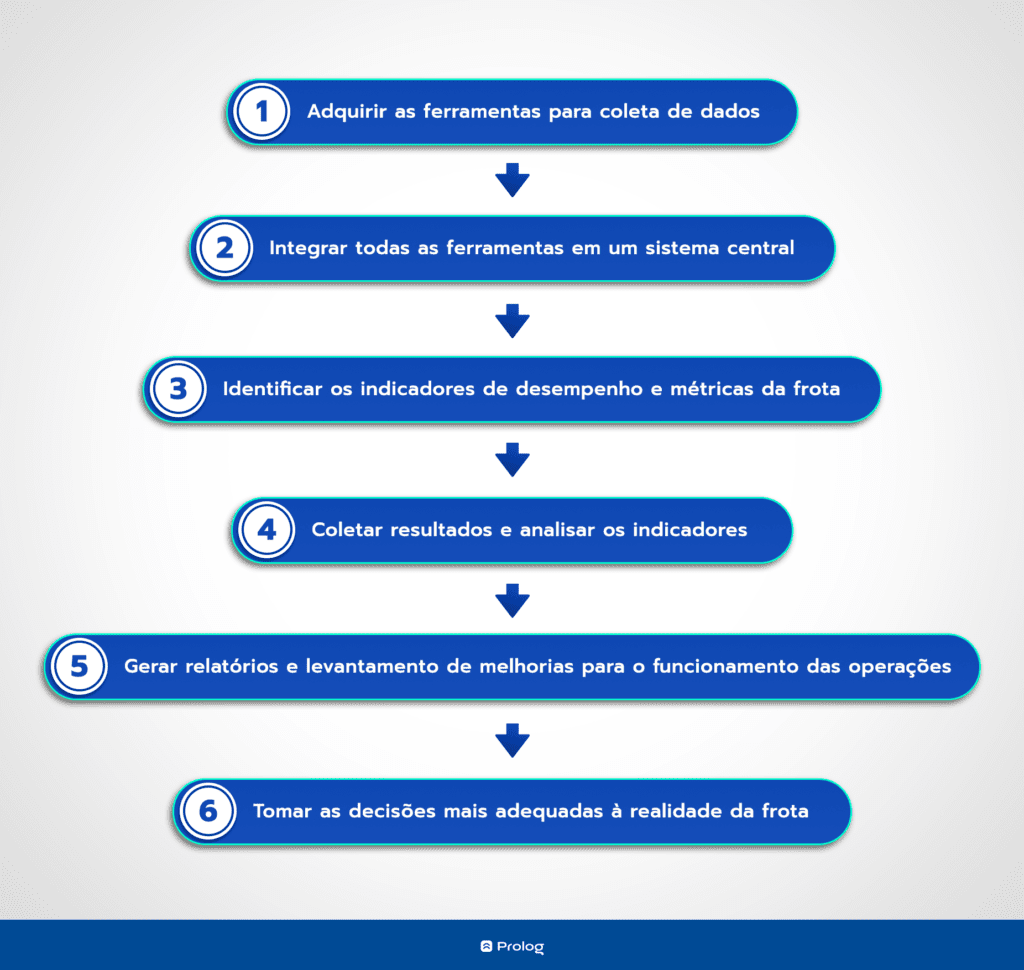
It is not necessarily a physical tower-shaped space you need in your company, but a management model to optimize decision-making.
Thus, implementing a logistics control tower happens in three stages:
First stage: data collection
The first step is collecting the information needed to analyze indicators and make decisions. If you have systems operating in your routine, you can bring their data into this centralized hub and continue collecting it in the same way.
On the other hand, if management is still manual, you need to invest in the necessary technologies, such as systems for fleet maintenance, tire management, routing and fleet monitoring, and so on.
These areas are usually obtained separately, from different suppliers: keeping track of vehicles and cargo in transit is a service provided by tracking and telemetry companies; tire management and maintenance come from systems that record inspections and workshop services. Knowing where each piece of data comes from helps avoid expecting information from a supplier that does not collect it.
Second stage: indicator analysis
Indicators show operational performance across different departments and transport stages. For example, the vehicle idle time indicator helps you understand fleet productivity and plan routes to avoid traffic.
It is important to have comparison benchmarks to assess whether your fleet's results meet an expected standard or need urgent improvement measures. Without a reliable external reference, the fleet's own previous period usually serves as a benchmark — comparing months with similar volumes and route profiles.
Third stage: results and decision-making
This is the decisive stage, when you use everything that happened in the previous stages and make your decisions.
Generally, reports need to be created and reviewed with company directors for new measures actually to be taken, so having data available and showing the operation's reality becomes even more important.
A note on scope for anyone drawing up a supplier list: a single tool is unlikely to cover the whole tower. Each system delivers a portion of the data, and the tower is where these portions can be read together.
To help build your logistics control tower, discover Prolog's fleet management technologies: tire management, electronic checklist and maintenance management — three areas where data enters through an inspection performed by a person and a workshop record.
Frequently asked questions
What is a logistics control tower?
What is the role of a logistics control tower?
How does a logistics control tower work?
How do you implement a logistics control tower?
Does the control tower collect data on its own?
What are the advantages of having a logistics control tower?
// newsletter
Fleet management content, straight to your inbox
Articles on tires, maintenance and fleet operations. No spam.