Electric trucks: how they work and whether they are worth it
 Jade Zart 6 min read
How about preparing your trucking company for more sustainable and efficient decisions? Start by understanding how an electric truck works: it can reduce direct emissions, lower noise and change the fleet's operating math, but it still calls for care with investment, charging and range.
Although here in Brazil it is still a technology in development for many operations, there are already electric trucks being tested and on the road, including models developed for the Brazilian market.
Meanwhile, in Europe, the electric truck already appears in several regions as an important alternative for freight transport. This is largely due to stricter laws on reducing environmental impact.
In fact, this vehicle really emerged as a solution and a response to pollutant emission rules. Electric vehicles have no tailpipe emissions; at the same time, generating the electricity used for charging can still produce carbon pollution, depending on the energy mix.
The truth is that it may take a while to be used on a large scale because of its purchase price. Today, electric trucks still require a higher initial investment than conventional trucks. On the other hand, however, the operating cost can become more competitive depending on the operation, the energy rate, the type of route and the charging infrastructure.
According to some logistics specialists, the ROI (return on investment) can depend heavily on the operation. But how does this truck work? Is it really better? Is it worth investing in?
Every time something new comes along, the questions and doubts arrive in full force, right? To start, let's answer:
How does the electric truck work?
Unlike the traditional models used all over the world, the electric truck runs, of course, on electrical energy supplied by batteries. Charging time changes according to the model, the battery and the available infrastructure; in one market example, the Volvo FH Electric can charge from 20% to 80% in about 65 minutes.
Even so, some truck models use brake friction and deceleration as a source of energy production to give the batteries an extra charge. This reuse, known as regenerative braking, helps explain the efficiency of the system: electric vehicles use approximately 87% to 91% of the energy from the battery and from regenerative braking to move the vehicle.
Charging can be done with electrical energy, by plugging the vehicle into an outlet at charging stations, or through clean energy sources, such as wind and solar. Availability will also depend on the model the company acquires, the infrastructure it contracts and the electricity mix used for charging.
It is important to mention that other elements that need a battery, such as the air conditioning and headlights, may have separate systems, depending on the vehicle's design.
What models are available on the market?
One of the first models, from Renault Trucks, appeared in 2009 and, since then, this market has only grown. Today, we can find a variety of models from several automotive industry companies, including:
- Tesla Semi (Tesla);
- Urban eTruck (Mercedes Benz);
- FL Electric (Volvo);
- ET-ONE (Thor Trucks);
- T-POD (Einride);
- e-Delivery (Volkswagen).
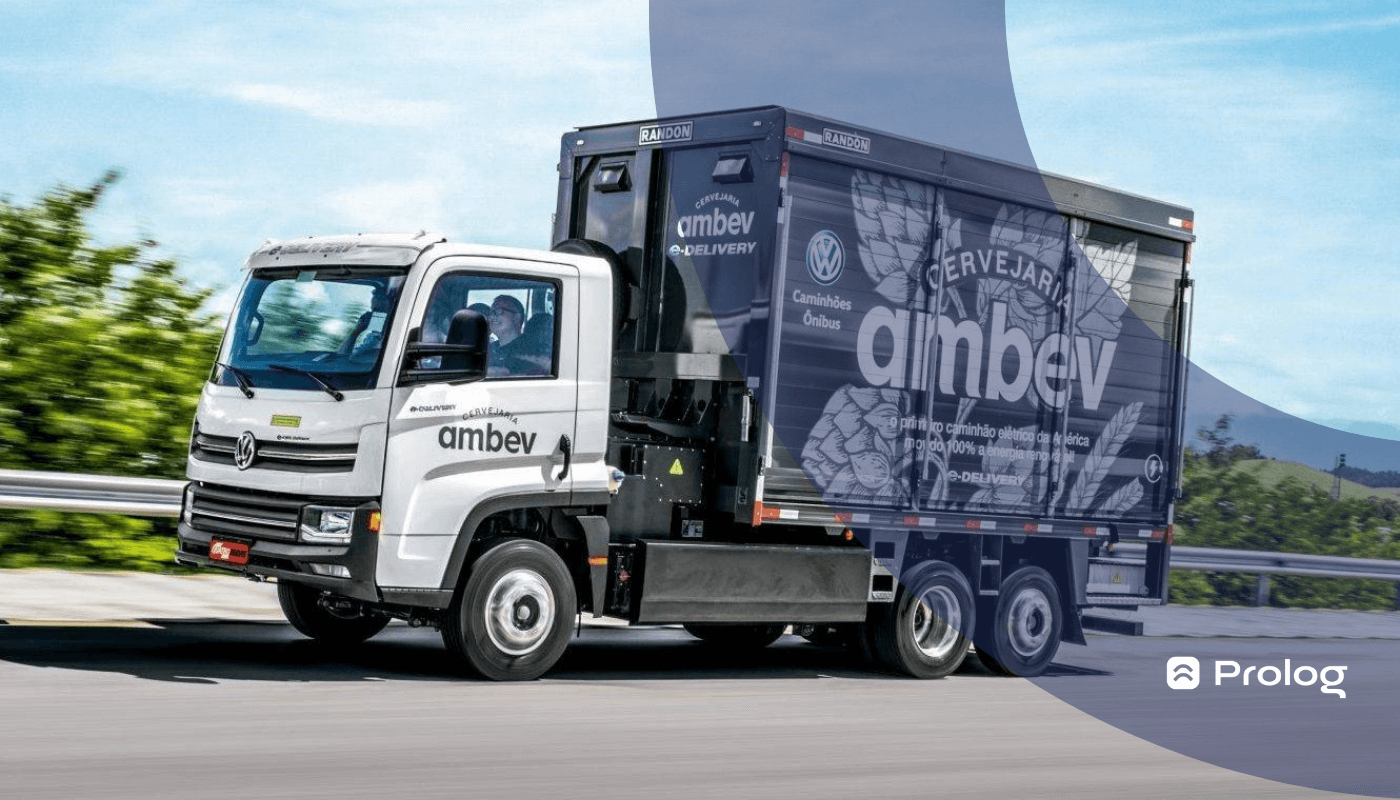
As mentioned earlier, the e-Delivery is the first model produced in Brazil, by Volkswagen. It has been getting a lot of attention because of its relationship with Ambev, a well-known beverage company.
Clearly, each model has its own characteristics. In general, range should be analyzed model by model, because it depends on the battery configuration, the weight carried, the route and how the vehicle is used.
So, thinking about a Brazilian scenario, where charging stations for this vehicle type are still a point of attention, it is hard to say when these vehicles will come to dominate freight transport fleets. In many operations, urban use and planned routes remain the most likely way to start.
Is Ambev revolutionizing freight transport?
This company, which already has its own transportation system, has been investing in the implementation of electric trucks since 2018. Initially, tests with this machine have been carried out only in São Paulo, but the results have been positive.
For this reason, the company decided to increase its investment in these trucks and made a purchase of 100 new electric trucks of the e-Delivery model. What's more, the plan was for the company to have 1600 of these vehicles by 2023.
And how does the company intend to run transport operations given the lack of charging stations?
Well, here is another big piece of news:
Ambev is investing in the implementation of solar plants at its distribution centers throughout Brazil. That way, the vehicles in the electric truck fleet will make stops both to drop off or pick up goods and to recharge the machines.
And here is a bonus piece of information: for these 100 new trucks, a reduction of 1,540 tons of CO2 in the atmosphere and savings of 583 thousand liters of diesel are expected.
What are the advantages and disadvantages of the electric truck?
This is the moment to understand whether it is worth investing in electric trucks. Is it? The pros and cons will certainly help you make a decision. To start, what are the advantages and benefits of the electric truck?
- The electric motor works more simply;
- maintenance costs tend to be lower for some components, since there is not the same set of oil, exhaust and internal combustion engine parts;
- regenerative braking can help recover energy during deceleration;
- it has a greater ecological benefit when the operation considers direct emissions and the energy mix used for charging;
- the vehicle is more comfortable;
- the truck is quieter;
- it suffers less vibration during the trip;
- it can make use of clean energy;
- a low charging cost can happen depending on the energy rate and the infrastructure;
- it has more integration with other technologies;
- the motors are highly efficient.
Despite having several positive points, there is a concern about electricity consumption. This is quite understandable, because the environmental impact of the operation does not depend only on the truck: generating the electricity used to charge electric vehicles can also create carbon pollution. Just choose the vehicles in your fleet after a lot of research, compare routes and plan the energy source well.
With this in mind, what are the disadvantages you need to consider before buying an electric truck?
- The initial price of the vehicle is higher than that of conventional trucks;
- many individual parts may depend on the dollar exchange rate and on tax costs;
- charging points in Brazil are still scarce on many routes.
What is the outlook for this innovation in Brazil?
In Brazil, some electric truck models are already on the road; however, progress tends to begin with operations in which the route is predictable, charging can be planned and the model's range matches the distance traveled. This is a reality that may change little by little.
One example is Ambev itself, which is investing not only in the trucks but also in distribution centers optimized to charge the fleet's vehicles.
Although we do not yet know when these vehicles will become popular across the whole country, you should always be looking for information and keeping up with the news. That way, you will already be preparing to evaluate updating your fleet and, of course, staying one step ahead of competitors.
In addition to the electric truck, several technologies are already available to make your fleet management more productive and efficient! How about learning more about the subject? Read our post:
WHAT LOGISTICS TECHNOLOGY WILL DO FOR YOU
Frequently asked questions
How many kilometers does an electric truck run on one charge?
Is it worth investing in an electric truck?
What electric truck models are on the market?
How is an electric truck charged?
Who already uses electric trucks in Brazil?
// newsletter
Fleet management content, straight to your inbox
Articles on tires, maintenance and fleet operations. No spam.