The 5 types of forklift tire and where to use each
 Luiz Felipe 6 min read
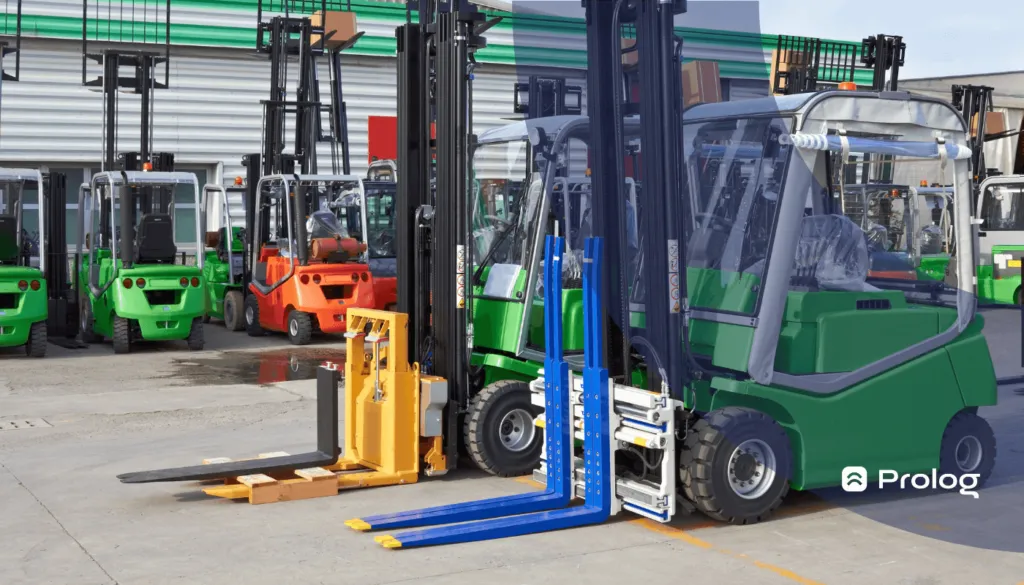
How about reducing your company's forklift tire costs? Find the most important information about them below.
There are several details to consider before choosing a tire for your forklift, and even more when caring for them after installation.
For example, some tire types are more recommended for paved surfaces, others for indoor floors and others for uneven ground. The choice also changes according to how the forklift is used, so the machine manufacturer's recommendation should guide the decision. To help you understand this better, we have put together this short guide. Read on.
What are the types of forklift tire?
They can be divided into five categories. Among the most common forklift tire types are pneumatic, solid and polyurethane tires; in addition, the market also uses superelastic and cushion constructions for specific applications.
Pneumatic
These have an inner tube. In other words, they require calibration and pressure control following an inspection schedule.
Although they are simpler to maintain, pneumatic tires are widely used when the operation needs better cushioning of impacts between the vehicle and the ground. This is because they are made with strong, durable rubber. For the same reason, they are also suitable for uneven ground, provided the model is compatible with the forklift and the application.
Solid
Because these tires are made from hard rubber, impact cushioning is lower. Consequently, this type is less widely used when the operation depends on comfort and absorption of surface irregularities.
What you need to know is that they can be used both indoors and outdoors, but use on uneven surfaces should be avoided when the equipment or tire manufacturer does not recommend that application.
Polyurethane
This type is widely used on electric forklifts and in indoor operations. Its design works by being pressed onto the vehicle's wheel, almost replacing the wheel's function.
Mainly used indoors, it does not perform well on rough terrain.
Superelastic
This type is solid and recommended for surfaces such as asphalt and polished cement: in other words, even ground. Because they come in a white alternative that does not mark the floor, they are the option for the pharmaceutical, chemical and food industries.
One advantage: like solid tires, superelastic tires do not need calibration.
Cushion
This is a kind of offshoot of superelastic tires. They are therefore also solid, but their distinguishing feature is that they are made from vulcanized rubber.
Where should they be used? In paved operations on smooth indoor floors.
Want to improve your tire management? Talk to a Prolog specialist
What is the right tire for your forklift fleet?
The answer is short and simple: use the model recommended by the vehicle manufacturer.
The truth is that choosing the wrong tires can have several negative outcomes. Among them: machine damage, stains and damage in the workplace, and operational delays. Since tires vary by construction and application, it is worth confirming whether the chosen type matches the floor, load, environment and how the forklift is used.
When should you replace forklift tires?
Just as you need to choose your forklift's tires, you also need to know the right time to replace them.
The indications are to replace or remove them from service for assessment when:
- they are bald, porous or reach the wear limit specified for that tire model;
- they have cuts, cracks, defects, chunking or unevenness between components;
- there is excessive or uneven wear;
- the tire no longer meets the safe-use condition defined by the manufacturer, maintenance or the operation's inspection.
What are the risks of not replacing tires that have reached their usage limit? These include accidents, cargo damage, increased fuel consumption and loss of vehicles.
An important precaution is not to apply the same standard to every type. Pneumatic, solid, polyurethane, superelastic and cushion tires have different constructions, so inspection needs to consider tire type, visual condition and the manufacturer's recommendation.
Can these tires be retreaded?
Yes, but the possibility depends on tire type, construction and casing condition. Before planning tread replacement, confirm whether the model allows this process and whether the tire's condition permits refurbishment.
Another difference:
While truck or bus tires can undergo refurbishment when well maintained and within applicable technical criteria, forklift tires require a more specific assessment. A universal number of retreads cannot be assumed for all constructions.
To carry out retreading, the casing must not be damaged. The tire should therefore be removed before wear compromises its structure and always according to the limit applicable to the model.
What causes forklift tire wear?
This is an essential question. Excessive wear is generally one of the main causes of premature tire loss. Pay attention to the answer:
Low pressure
Of course, this problem is specific to forklift tire types that require calibration. When there is too little air in the tires, their sidewalls flex excessively.
As well as affecting the tire's structure, this will raise the temperature and increase wear on these parts.
Some causes of pressure loss can include a damaged or poorly positioned flap, a short, off-center or uncapped valve, among others. On air-filled tires, pressure should be part of the routine check.
High pressure
Similarly, only tires with an inner tube suffer wear from high pressure. What happens is that the casing is subjected to excessive stress and ends up losing flexibility.
As a result, cushioning is impaired, and the tire will suffer more ruptures and damage.
Forklift maintenance
Vehicle maintenance is also an essential precaution for forklifts. Tasks such as machine alignment and balancing should be routine to prevent tire wear.
Tire condition should also be included in the daily forklift inspection, with attention to cuts, chunking and other visible damage. This habit helps find problems before they develop into a longer stoppage or an unsafe condition of use.
Forklift operation
Driving style is directly related to tire preservation. High speed, abrupt acceleration and braking, or engaging reverse without first stopping the machine are therefore common actions that increase tire rubber wear.
Also avoid overloading forklifts.
What is the ideal care for forklift tires?
Forklift tires require constant maintenance, just like any other tire type.
Everything from calibration control and removing debris from the grooves and tread to identifying cracks, cuts, chunking and impact damage should therefore be part of a forklift fleet manager's daily routine.
Bringing together all the precautions to improve tire durability, this is the complete list:
- carry out correct calibration on air-filled tires;
- travel at the manufacturer's recommended speed;
- avoid abrupt acceleration and braking;
- avoid prolonged exposure to unpaved and uneven surfaces when the tire is not suitable for that use;
- keep the axle aligned;
- carry out preventive maintenance frequently;
- inspect cuts, chunking, cracks and other visible damage;
- keep track of the tires.
To discover a technological tire management solution, take a look at Prolog App.
Frequently asked questions
What are the types of forklift tire, and where does each fit?
How do you choose the right tire for a forklift fleet?
When should you replace a forklift tire?
Can forklift tires be retreaded?
What causes the most wear on these tires?
What care extends forklift tire life?
// newsletter
Fleet management content, straight to your inbox
Articles on tires, maintenance and fleet operations. No spam.