Truck reflective tape placement: how to apply it
 Jade Zart 5 min read
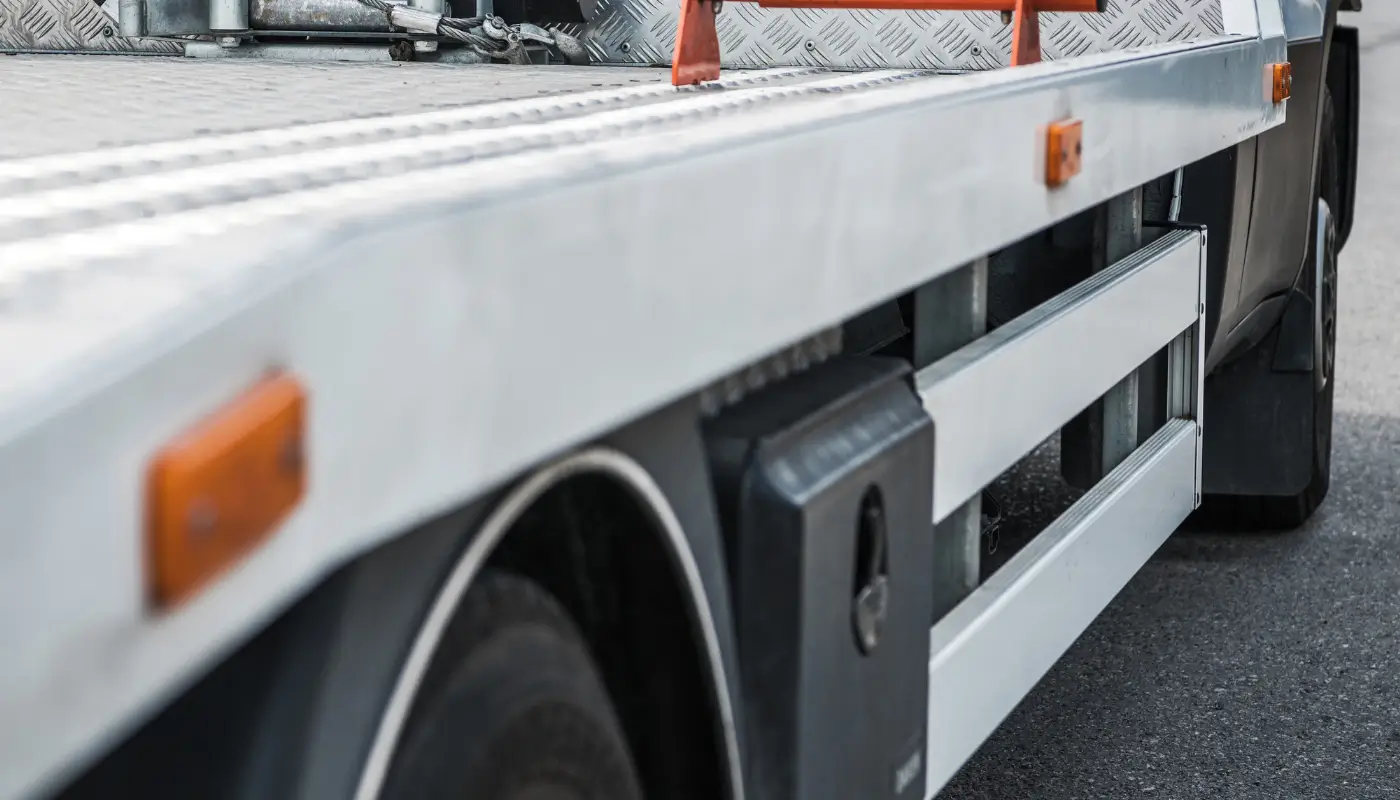
Reflective tape for trucks is an indispensable feature for increasing safety in heavy vehicle transport operations.
Without a doubt, safety in road freight transport is a constantly ongoing discussion.
New measures and alternatives are debated all the time to bring about fewer accidents involving large vehicles, such as freight trucks.
That makes reflective tape even more relevant: it helps make vehicles more visible and is also part of Brazil’s technical requirements for retroreflective film on heavy trucks. Learn more:
- What is reflective tape for trucks?
- What is it for?
- Is it mandatory?
- Regulations and standards for reflective tape on fleets
- Why is reflective tape on trucks important?
- How do you use reflective tape on trucks?
What is reflective tape for trucks?
Reflective tape for trucks is a type of film that reflects light from other vehicles’ headlights on the road, increasing truck visibility in low light or at night.
This tape is made from highly reflective materials and designed to adhere to trucks’ exterior surfaces, highlighting the vehicle’s presence and outline.
In Brazil, Contran (the National Traffic Council) Resolution No. 948 treats this item as retroreflective film and establishes technical requirements for its use on vehicles, aiming to provide better daytime and nighttime visibility.
What is it for?
It is a feature used on heavy vehicles to increase road safety, especially on nighttime trips, alerting other drivers to the truck’s presence.
The main function of reflective tape is to improve vehicle visibility and recognition in low light or at night, aiming to reduce the risk of accidents.
By reflecting light from approaching vehicles’ headlights, the tape helps clearly mark the truck’s dimensions and position, allowing other drivers to adjust their direction and speed safely and in good time.
Thus, in bad weather such as fog or heavy rain, reflective tape continues to provide a visible indication of the truck, even when overall visibility is poor.
Is it mandatory?
Yes, reflective tape for trucks is mandatory in Brazil for vehicles covered by the regulation.
Specific standards may vary by country or region, but they generally require tape to be applied at strategic locations on the vehicle to maximize visibility.
In Brazil, Contran Resolution No. 948 refers to trucks with a gross vehicle weight (GVW) above 4,536 kg and establishes that they may only be sold and have their annual license renewed when fitted with retroreflective safety devices.
Regulations and standards for reflective tape on fleets
In Brazil, Contran Resolution No. 948 establishes the technical requirements for using retroreflective film on vehicles and defines rules related to retroreflective safety devices.
Besides covering film requirements, the resolution requires manufacturers to register products with INMETRO, Brazil’s National Institute of Metrology, Quality and Technology, and states that noncompliant vehicles are subject to the penalties set out in art. 230, subsections IX or X, of the CTB (Brazilian Traffic Code).
Why is reflective tape on trucks important?
Improving vehicle visibility in low light
At night and in other low-light conditions, such as rain or fog, a driver’s ability to see vehicles ahead is reduced.
In these cases, reflective tape acts as a luminous warning, reflecting headlights from approaching vehicles and making the truck easier to see.
This allows other drivers to quickly identify the truck’s presence, reducing the risk of collisions and road accidents.
Alerting other drivers to the truck’s presence
Reflective tape works as an effective warning mechanism to inform other drivers of a large, heavy vehicle’s presence on the road.
It is useful on winding roads or when overtaking, where quickly recognizing a truck’s presence helps drivers of smaller vehicles make safe decisions.
Increasing drivers’ reaction distance
By making the truck more visible, reflective tape helps increase the reaction distance of approaching drivers.
This gives other drivers more time to adjust their speed and road position, avoiding sudden braking or last-minute evasive maneuvers that can result in accidents.
Staying compliant with current legislation
Besides its safety benefits, applying reflective tape to trucks is a legal requirement in Brazil for vehicles covered by the regulation. Keeping the fleet compliant helps prevent noncompliant vehicles from being subject to the penalties set out in art. 230, subsections IX or X, of the CTB, as well as problems renewing the annual license.
How do you use reflective tape on trucks?
In Brazil, it must be installed on the sides and rear of the truck. The practical answer to reflective tape placement starts with these two areas: sides along the vehicle’s length and rear with a visible outline of the back area.
On the sides
The tape must be placed along the full side length, complying with the specific regulations on height and spacing. Following the resolutions on reflective tape, strips must be applied with gaps of 30 cm between them.
Likewise, each strip must be at least 30 cm, with 15 cm white and 15 cm red.
At the rear
Reflective tape at the rear of the truck must be applied at the top and bottom of the vehicle’s rear, forming an outline that clearly highlights the rear area. The red ends must be connected at all four rear corners.
Reflective tape for trucks also needs to be checked during the vehicle inspection checklist process. This helps identify missing tape, wear, poor attachment, dirt, damage or nonstandard application before the truck sets off.
Make sure it is always compliant in your fleet by using a maintenance management spreadsheet. Download it free here to start using it (in Portuguese).
Frequently asked questions
Where is reflective tape placed on a truck?
What are the dimensions and colors of reflective tape?
Is reflective tape mandatory?
Which standards cover reflective tape for trucks?
What is reflective tape on a truck for?
// newsletter
Fleet management content, straight to your inbox
Articles on tires, maintenance and fleet operations. No spam.