How to save fleet fuel through tire management
 Luiz Felipe 3 min read
Want to save fuel in your fleet? Learn more about achieving this goal and how Prolog helps you!
Although electric trucks are becoming better known, most fleets still depend on fuel for their transport operations today. It is also one of their main expenses!
That is why managers are always looking for alternatives to save on refueling. Today, you will learn how Prolog's tire management solution will help reduce your fleet's fuel consumption costs.
But first:
What helps save fuel?
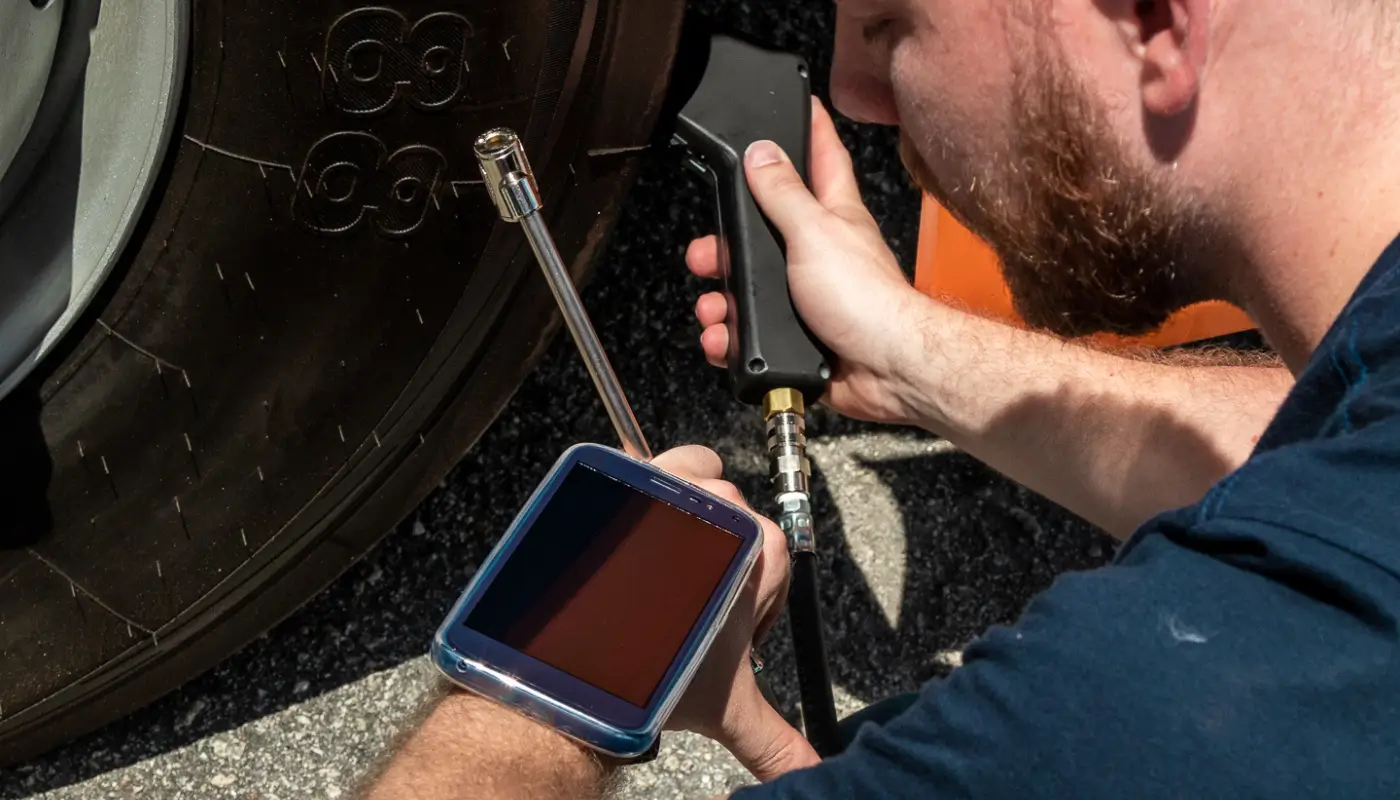
Check and adjust tire pressure correctly
Tires are designed to run with a specific area of ground contact, and correct calibration ensures this. In brief, high pressure reduces the contact area and low pressure increases it.
Likewise, low pressure also increases the engine effort needed to move the vehicle, using more fuel.
What is the correct calibration? The tire manufacturer/supplier should indicate the ideal pressure.
Keep tires in good condition
Deformed or excessively worn tires increase fuel consumption because of their lack of traction with the ground. This, in turn, increases the engine effort needed to move the vehicle and causes fuel waste.
Ideally, vehicle balancing should be carried out every 10 thousand km, along with all other tire care, of course.
Retreading
On that subject, the retreading process can be a factor in saving fuel.
It involves removing the used tread and replacing it with a new one. This increases tire durability and helps save fuel by reducing rolling resistance.
Avoid excess vehicle weight
Carrying a load above each vehicle's recommendation requires more effort to move. This causes higher fuel spending.
Tire rotation
This task is essential to ensure even tire wear. As a result, it will help make fuel consumption more efficient.
Defensive driving
Excessive speed (from 110 km/h) increases fuel use by up to 25%. Likewise, harsh braking damages the engine and also increases consumption.
Fuel adulteration
Although cheaper filling stations generate immediate savings, they may be cheap for a reason: they mix other products into the fuel.
In the long term, you will have vehicles with damaged engines and higher expenses.
Engine temperature
Keeping the engine at its ideal temperature requires attention to two points:
- Keeping maintenance up to date to identify problems in advance and carry out basic tasks such as oil changes, etc.
- Optimizing routes so the truck does not need to make several trips in just one day. If it needs to stop along a single route, that is better than going back and forth to base several times.
Prolog App: Tire Management
Have you noticed how many tasks relate to tires? That is why tire management has a direct impact on saving fuel.
The solution includes a tire management system and a tire inspection kit. Through the inspection task, the system collects the information needed to determine, for example, each tire's average wear level, the likely causes of wear and what action to take as a result.
Inspection also collects tire calibration data, indicating the need for correction. This is the main key to your fuel savings.
In addition, avoiding excessive wear and rotating tires at the right time, which the system also helps identify, are crucial actions for reaching your goal.
Frequently asked questions about the Prolog solution
1 What is it? A solution to make fleet tire management easier and faster.
2 What does it do? It turns the tire inspection process into a digital task, making it easier to collect, store and analyze data.
3 How does it work? We have an inspection kit that collects tire calibration and tread depth data and stores the information in the Prolog system.
We provide an inspection schedule, the inspection kit to carry out the task, data analysis and completion of open services from the inspection.
4 What are the benefits? Inspection time is halved compared with the traditional method, data will be extremely reliable, you will make better fleet decisions, tire durability will increase and, of course, you will save fuel.
Now, learn EVERYTHING about our solution! (in Portuguese)
Frequently asked questions
What helps save fuel in a fleet?
What is the correct tire calibration?
Does high speed increase fuel consumption?
Why does tire management help save fuel?
Does retreading help save fuel?
// newsletter
Fleet management content, straight to your inbox
Articles on tires, maintenance and fleet operations. No spam.