
Reducing fleet fuel consumption: causes and actions
 Luiz Felipe 4 min read

Knowing all of a fleet’s processes is essential for finding the best solutions to help reduce an operation’s fuel consumption.
That is why the fleet manager, who has the necessary knowledge, is responsible for planning and developing solutions in this area. Among their tasks, they need to keep track of fleet inspections, maintenance services, tire conditions and so on.
Fuel consumption is one of the largest costs in transport operations and one of the most complicated to control. This is because various factors are connected to it, such as price changes, road conditions and driving style.
See in more detail:
What most influences fleet fuel consumption?
There are different factors that can increase a fleet vehicle’s fuel consumption, such as fuel quality, problems in the vehicle’s structure and incorrectly inflated tires.
That is why implementing preventive maintenance processes for vehicle inspections is so important. When you identify an irregularity, you understand what it is, what causes it and how to resolve it.
Learn more (video in Portuguese):
Explanation of the main reasons fuel consumption increases.
Fuel quality
Quality fuel does not cause vehicle problems.
If you face situations such as an engine overheating, losing efficiency, showing rust, wear or other types of problems, you may suspect the fuel being used.
Another problem that helps identify poor fuel is increased consumption per route. If you identify an increase without clear reasons, when the vehicle has no failures and the driver drives appropriately, you may also suspect the fuel.
In addition, very low prices at a refueling station may indicate adulterated fuel. One way to avoid refueling with the wrong fuel is therefore to use only stations with well-known brands.
Problems in the vehicle’s structure
The vehicle has various components that work together to function properly. Therefore, breakage or failure in a single part can result in other damaged parts.
In fact, problems in the vehicle’s structure have a “snowball” effect.
For example: a lack of balancing causes tire wear, which consequently increases the engine effort needed to move the vehicle and ends up generating higher fuel consumption.
Avoiding structural problems and reducing fuel consumption involve a preventive maintenance routine, performing regular vehicle inspections and preventive services whenever necessary.
Incorrectly inflated tires
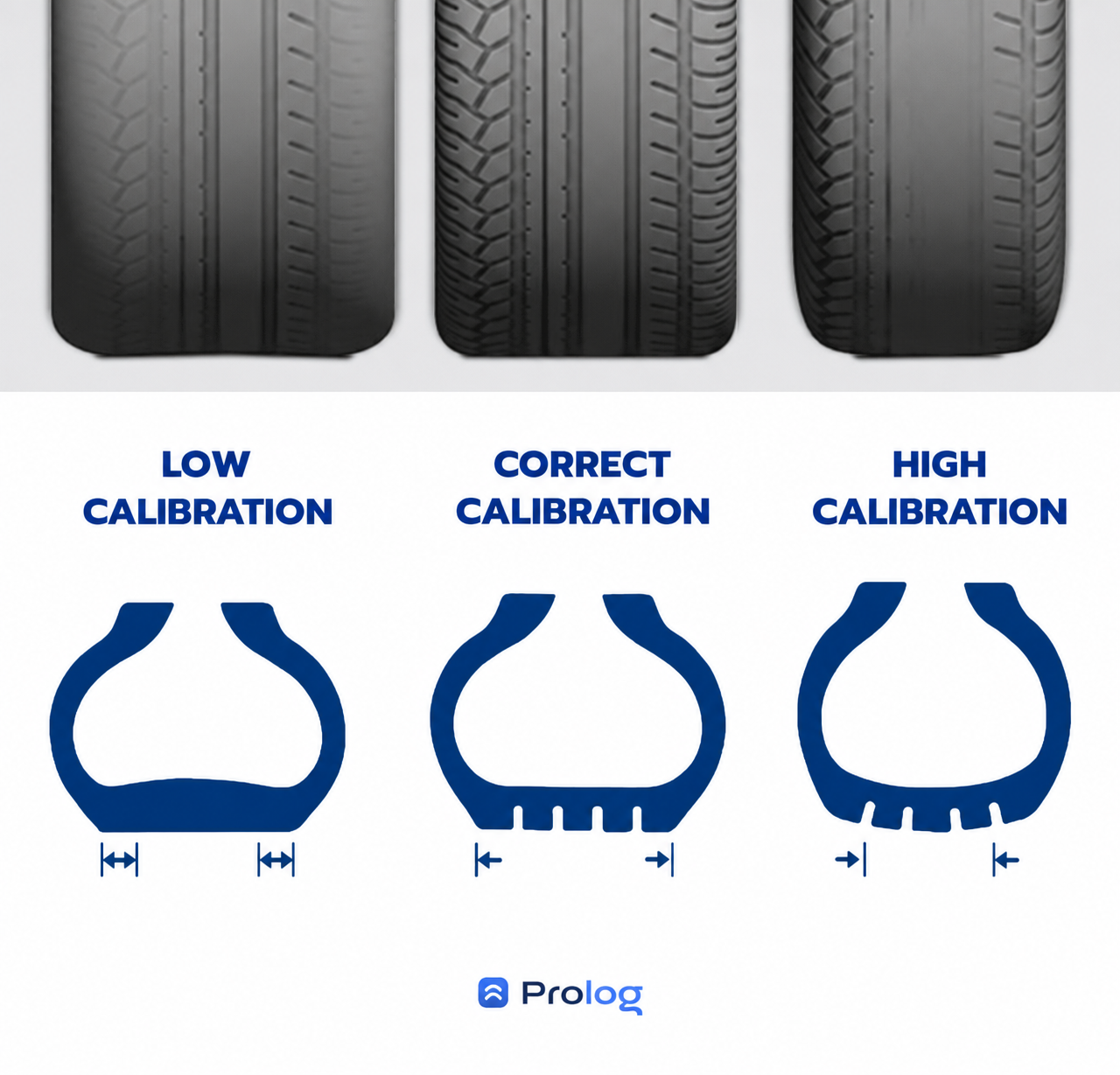
Comparison of damage from incorrect tire calibration.
Maintaining correct tire calibration is not such an obvious action for managers seeking to reduce fleet fuel consumption. But it is a proven fact: if tires are above or below the recommended pressure, they can suffer wear and make the engine work harder, increasing consumption.
To keep tires at the correct pressure, fleet asset management is the solution, controlling and managing tires with a view to reducing their maintenance and replacement costs.
What to do to reduce fuel consumption in your fleet
Tire management
To better understand the connection between tire management and fuel consumption, the link between the two factors is tire pressure inspection.
When inflated below the recommended pressure, tires have increased drag. In other words, the engine needs to work harder to move the vehicle as required.
By carrying out tire pressure inspections, it is possible to create an information history and establish patterns.
With this information in hand, you identify and prevent possible irregularities, giving you time to correct problems and avoid harm to vehicle and tire performance.
Refueling management
Fleet refueling management is a fundamental area today.
It implements processes that help reduce fuel consumption, both through awareness of what causes increases and through control of amounts spent on refueling and mileage covered.
Route planning

Details of the best routes for a delivery.
Choosing the shortest routes is not always the best strategy: you need to consider traffic, road conditions, whether roadwork is underway, etc. Every detail matters, and routes need updating for each trip.
You can also use technological route planners to help compare different routes and select the best value for the operation.
Vehicle load weight
Know each vehicle’s maximum capacity and do not exceed its limits. This way, the engine will not need to work beyond its capacity to reach the necessary speed. You also avoid the risks of fines and losing trucks through misuse.
Guiding drivers and ensuring they know the correct way to handle fleet trucks is also important to avoid wasting fuel. Even awareness about air-conditioning use can help reduce fleet costs.
Logistics technologies
Software to help reduce a truck fleet’s fuel consumption should be assessed according to your operation’s needs.
If the biggest problem relates to tires, use a tire management system. If the problem relates to maintenance, a maintenance management system and electronic checklist are the ideal way forward.
If you identify fuel as your biggest pain point, a system focused on refueling control is a great option.
Learn more about fuel savings by downloading our free resource on the subject (in Portuguese).
Frequently asked questions
What increases fleet fuel consumption the most?
How can I tell whether the fuel used is poor quality?
Do incorrectly inflated tires increase fuel consumption?
How does route planning help reduce consumption?
What software helps reduce fleet fuel consumption?
// newsletter
Fleet management content, straight to your inbox
Articles on tires, maintenance and fleet operations. No spam.


