7 types of fleet tire damage: causes and prevention
 Jade Zart 5 min read
Understanding and dealing with tire damage is a routine part of fleet management.
On every trip, tires face varied challenges that can lead to different types of damage, ranging from a simple puncture to more serious issues such as tears or irregular wear.
Each of these issues requires a specific, careful approach.
Preventing tire damage is more than a matter of maintenance; it is a practice that requires constant vigilance, in-depth knowledge and a clear inspection routine.
What types of damage can tires suffer on the road?
Punctures
One of the most common issues encountered on the road is a punctured tire. This generally happens through contact with sharp objects, such as nails or glass, that pierce the tread.
A punctured tire can lead to a sudden loss of pressure, affecting tire handling and vehicle handling, resulting in dangerous situations, especially at high speed.
Tears or cuts
Tire tears or cuts are often caused by collisions with sharp or irregular objects on the road.
This damage can be superficial or deep, compromising tire integrity and, in severe cases, making it unusable.
A torn tire can also affect the tire’s internal structure, increasing the risk of accidents and premature tire loss.
Bulges
Tire bulges and protrusions usually arise from internal damage caused by strong impacts, such as potholes or road obstacles.
This damage indicates that the tire’s internal structure has been compromised, creating a weak point that can lead to sudden failures.
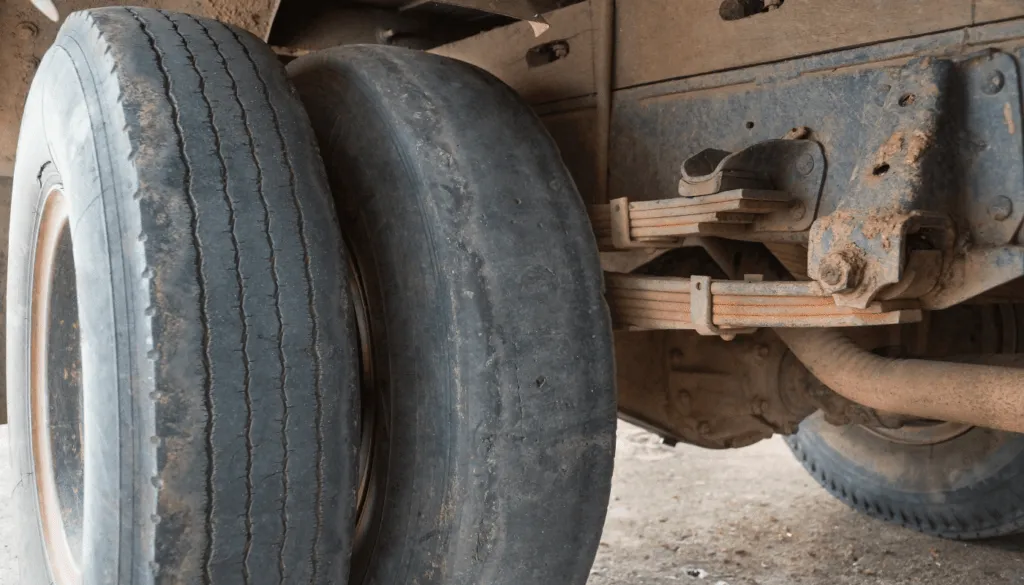
Irregular wear
When a vehicle’s tires wear abnormally, the issue may be due to a lack of:
- Proper alignment;
- Suspension checks and adjustments;
- Proper tire pressure calibration.
This type of wear not only reduces tire useful life, but can also negatively affect vehicle stability and fuel efficiency.
Excessive wear
Tread wear occurs naturally over time, but can be accelerated by aggressive driving practices or inadequate vehicle and tire maintenance.
Tires with worn tread lose their grip, especially on wet surfaces, increasing the risk of accidents.
Ply separation
Ply separation is damage that occurs when a tire’s internal layers begin to come apart from one another.
This issue can be caused by factors such as overloading, excessive heat due to improper inflation or prolonged use, and severe impacts.
Ply separation affects the tire’s structural integrity, and early identification may be prompted by irregularities on the tire surface or abnormal vibrations while driving.
Bead damage
Bead issues can occur because of incorrect mounting or strong impacts against curbs or potholes.
This damage can compromise the seal between the tire and wheel, leading to air loss and, consequently, improper pressure.
Identifying bead damage requires a more careful tire inspection and is essential to avoiding tire failures and maintaining road safety.
What should you do if a tire is punctured on the road?
If a tire on one of your fleet vehicles is punctured while on a route, drivers must be prepared and instructed on how to proceed.
It is essential that they gradually reduce speed and find a safe stopping place away from traffic flow. They must use the hazard lights to signal the emergency to other drivers.
It is important for your fleet to be prepared to handle emergency situations like this, which is why risk management is so important.
It prepares the fleet for moments like this by indicating the most appropriate action for the different scenarios in which this can happen — especially in heavy-vehicle fleets, where changing tires is less practical than in a car.
How can you avoid tire damage on the road?
To minimize the risk of tire damage on the road, it is essential to carry out tire management in your fleet.
What care should we take with tires?
This begins with tire maintenance, including regularly checking and adjusting internal air pressure, which is indispensable to avoiding excessive and premature wear and damage due to tire overloading.
Wheel alignment and balancing also help prevent irregular wear and extend useful life.
Frequent visual inspections for signs of wear, cuts, bulges or foreign objects embedded in the rubber are also essential. In a maintenance routine, the most important points to watch include pressure, tread, rotation and alignment, as well as checking for tire damage.
Ensuring that tires are good quality and suited to the vehicle type and driving conditions is also essential to preventing damage and ensuring road safety.
When an inspection identifies a concerning condition, the fleet must refer the assessment to a tire professional, especially if there is visible damage, unusual vibration or a sign of internal failure.
What care should the driver take with the vehicle’s tires?
Another point, which falls under fleet driver management, is encouraging responsible driving practices, such as avoiding excessive speed, abrupt maneuvers and driving over dangerous obstacles such as potholes and road debris.
What does the Traffic Code say about tires?
In Brazil, the CTB (Brazilian Traffic Code) treats vehicle upkeep as a safety requirement: driving a poorly maintained vehicle that compromises safety is an infraction. For tires, this means damage capable of compromising safety needs to be addressed before the vehicle continues operating.
Specific rules on tire use on vehicles are addressed by Resolution No. 913/2022 of Contran (Brazil’s National Traffic Council) in Brazil. When guiding the fleet, it is therefore more accurate to separate the CTB’s general rule on poor upkeep from the technical requirements defined by Contran for tires.
In practice, tires must be suited to the vehicle type and driving conditions, respecting the load and speed limits specified by the manufacturer.
Fleet managers are responsible for ensuring that all vehicles comply with these rules, as an essential part of preventive maintenance and fleet safety management.
Failure to comply with these rules can result in fines, as well as putting the safety of drivers and other road users at risk.
Keeping control of tire condition is essential to your fleet’s safety and efficiency.
To help with this task, we offer a free tire control spreadsheet, designed to make it simpler to keep track of and maintain your vehicles’ tires.
With it, you can easily keep track of tire wear, pressure and general condition, ensuring they always meet safety and efficiency standards.
Frequently asked questions
What are the most common types of fleet tire damage?
What causes tire ply separation?
What should you do if a tire is punctured on the road?
How can you avoid damage to fleet tires?
What does the Traffic Code say about tires?
// newsletter
Fleet management content, straight to your inbox
Articles on tires, maintenance and fleet operations. No spam.