Tires are responsible for 4 functions in the fleet
 Luiz Felipe 5 min read
Tires are among the main components of fleet vehicles, directly influencing vehicle performance and transport safety. As a fleet manager, it is essential to understand tire functions and the different types of tires.
This will allow you to make more strategic decisions in your operations.
Besides knowing the options available on the market, you also need to know how to identify which makes and models perform best in the fleet so you can manage it more efficiently.
Learn about:
- Tires and their importance in fleets and transport operations;
- What the functions of a tire are;
- Tips for making better use of fleet tires.
Tires and their importance in fleets and transport operations
Tires are an essential component in any vehicle fleet, being the only point of contact with the ground while moving, which makes their importance extend beyond simply moving vehicles.
Their role is actually to ensure proper vehicle performance, providing safety and efficiency on the routes driven. This reduces operating risks, makes fuel consumption more efficient and ensures delivery deadlines are met more consistently.
When tires are in ideal running condition, you will get the expected results. However, if you do not manage them properly and they run with defects or incorrect pressure, the effect can be the opposite.
A routine of tire inspections and periodic maintenance is needed to allow greater control over their condition and adjustments that maintain ideal conditions for longer.
What are the functions of a tire?
1 – Traction and grip
One of a tire's main functions is to generate traction and grip on roads. The assets' construction can differ in groove design, which increases or decreases these characteristics in a tire model.
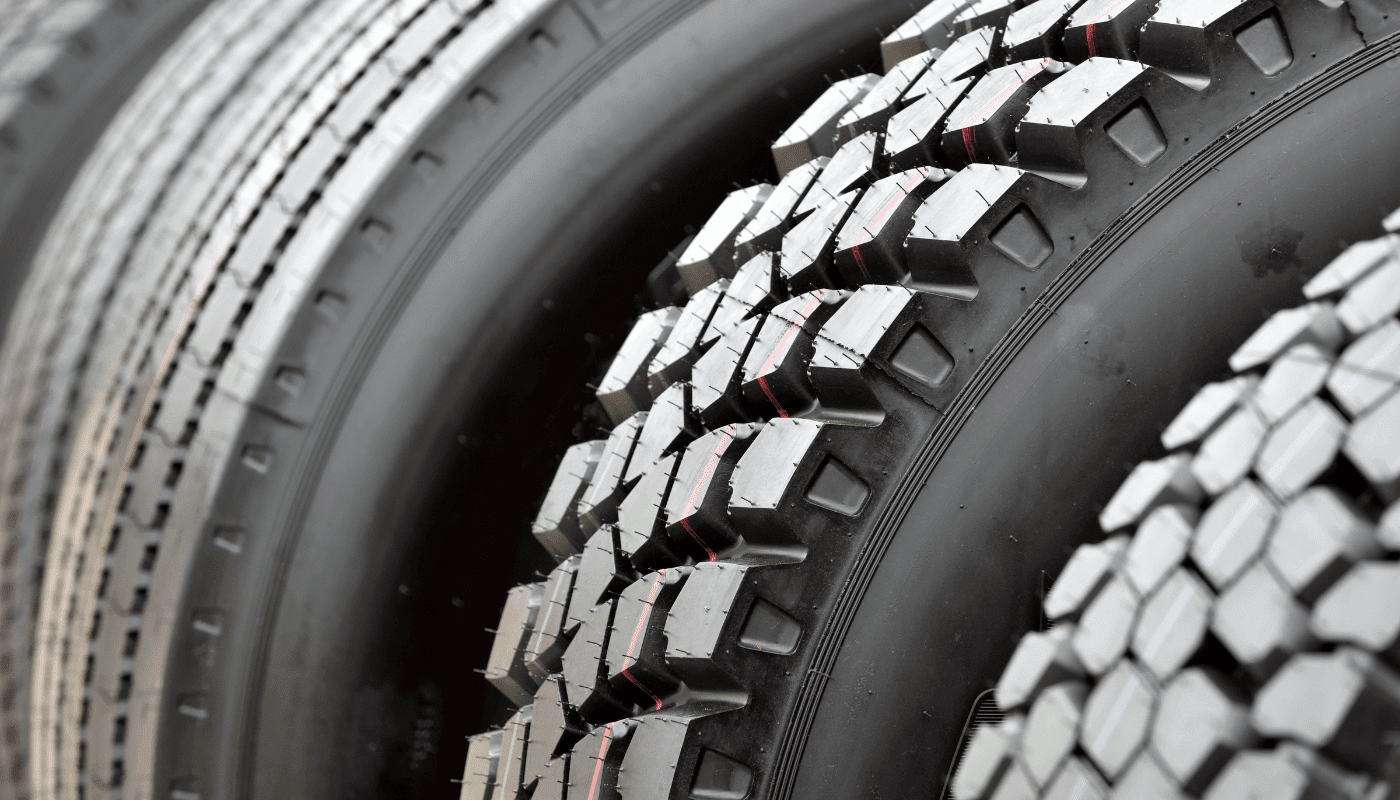
The grooves on unidirectional tires, for example, will perform better than other models on wet roads because they ensure a smoother passage of water.
Besides tread type, other aspects influencing traction and tire grip are tire width, internal pressure, the asset's condition, vehicle speed and vehicle mechanics.
2 – Load support and weight bearing
Tires are responsible for supporting the weight of the vehicle and its load. This makes it essential for drivers to know how to load correctly, distributing the load evenly.
This distribution will affect vehicle stability during transport, preventing one side from carrying more weight than the other, something that could cause a rollover on a bend, for example.
The assets also have a load limit, information marked on the sidewall and represented by numbers that should be interpreted using the tire load index table.
3 – Impact cushioning and comfort
One tire function is cushioning road impacts, contributing to greater comfort for the driver. Tires can absorb irregularities and small obstacles encountered along a route, minimizing impacts received and vibrations transmitted to the vehicle.
Besides choosing the right tire, you should pay attention to calibration. When pressure is below the ideal level, the rubber becomes “softer” and the driver feels more vibration and vehicle “swaying” when passing over potholes, rocks or cracks in the road.
On the other hand, high tire pressure makes the assets “harder” and can even lead to a blowout if the vehicle runs over debris at high speed.
Correct calibration is needed to ensure safe, comfortable transport for drivers, also reducing the incidence of mechanical and structural vehicle issues.
4 – Steering and control
Another tire function relates to vehicle control and steering.
These assets are directly connected to the steering wheel, and when vehicle alignment is performed, it calibrates their movements so the tires respond correctly to the driver's steering commands.
Besides this service, using the right tire size, keeping pressure properly adjusted and taking care to avoid irregular or excessive wear contribute to vehicle stability and balance.
This gives the driver greater comfort and confidence that the vehicle will respond appropriately as it moves.
Tips for making better use of fleet tires
To ensure ideal tire performance, proper and comprehensive management is needed. Some tips to optimize your fleet tire management processes are:
Choose the correct models
For this, you need to consider tire dimensions, the type of road and route driven, vehicle type and even the characteristics and weight of the transported load. Besides identifying the correct model, you may have different makes to choose from.
In that case, to choose the best make, you should run tests in your operation and keep track of each tire's performance to find out which actually delivers the best results according to your objectives.
Another important aspect that can influence your decision is tire price. Be careful not to buy only the cheapest models, since they may have issues such as lower durability or even a lower-quality composition.
Keeping track of these components' performance also helps identify which asset offers the most attractive cost-benefit ratio in your operation, by calculating tire CPK.
Inspect tires regularly
Tire inspection covers two aspects: pressure and tread depth. For the first item, internal pressure is checked and the driver is informed of the ideal value to inflate to if an irregularity is found.
For tread depth, a deeper analysis is needed to understand how much the tire is wearing over time and how quickly. It is also possible to identify the type of wear and why it is occurring in fleet tires.
In most cases, pressure checks are performed weekly, while tread depth inspections happen once a month.
This process is essential to increase asset durability and prevent issues with the performance of tire functions.
The best way to ensure good fleet results through tire functions is to manage these assets properly.
Investing in tire management is investing in the success and quality of fleet operations. Discover a dedicated solution for this stage of your operation and learn about all its benefits in a free demonstration.
Frequently asked questions
What does it mean to say tires are responsible?
What are the functions of a tire?
How does calibration affect tire performance?
How often should fleet tires be inspected?
How do I choose a tire model for the fleet?
// newsletter
Fleet management content, straight to your inbox
Articles on tires, maintenance and fleet operations. No spam.