Tire inspection schedule: how to create one in 3 steps
 Jean Zart 6 min read
Have you ever considered the impact a well-structured tire inspection schedule has on your fleet?
Besides directly affecting operating costs, poorly maintained tires can increase fuel consumption, cause uneven wear and, worst of all, compromise driver safety.
The truth is that without proper control, issues appear when least expected, and almost always at the worst moment. A worn tire can leave a vehicle stranded on the road, cause delays and even result in fines or accidents.
That is why a well-structured tire inspection schedule makes all the difference. With an organized process, you keep vehicles in good condition, avoid unnecessary expenses and improve operational efficiency.
If tire inspection is not yet a priority in your fleet (or if you want to optimize this routine), explore:
- What is fleet tire inspection?
- Why use a tire inspection schedule?
- How do you create a tire inspection schedule?
- How do you keep track of a tire inspection schedule?
What is fleet tire inspection?
Have you ever had to deal with a tire blowout in the middle of a delivery? Or noticed some trucks using more fuel than normal, with no clear explanation?
Often, these issues stem from the lack of an efficient tire inspection routine.
A tire inspection is simply a checking routine aimed at analyzing the condition of fleet tires, ensuring they are suitable for use on the road.
This involves visual checks, checking calibration and keeping track of tread wear. A well-performed inspection allows you to identify issues such as:
- Incorrect tire pressure;
- Uneven or excessive rubber wear;
- Tread depth below the recommended limit;
- Structural damage such as cuts, bulges or punctures;
- Issues with air valves and rims.
In addition to ensuring greater operational safety, tire inspection directly affects fuel consumption and the useful life of fleet components. Correct pressure, for example, helps improve fuel economy; underinflated tires can suffer overheating, uneven wear and internal damage.
However, occasional inspections alone may not be enough, because without structured planning this routine can become ineffective. That is where the tire inspection schedule comes in.
Why use a tire inspection schedule?
If inspecting tires in your fleet is still a task performed randomly, when there is time or only after an issue appears, this may be costing more than you imagine.
Without a well-defined schedule, checks become irregular, and then issues arise without warning: premature tire wear, higher fuel consumption and even vehicles stopped by unexpected failures.
With structured planning, you ensure each vehicle undergoes inspections at the right time, avoiding waste and optimizing tire use. This means:
- Lower costs from premature replacements
- Greater safety for drivers and operations
- Fewer unexpected failures
- Greater maintenance management efficiency
Ultimately, a tire inspection schedule is more than a preventive measure: it is a strategy to reduce costs, increase tire useful life and keep the fleet running efficiently at all times.
How do you create a tire inspection schedule?
(video in Portuguese)
To ensure inspection is efficient and fleet performance is optimized, it is important to structure a schedule of routines.
In addition to checking calibration and overall tire condition, a tire inspection schedule can establish monitoring of metrics such as tread depth and rubber wear.
From there, follow these steps to organize this routine in your fleet:
Define inspection intervals
Inspection frequency can vary according to the vehicle type and operating conditions.
A general recommendation that can serve as a baseline for different situations is to check tire pressure at least once a month and especially before long trips. In more severe operations, with higher mileage or a history of pressure loss, the fleet can adopt a higher frequency, provided it is documented in the schedule.
In practice, it is also worth inspecting tires whenever there are visible signs of uneven wear, damage or a change in vehicle behavior. For pressure, use a suitable gauge and check with cold tires, meaning after the vehicle has been parked for at least three hours. Also include a check before long trips, freight transport with heavy loads or towing another unit. For the tread, look for uneven wear, very smooth areas, high and low spots and other signs of damage.
Assign responsibility for inspection
The schedule must clearly define who will be responsible for inspecting tires at each point. Some fleets leave this check to drivers, while others rely on the maintenance team for this role.
Regardless of the choice, it is essential that those responsible have a tire checklist to standardize inspection and ensure no detail is missed.
Use tools to organize and record inspections
For the schedule to work in practice, it is important to have tools that make carrying out and keeping track of inspections easier. Some include:
- Electronic checklist: allows the team to record inspections in a standardized way, ensuring all essential points are checked.
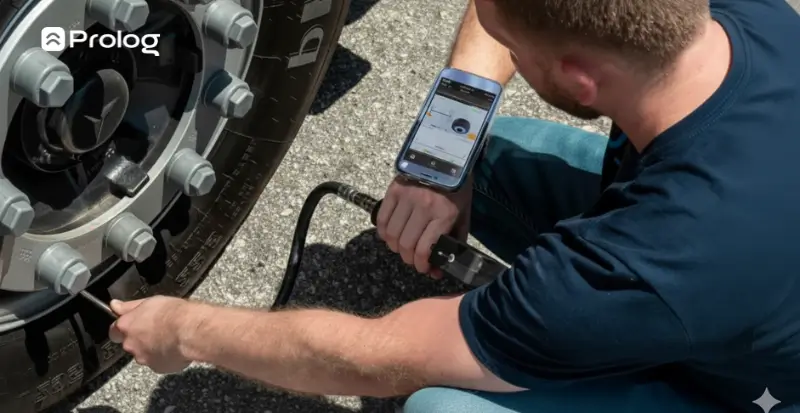
- Electronic tire tread probe: provides more accurate tread depth and calibration readings, reducing errors and increasing the reliability of data recorded by the team.
- Tire management system: centralizes inspection records, facilitates preventive maintenance scheduling and organizes reports, helping keep the schedule up to date and efficient.
With these tools, the tire inspection schedule becomes much more accurate and strategic, enabling control that truly brings positive results to the operation and company.
Adapt inspection to technology and operation type
Technology built into the tire itself or the vehicle can support the routine, but does not eliminate inspections performed by the team. Tire pressure monitoring systems, known as TPMS, detect pressure loss and alert the driver when the tire is 25% below the correct pressure. Even so, this alert does not replace a monthly check with a gauge.
The schedule must also reflect actual operating conditions. Pressure, load, speed, temperature, impacts and damage caused by road hazards are among the factors affecting tires. Therefore, a fleet operating in severe conditions can review intervals based on the history recorded by the team and each vehicle's service type, rather than applying the same frequency to all.
These records also help relate inspection to the tire life cycle. When the casing is suitable for reuse, retreading can extend its useful life and help reduce tire costs. Thus, the schedule looks beyond the next calibration and starts supporting decisions about maintenance, retreading and replacement.
How do you keep track of a tire inspection schedule?
Creating a tire inspection schedule is a major step, but it will only really have an impact if it is followed correctly and adjusted as needed. After all, planning on paper is no use if it is not applied to the fleet's routine.
The best way to ensure this control is to rely on tools that make carrying out and keeping track of inspections easier.
A fleet tire management system allows you to record every check performed by the team, schedule preventive maintenance and generate detailed reports, ensuring no important information is lost.
Furthermore, keeping track of tire management indicators, such as tire wear levels, incorrect calibration and cost per kilometer traveled, helps identify patterns and act before an issue leads to unnecessary expenses or compromises operational safety.
When you keep inspection records up to date and can view tire condition based on the checks performed, making strategic decisions becomes much easier.
Besides making the entire process more reliable, this also reduces the risk of failures that could go unnoticed in a routine without standards.
Ultimately, a schedule that is properly kept track of not only avoids waste and increases tire durability, but also improves the efficiency of the fleet as a whole.
And if you want to organize this process and ensure even more accurate control of inspections performed by the team, schedule a Prolog App demonstration.
Frequently asked questions
How often should fleet tires be inspected?
What is fleet tire inspection?
Why use a tire inspection schedule?
Who should be responsible for tire inspection?
How can the tire inspection schedule be kept track of?
// newsletter
Fleet management content, straight to your inbox
Articles on tires, maintenance and fleet operations. No spam.